











Bath Was Built Around the Art of Taking Time
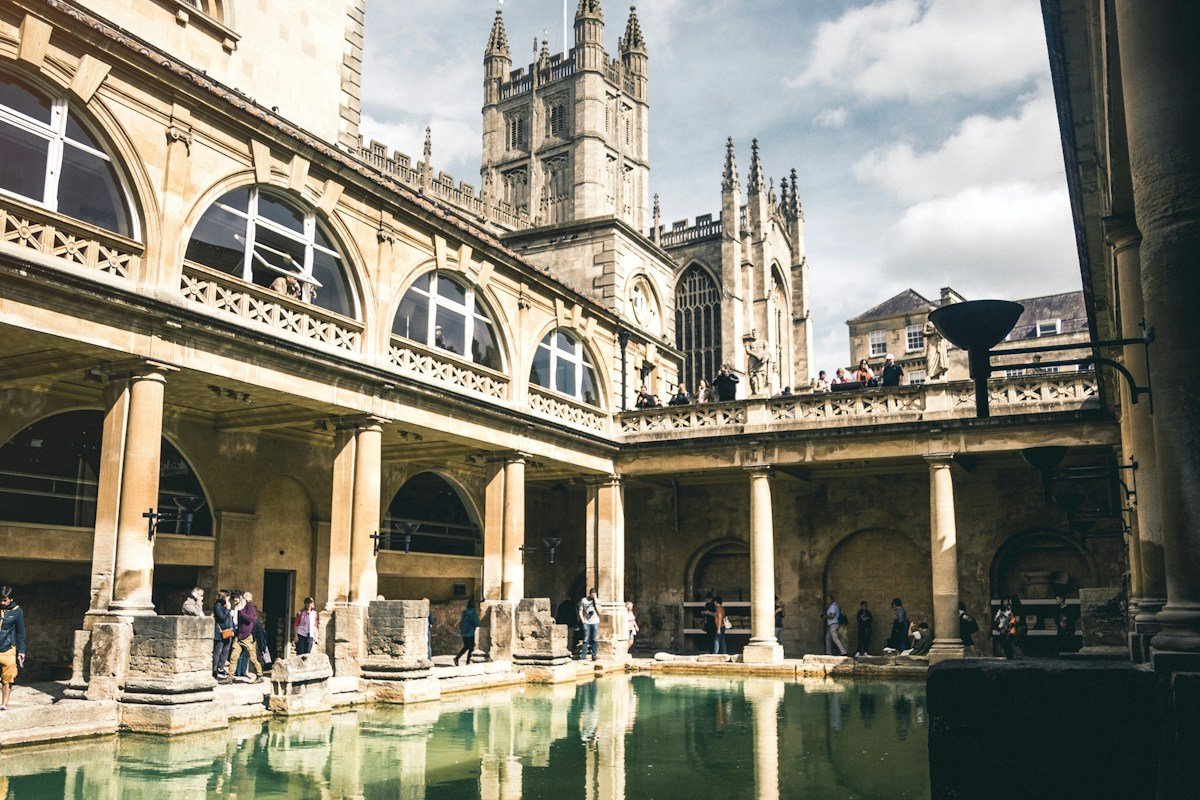 The Great Bath pool with surrounding galleries and Bath Abbey beyond. Photo by Jose Llamas.
Roman remains and Georgian streets reveal how a small English city turned water, sociability and architecture into a lasting identity.
Bath encourages a visitor to think about time in more than one way. Its Roman remains reach deep into the past, while its Georgian streets suggest a city shaped around the deliberate use of leisure. Walking between them makes the relationship unusually tangible.
The natural hot springs supported a Roman spa settlement, and Bath later developed into a celebrated eighteenth-century city. UNESCO recognises the way its Roman archaeology and neoclassical architecture belong to a wider urban composition. The story extends beyond the survival of an impressive bathing complex.
Begin with the Roman Baths to establish the importance of water, then explore the streets with that history in mind. Consider how public space encourages gathering and how rows of buildings create a coherent setting. The attraction is not only the elegance of a single facade, but the larger arrangement around it.
A short visit works best with a small number of anchors. Leave time between substantial stops for a riverside stretch, a shop or an unhurried meal. Bath is compact enough to tempt an overfilled schedule, yet its character is easier to appreciate when there is room to observe proportions and changing viewpoints. The famous buildings become more distinct when they are not competing for attention.
There is also an interesting question beneath the pleasure of looking. Who could participate in the leisure culture that shaped the city, and whose work supported it? Architecture can introduce those social histories as effectively as it displays taste. Bath’s beauty remains a strong reason to visit. Its layered relationship with health, status and sociability gives a reason to keep looking.
Further reading: UNESCO World Heritage Centre.
Photo by Jose Llamas.