






Dave Bookbinder Challenges Businesses to Rethink Success Through the Power of Human Capital

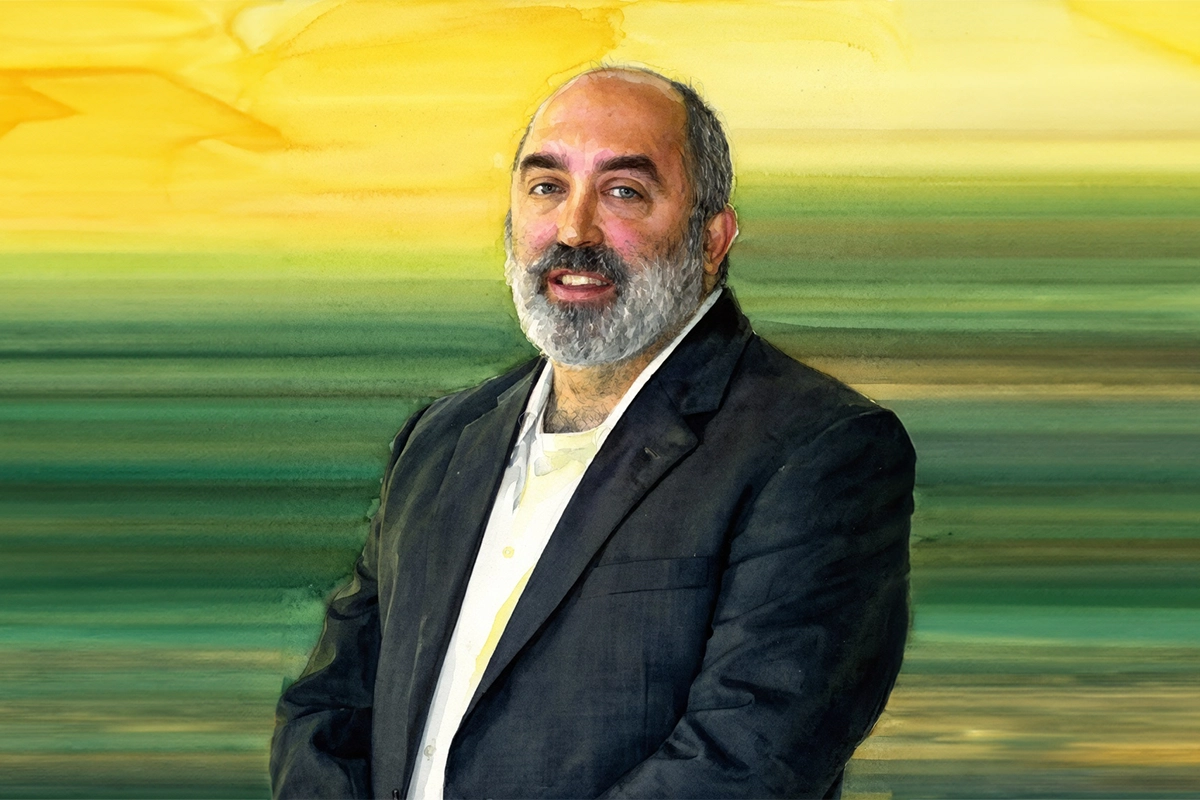
Photo: Dave Bookbinder, bestselling author and human capital pioneer, redefining business valuation by shifting focus to the value of people.
Revolutionising Business Valuation One Page At A Time
Dave Bookbinder discusses the value of human capital, corporate culture, and his redefining practices in business valuation while emphasizing the crucial need to recognize people as an organization’s greatest asset.
D ave Bookbinder stands as a towering figure in the realm of business valuation, known globally for his extraordinary ability to decipher the true worth of a company by looking beyond the numbers and into its very soul — its people. As an esteemed author, his works, The NEW ROI: Return on Individuals and The NEW ROI: Going Behind the Numbers, have not only claimed the #1 best-selling spot but have also revolutionized how businesses view and value human capital. His latest, A Valuation Toolbox for Business Owners and Their Advisors, debuted with accolades as an Amazon Top New Release, further cementing his reputation as an innovator in the field.
At Mosaic Digest Magazine, we take great pride in spotlighting trailblazers who challenge conventions, and Dave Bookbinder epitomizes this ethos. Through his writing, podcasting with the award-winning Behind the Numbers series, and consulting work, Dave unapologetically leads the charge in redefining how the business world measures success. His passion for proving that people are an organization’s most valuable asset has transformed the conversation around corporate valuation and has left an indelible mark on leaders, entrepreneurs, and industries alike.
In this exclusive interview with Mosaic Digest, Dave shares his insight and expertise on the often-overlooked importance of human capital as a measurable component of business valuation. He discusses the evolution of accounting standards, the critical impact of company culture, and the transformative role leaders can play in driving enterprise value. As you read Dave’s thoughtful responses, you’ll gain not only a deeper understanding of his groundbreaking ideas but also a profound respect for his commitment to empowering organizations to recognize the true power of their people.
What initially inspired you to focus on valuing human capital as a measurable component of business worth?
I’m known as a ‘valuation expert’ because I’ve been providing valuation services to thousands of clients over the course of my career. I’ve valued business enterprises and their intangible assets for a variety of purposes. One of those intangible assets that I’ve valued is people – the human capital. Every CEO on the planet will tell you that their people are their most valuable asset, but do you know where this ‘most-valuable’ asset appears on the balance sheet where all of the assets are depicted? They don’t. So I embarked on a journey to prove that people really ARE an organization’s most valuable asset that resulted in two books that I refer to as the NEW ROI series- where the NEW ROI is Return on Individuals.
How do you think traditional accounting standards could evolve to better reflect the value of people within organisations?
There are signs of progress regarding companies being required to report certain human capital metrics, but we need more. A great place to start would be to recognize a human capital asset on the balance sheet. I’d also like to see the valuation profession incorporate human capital metrics into business valuation analyses to capture the value that an engaged workforce brings to the organization.
In your experience, what are the most common misconceptions business owners have about valuation?
There are many misconceptions, but the most common are:
- Managing the business to avoid paying taxes: Having the brother-in-law who doesn’t really work at the company on the payroll is not uncommon. But when the business owner gets an offer and they have to produce financial statements, they are presenting an artificially lower profitability. Buyers aren’t going to pay a premium valuation for an unprofitable business.
- Looking for shortcuts: Free online calculators and “ballpark” estimates can be dangerously misleading. Relying on rules of thumb is another dangerous shortcut. Just because an article on the internet says that companies in your industry sell for “ten times EBITDA” doesn’t mean that multiple applies to you. Each situation is unique.
- A lack of objectivity: Business owners are emotionally attached to their company, and they often produce overly-optimistic forecasts which could result in overvaluing the business.
- Not understanding the forward-looking nature of valuation: Buyers are investing in the future expectations for the business. Business owners tend to focus on multiples based on historic performance.
- Not consulting professionals: Valuing a business is a complex task that should be performed by a qualified professional. I can tell you horror stories of business owners who tried to save a few thousand dollars on a valuation only to lose millions of dollars by not getting the analysis done properly.
Could you share an example where recognising the value of human capital significantly changed a company’s trajectory or valuation outcome?
If anyone reading this has been through an acquisition or merger, they may have (or seen their colleagues) either leave out of fear or uncertainty, or had their position eliminated. The result of these departures / terminations includes an intangible cost that is the institutional knowledge that leaves with the employee and cannot be replaced. This has a big impact on operations and business value that could take years to recover.
How has the reception to the idea of “Return on Individuals” evolved since you published the first edition of The NEW ROI?
Initially, there may have been a misunderstanding about the use of the term “human capital” as some people found that term to be offensive but I reached out to every one of them to explain the use of that term (and devoted a portion of the second book to this topic) and that helped them to understand that I’m really ‘on their side’ of the conversation. The idea has been very well received and has gained visibility in various publications and in my speaking on the subject. I think that the best acknowledgment of the NEW ROI construct is that the notion of investing in your people and building a great culture will drive business enterprise value is an investible strategy. Meaning, there are Exchange Trade Funds now that are predicated on investing in companies with great cultures because these companies tend to outperform their peers. While I am not associated with those ETFs, it’s great to see this thesis playing out in the markets.
What role does corporate culture play in quantifying a company’s true value, and how can leaders assess it effectively?
A great culture drives employee engagement, which drives discretionary effort, which leads to innovation and growth in sales, profits and business value. The research and data bear that out. It’s all connected. There are a number of ways for leaders to assess culture, from surveys to walking the halls and talking with people, but one metric that might help is watching turnover. If there are ‘hot spots’ of high turnover in your company, there’s a good chance that there’s a leadership issue. People don’t usually quit their job; they quit their boss.
As you updated your Valuation Toolbox, what new trends or tools did you find most impactful for modern business owners?
The second edition of the Valuation Toolbox has a half dozen additional tools, including a discussion on why two companies with the same revenue aren’t worth the same, and the hidden factors that drive business value, just to name two. The key is to look behind the numbers to understand what really drives business value.
What advice would you offer to other authors seeking to write about the intersection of finance, leadership, and human value?
My advice to any aspiring author, regardless of topic, is to just do it! I never intended to write a book – that’s too much work. My books were what I’d call passion projects – never about trying to sell books – always about trying to share a message. But get started – jot down ideas and play with them like clay until you’ve molded something that resonates with you. Chances are it will resonate with others ,and don’t be afraid to put yourself out there. Somebody needs to hear what you have to say.