











Exploring Nightlord And The Brilliance Of Garon Whited
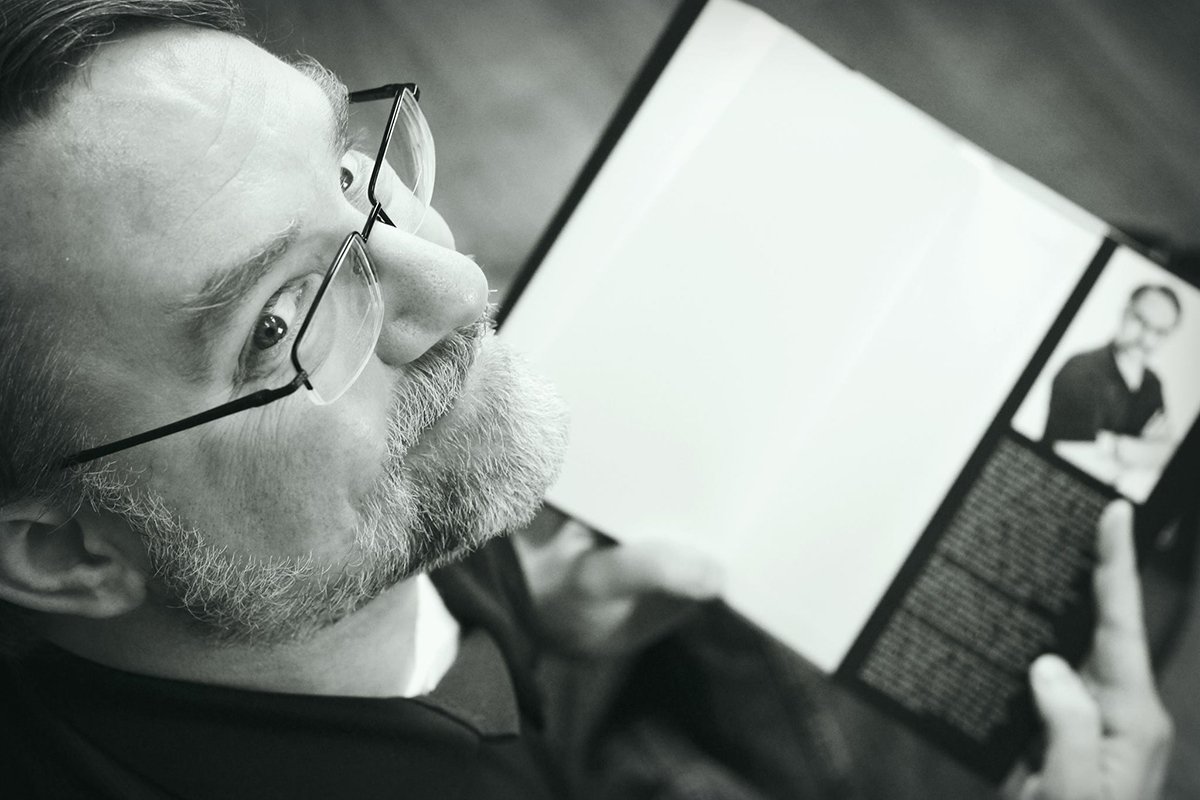
Photo: Garon Whited – Creator Of The Gripping Nightlord Series And Master Of Imaginative Fantasy Adventures
Breathtaking Fantasy With A Twist
Garon Whited shares insights on his Nightlord series, balancing humour and darkness, creating complex characters, intricate world-building, and dispenses actionable advice for aspiring authors in fantasy writing.
G Garon Whited is a masterful storyteller whose genius shines bright in the realms of fantasy and adventure. With his celebrated Nightlord series, Whited combines vampires, dragons, wizards, and alternate worlds into a breathtaking tapestry that captivates readers. Known for his humour, depth, and engaging narratives, his unique blend of urban fantasy and epic escapades evokes comparisons to greats like Anne Rice, Robert Heinlein, and Roger Zelazny. His imaginative literary worlds brim with magical realism, post-apocalyptic adventures, and alternate dimensions that both thrill and inspire. Garon’s talent lies not only in crafting intricate worlds, but also in crafting characters who resonate deeply with his readers. Prepare to be transported, as we delve into the mind of an author who expertly balances humour, darkness, and vibrant storytelling.
Garon Whited captivates readers with profound creativity, nuanced storytelling, and immersive worlds filled with vampires, dragons, magic, and unforgettable adventures.
What inspired you to write the Nightlord series?
Spite. Spite and disgust.
I was in a bookstore, reading something on the New Release shelf, and it was a vampire novel. One chapter in, I thought, “Maybe it gets better.” About a hundred pages in, I thought, “This isn’t getting better, but how can I look away from the horror of this train wreck?” At the end of the book, I thought, “I want those two hours of my life back. I could eat a pen and produce a better book tomorrow morning!”
Since I have delicate digestion, I wrote a book the hard way, instead.
How do you balance humour and darkness in your storytelling?
Humor and darkness go hand in hand. Humor springs up whenever the darkness closes in. Sure, it may be dark humor, but it appears as naturally as blood from a cut.
Which character in your books do you feel most personally connected to and why?
I’d have to say Eric, the protagonist. The Nightlord series is written from Eric’s point of view; it’s supposed to be his diary. I spend a lot of time thinking in his terms, working out what he does and why.
“Nightlord is a fantastic trip! It puts me in mind of a love-child by Anne Rice and Robert Heinlein raised by Arthur C. Clarke.” – Garon Whited, Nightlord: Sunset
What challenges have you faced while building such an intricate and fantastical world?
Internal consistency is always the hobgoblin lurking to my left. “Are you suuure her hair was blonde?” “Are you referencing something you wrote, or only thought about writing?” “How many of those things did you say there were? Which time?”
When you have three or four million words in one story, sometimes you have to go back and double-check!
How do you approach character development, especially for someone as complex as Eric?
Fortunately, due to the format, Eric’s character development is fairly linear. He changes over time due to the circumstances (and traumas) he faces. It’s a gradual thing, not a sudden switch due to One Inciting Incident. He doesn’t get handed a great quest and suddenly find himself thinking in terms of being a Chosen One. He gets handed problems and he looks for the easy way out—or for a way to make the problem become Never A Problem Again, depending. As he grows rapidly in power (and slowly in confidence), we can watch him change, but it’s always a reasonable, possibly even inevitable, and certainly a gradual transformation.
“The world moves at a geological pace, no pun intended. That is, there’s lots of standing still, doing nothing much, and then the occasional short, sharp yank. Once in a while, there’s a huge kaboom, and nothing is quite the same afterward.” – Garon Whited, Nightlord: Sunset
What does your writing process look like on a daily basis?
I sit in front of a computer with an open file. I read what I wrote yesterday, hate it, and rewrite it. Then, bearing in mind where I’m headed, I ask, “What did I plan to have happen next?” If I remember, great! If not, I invent something. I write it down.
Eventually, I get tired of hunching over a keyboard, so I lean back in my chair and read something. I check my email. I maintain a social media account. I frequently remember to eat, but it’s not guaranteed.
Then I ask, “Where was I? Oh, right.” And I get back to expanding a book.
Eventually, I get too tired to really focus on all the little things. I find myself having to go back and correct what I’m writing in order to make the sentences coherent. That’s when I realize it’s time for bed.
The next day, I do it again.
Are there any specific authors or works that have influenced your writing style?
I’d say Heinlein is a major player, along with Zelazny. And I generally re-read “The Silmarillion” every year.
How do you handle writer’s block when creating such detailed narratives?
This is one of the more common questions I’ve had in author interviews and I have to admit, it confuses me. Theoretically, I know what you mean. “Writer’s block” is supposed to be a condition where you can’t think of anything to write. I can imagine such a state, sort of, but I don’t really understand it.
To put this in perspective: I know authors who keep a notepad by their bed, just in case they wake up in the middle of the night with a great idea. I don’t. I can’t write down all my ideas. I don’t even try to catch them. One will flash up to me and I’ll go with it. If one disappears, I don’t mind. Another will be along in a minute. It’s like trying to catch all the raindrops in a storm. I just stand there and they hit me from all sides.
What advice would you give to aspiring authors who struggle with developing their first story?
Be prepared to give up on it.
By that I mean for you to not expect perfection. Don’t think your story has to be “perfect.” It has to exist. Write the story, the whole story, and then you can go back to edit it. Change it. Make it better.
Then comes the point when you’re debating whether or not to keep a comma. Do I need to have an em-dash or an ellipsis? That sort of thing. When you’re down to questioning your punctuation, give up. You’re done. Let the story go. Turn it loose. Publish it, let it live, let it take wing and go be itself!
Now you can focus on a new story. Because you’re a writer. That’s what you do.
What is one writing tip you would share with someone just starting their journey as an author?
It’s less of a writing tip than writer advice.
Not everyone will like your story. And that’s okay. You will find the people who do—or they will find it. Others will not care for it, or actively dislike it. Be prepared to ignore them utterly. Focus on your weird little niche and have fun with your tribe of weirdos.
How do you recommend new authors deal with critical feedback on their work?
Ignore them. I do. I haven’t read a review in over a decade. Frankly, I don’t care what other people have to say about the story I’m writing. If they don’t like it, they can go write their own!
However, if you’re looking for critical feedback to improve your writing, always bear in mind that someone else has an opinion. An opinion. You are the one who has to decide if their opinion is worth listening to.
Do you have any general advice for aspiring authors looking to make their mark in fantasy writing?
“Make their mark?” As in, “get famous?” Or be financially successful?
If fame or money are the goals, I would suggest paying far more attention than you like to marketing. It’s the least-fun portion of a book. Advertise. Sell. All that stuff. People can’t read what they can’t find—or don’t even know exists.
You wrote your story. Now go find people to read it! (Or, better yet, get someone else to go find those people while you write your next story.)