



Guy Boulianne Inspires Through Poetry, Prose, and Independent Publishing
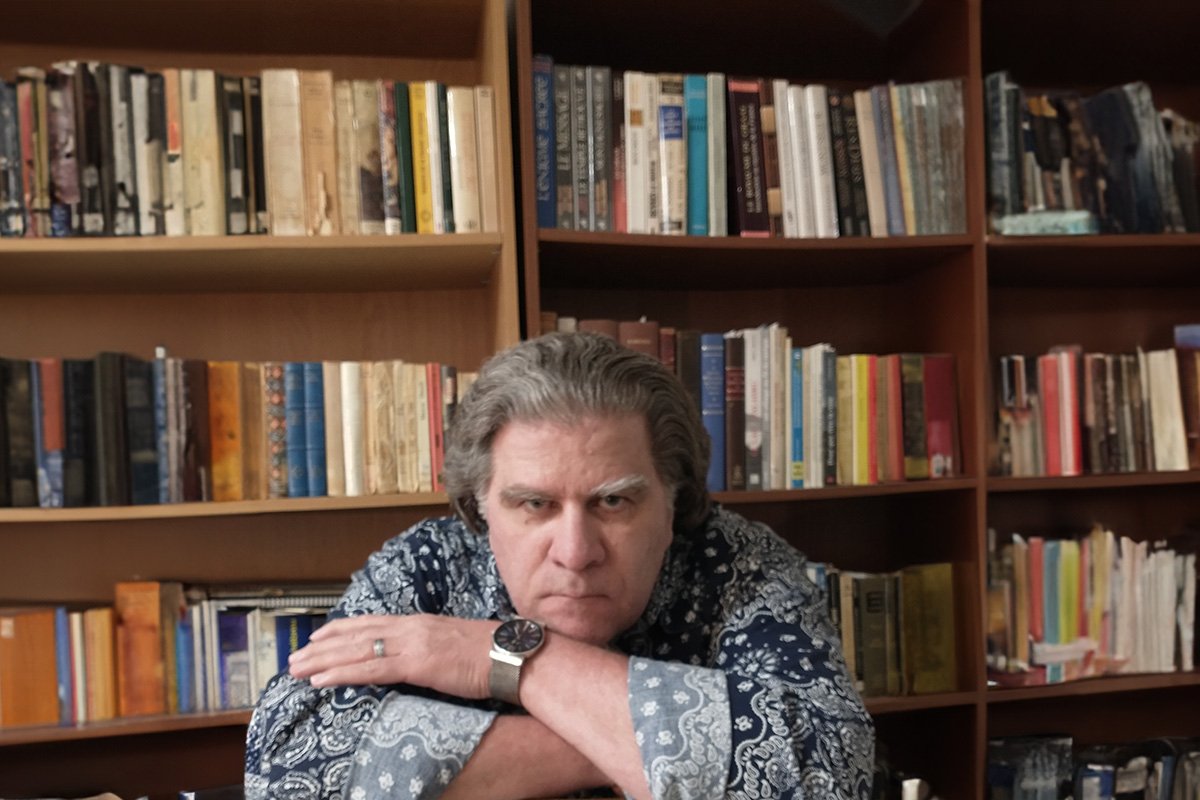
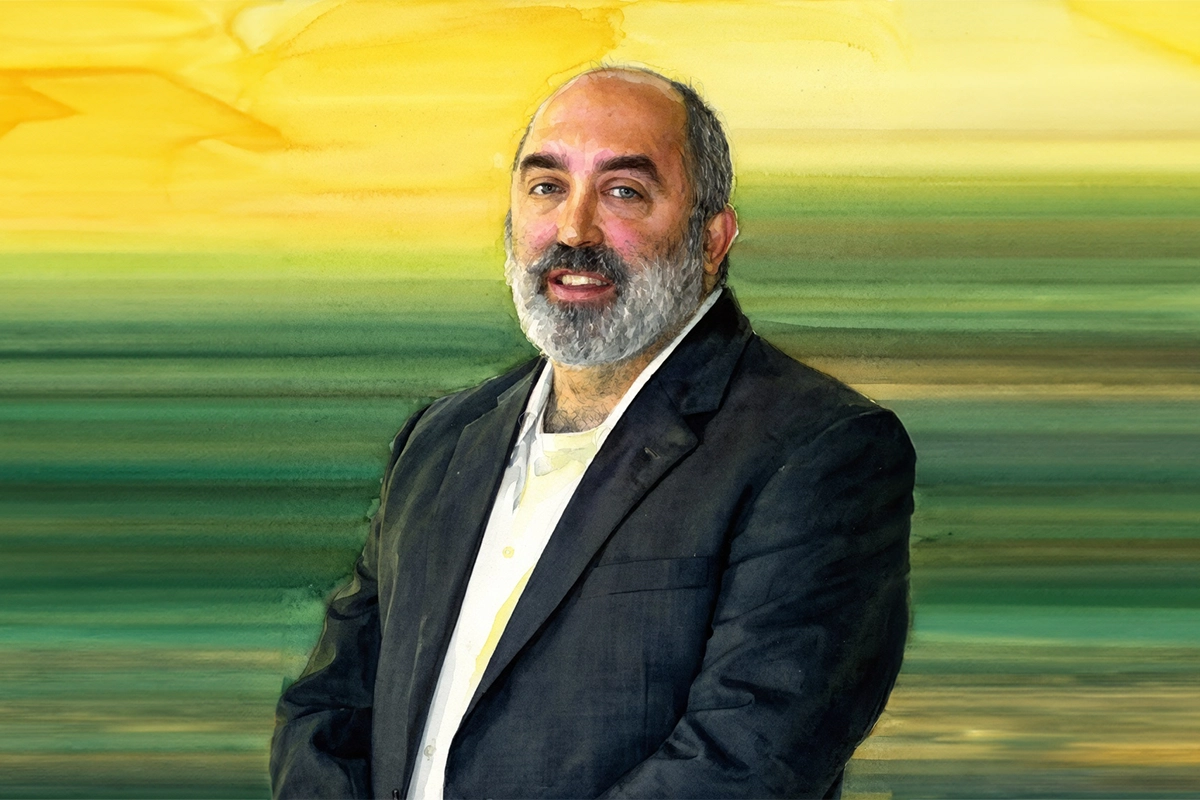
PHOTO: Guy Boulianne Shares His Passion For Literature, Art, And Independent Publishing
A Visionary Quebecois Author Who Bridges Literature, Art, and Truth With Integrity And Passion
Guy Boulianne’s journey spans poetry, historical essays, political commentary, and independent publishing, reflecting his commitment to truth, creativity, and cultural exploration that inspires writers and readers alike.
Guy Boulianne has built an extraordinary literary and artistic career spanning poetry, historical essays, political commentary, and visual arts. Mosaic Digest magazine is proud to feature his insightful interview, highlighting his dedication to truth, creativity, and intellectual integrity. From his early poetry collections to founding Éditions Dédicaces, Guy’s work bridges cultures, genres, and generations, reflecting a remarkable passion for literature, genealogy, and independent publishing. His unique voice continues to inspire writers and readers alike, making him a distinguished figure in Quebec’s literary and artistic community.
Boulianne’s work captivates with intellectual depth, artistic vision, and unwavering authenticity across diverse literary and visual mediums.
Your earliest publications were poetry collections—Avant-propos d’un prince fou (1983) and La bataille des saints (1987). What inspired your initial foray into poetry, and how have your creative impulses evolved since then?
I started writing poetry seriously at the age of 18. I could say that my inspiration came from Jim Morrison, the lead singer of the band The Doors in the United States. He was not only a singer, but a visionary poet. Later, the Ukrainian poet Meery Devergnas was a great inspiration for me when I read her book “Fêtes apocalyptiques” (Apocalyptic Feasts). My other inspirations come from Quebec poets like Michel Metthé, Germain Beauchamp, Ronald Després… not to mention Félix Leclerc. I had the honor of meeting Meery Devergnas during my first participation in the Montreal Book Fair in 1983. My poetry has always been socially and politically engaged, which is still reflected in my writing today. My poem “Préface aux dirigeants” (Preface to the Leaders) has been included in several publications in Europe and Quebec.
You gained experience as co-director of Galerie Frère Jérôme and later founded Galerie Imagine in Montréal. How did your immersion in the visual arts and gallery curation shape your writing and editorial approach?
My immersion in the visual arts didn’t really shape my writing and editorial approach. I was already writing when I met the director of the Frère Jérôme art gallery, Pierre Corbin, in 1983. However, it allowed me to evolve steadily in the artistic community. During this time, I was producing a television show for the Regroupement des auteurs-éditeurs autonomes (Grouping of independent authors-publishers), of which I was one of the administrators. My immersion in the visual arts therefore didn’t influence my writing, but it may have fueled it.
That said, I recently decided to get back into painting after a 40-year absence from that particular field. My works are currently exhibited and for sale in the internationally renowned virtual art gallery, ArtMajeur.
Between 2005 and 2009, you served as editor-in-chief of Éditions Mille Poètes (US). Can you share memorable challenges or triumphs from managing a multinational publishing house?
Indeed, the French-language publishing house Mille Poètes was registered in the state of Delaware in the United States. My fondest memory of this experience is when I brought together about twenty poets and authors in the beautiful city of Carcassonne, France, for a memorable day of poetry. The authors came from all over France, Belgium, and even Algeria and Morocco. We later published a report of this meeting in a book entitled “Les Mille Poètes à Carcassonne” (The Thousand Poets in Carcassonne).
In 2009, you launched Éditions Dédicaces. What motivated you to start your own publishing house, and how do you differentiate its mission from other publishers?
Dédicaces Publishing House was one of the pioneers in digital publishing and print on demand. This allowed us to expand quickly without having to manage a large inventory of books. Dédicaces Publishing House achieved rapid success. We participated in several book fairs in the United States, France, Switzerland, and of course, Quebec. As with Carcassonne, my favorite memory is when I brought together a dozen authors and more than 300 guests at the top of the Olympic Stadium Tower in Montreal to celebrate the publishing house’s fourth anniversary. This exceptional event was memorable.
Your works span surrealist tales, historical essays, translations, genealogical studies, and political commentary. How do you negotiate such a rich tapestry of genres while maintaining a consistent authorial voice?
All that matters to me is truth and facts, whether historical, genealogical, political, or social. What I hate most is people who manipulate information to serve their personal and political agenda. Therefore, my editorial work is consistent and integral to myself.
“All that matters to me is truth and facts, whether historical, genealogical, political, or social.” – Guy Boulianne
Your genealogy and ancestry seem central to your identity—you explore these themes across various platforms. How do personal history and family heritage influence the narratives you craft?
Niccolo Machiavelli wrote: “Whoever wishes to foresee the future must consult the past; for human events ever resemble those of preceding times.” You can’t predict the future if you don’t know your past, and this is true both on a personal level and at the level of an entire people. Nowadays, too many people are ignorant and as a result, they can be manipulated more easily by those who lead them. In 1682, Christina of Sweden wrote: “Knowledge of the past is of great help for the future.” She was right and I put that maxim into practice.
You earned the ‘Diplôme d’honneur de la francophonie’ at the Concours Europoésie UNICEF in 2010. What significance did this award hold for your work, and how did it shape your subsequent literary trajectory?
Indeed, I won this honorary diploma alongside other poets from Algeria, Belgium, Italy, Romania and Switzerland. As a reward, one of my poems was included in the anthology “Europoésie. Année 2010,” published by Éditions du Sandre the following year. I was given another honor when the historian of French-language literature, Réginald Hamel, decided to include me in the second edition of the “Dictionary of Poets from Here [Quebec] from 1606 to the Present Day,” a 1,360-page work published by the famous Guérin publishing house. Again, this hasn’t influenced my writing, but it’s always an honor to receive such awards.
“My poetry has always been socially and politically engaged, which is still reflected in my writing today.” – Guy Boulianne
Through your independent chronicling and membership in organisations such as the Nonfiction Authors Association and Independent Author Network, you engage deeply with ideas around ethics and journalism. Can you explain to us what this brings to you?
As a freelance writer and columnist, I am not only a member of the two organizations you mentioned, but also of the AuthorsDen platform in the United States. This gives me increased visibility. These organizations help me promote my editorial work. It is also true that I fully adhere to the Global Charter of Ethics for Journalists, which was adopted at the 30th World Congress of the International Federation of Journalists (IFJ) in 2019. This goes hand in hand with my personal philosophy of integrity and intellectual honesty.
Your commentary—on conspiracy theories, geopolitics, and cultural myths—has embraced digital platforms. How do you approach balancing rigorous research with narrative flair when addressing complex or controversial topics?
What is now called a “conspiracy theory” is often nothing more than a search for the truth. The term “conspiracy theorist” is often used for defamatory purposes and to discredit opponents. Personally, I attach particular importance to sources and references, and I deplore the fact that individuals publish nonsense and gossip without having done the proper research. Such irresponsible actions greatly harm genuine researchers and investigative journalists. Economist Martin Armstrong wrote: “I do not think we need any wild theories that can easily be discredited, and then because this is discredited, they apply it to everything else. My concern is that a part of a deliberate plan to put out false information, one strategy is to do precisely this and then discredit everything else.”
For your fellow emerging authors—those grappling with genre-hopping, independent publishing, or blending personal history with broader themes—what guidance would you offer regarding staying authentic while navigating the literary and editorial landscape?
I would tell all these authors to be themselves. To be authentic in your writing, you have to be authentic to yourself. That’s the recipe!