




Irine Wittig’s Journey Through Loss, Resilience, And The Quest For Belonging
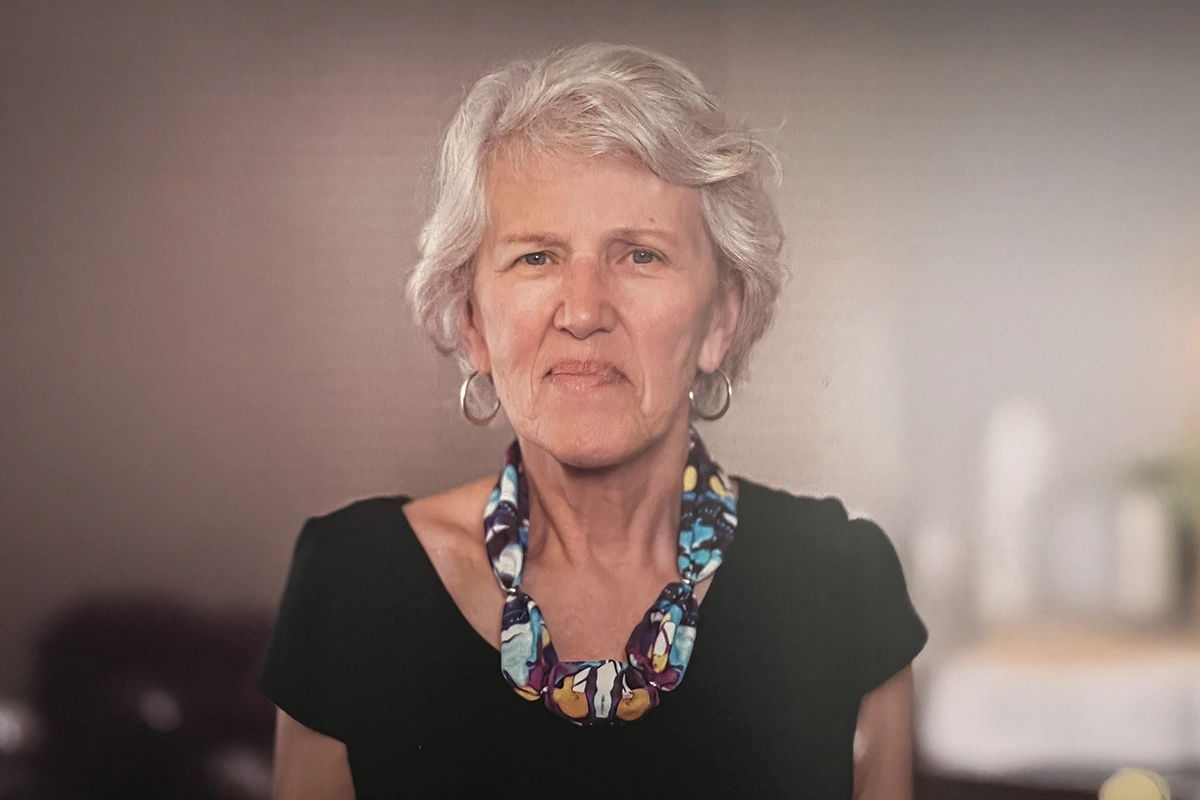
Exploring The Depths Of Human Experience Through Storytelling
Irine Wittig shares her inspirations, creative process, and the profound connection between her family’s history and her compelling narratives about loss and belonging.
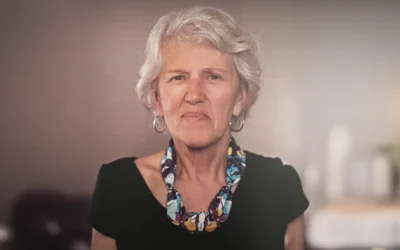
I rine Wittig’s journey from her early life in liberated Rome to her roles as a writer and ceramic artist is a testament to the profound stories that shape our identities. With a rich tapestry of experiences that includes living in Argentina, New York, and various European countries, Irine brings a unique perspective to her work. Her novels, such as All That Lingers and Almost Home, delve deep into the themes of displacement, resilience, and the quest for belonging, making her a voice that resonates with the complexities of the immigrant experience.
In this exclusive interview with Mosaic Digest, readers are invited to explore the heart and mind of an author who artfully captures the nuances of history and personal narrative. Irine’s ability to weave historical accuracy with emotional storytelling invites us to reflect on the past while considering its impact on our present and future. Her work transcends mere storytelling; it seeks to honor those who have experienced loss and longing, encouraging a deeper understanding of the human condition.
Join us as we celebrate the literary contributions of Irine Wittig and gain insight into both her creative process and the inspirations behind her compelling stories. As we turn the pages of her life and work, we are reminded of the power of words to heal, connect, and inspire.
Irine Wittig’s storytelling beautifully captures the complexities of the immigrant experience, weaving historical depth with emotional resonance.
Highlights from the Interview:
- Irine’s upbringing in a community of Holocaust survivors shaped her writing.
- Her novels reflect the intricate blend of personal history and broader themes of displacement.
- She emphasizes the importance of historical accuracy in her storytelling.
- Irine’s background in ceramics influences her visual creativity as a writer.
- She discusses the challenges of exploring family history in fiction.
What inspired you to write All That Lingers, and how did your family history influence the story?
I was born during the war, in a community of Viennese women who had fled to Italy. We emigrated to Argentina, and then New York, where I grew up hearing stories of war and emigration, but also of the lives they’d left behind in cities and countries they’d one loved. In my novel, I tried to capture a bit of all of that. In my main character, Emma, I imagined what my grandmother’s life might have been like had she stayed. I incorporated various details from my own family’s history.
How did your experience living in Europe and working for the Department of Defense shape your perspective as a writer?
My years in Europe as a student in Germany and expat in Italy and Switzerland opened my eyes to how other countries view the world. In Naples, as a small-item buyer for the Navy, I spoke Italian, ordered fuel in German, and sent written orders in English. In Switzerland, I practiced my French and wished I still remembered the Spanish I’d spoken as a child in Argentina. It all made me feel that if I learned the language, I could live anywhere.
You’ve written both historical fiction and children’s books — how do you approach writing for such different audiences?
Different times and circumstances have inspired my writings. Eager to share the joys of painting on ceramics the way the Italians do, I wrote The Clay Canvas. Designsthat I originally created for ceramics, led to paper illustrations which then led to writing and illustrating An Amusing Alphabet. I enjoyed writing so much, that I was inspired to write a novel based on the many stories I’d heard as a child. Dreams and memories were the inspiration for some short stories. Playing word games with my youngest granddaughter inspired the interactive Let’s Play See You Later, Alligator.
In The Best Thing About Bennett, you explore themes of reinvention later in life. What drew you to that topic?
The Best Thing About Bennett came about because I always imagine characters before I imagine plot. So one day, I imagined a middle-aged woman, used to her isolation, suddenly finding herself without a job. What brought her to that point, and how would she change her life now that she was forced to, is what I set out to explain and describe. Her experiences in Uganda were influenced by an experience I had there.
kind of research did you do for Almost Home and what was the most surprising thing you uncovered?
Almost Home was meant at first to be a compilation of all the information, documents, letters and mementoes I had on my uncle, whose loss was the tragedy in my family that I have felt all my life. It was only a decade ago that I learned about the previously classified Ritchie Boys intelligence efforts. Because of a major fire of Army records in 1973, little information was available. Research I did at the National Archives, and correspondence with several people who knew about them began to fill in some of the missing pieces. The most meaningful discovery was made when my husband and I traced his war time service in Alsace and Germany, and we found the approximate place his body was found. It made it clear me that his death had not been accidental, though we will probably never know more than that.
As a ceramic artist and teacher for two decades, how has your visual creativity influenced your writing process?
As I am basically a visual person, I try, in my fiction, to create a sense of place, whether in describing a city or the specifics of a room.
How do you balance historical accuracy with emotional storytelling in your novels?
In historical fiction, I feel it is essential that the historical details be correct. I hoped, in All That Lingers, to evoke empathy with the characters’ hopes and struggles and the difficult choices they had to make; and to make readers ask themselves how they would have acted in their place.
Which character that you’ve written do you feel the strongest personal connection to, and why?
8. In All That Lingers it would be Emma, who, like my grandmother, fully understood “all that lingers.” But Emma was also like my mother, who like a willow tree, was bent by the wind, but never broke. She was a symbol of how hope is the essence of resilience. But I also must admit to a fondness for Friedrich, who, like many of us, understands his flaws, and even when he wants to do better, doesn’t quite manage it.
What do you hope readers take away from your stories, especially those rooted in war and displacement?
I hope that readers will learn about Austria’s long unacknowledged role; that they’ll learn that war leaves scars that may never quite heal; that hiding the truth only adds to the pain; and that decency and kindness can flourish even in the worst of circumstances. Resistance may only be possible in small steps, but saying and doing nothing is complicity.
What advice would you give to aspiring authors who want to explore their own family history in fiction?
Exploring one’s own family history in fiction is tricky. You step into dangerous territory if you make your parents, siblings, or other direct relatives, the main characters. What you include or leave out matters. Honesty and correctness is essential but not necessarily desirable if those relatives are alive and could be hurt.
Decide what it is that you really want to communicate. Is it the historical circumstances the characters find themselves in, or is it their relationships with one another? Invented characters may work just as well.
Editor’s Note
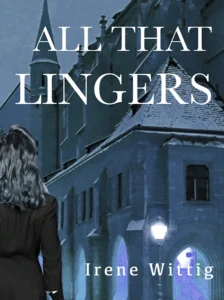
Irene Wittig’s “All That Lingers” masterfully weaves a poignant narrative of friendship and resilience against the backdrop of war. With richly developed characters like Emma, Sophie, and Friedrich, the story captures the pain of loss and the hope of healing. Wittig’s insightful prose and historical depth make this novel a standout, leaving a lasting impression on readers. Highly recommended!