










Jane Doucet Writes With Humour, Heart, and an Unapologetic Embrace of Life’s Messy Truths

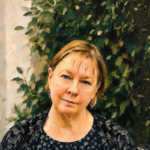
PHOTO: Author Jane Doucet, photographed in Halifax, Nova Scotia, brings laughter and heart to the stories women want — and need — to hear.
A Celebrated Canadian Novelist Explores Midlife, Motherhood, And Reinvention With Wit And Warmth
Canadian author Jane Doucet crafts sharply funny, emotionally rich novels that spotlight midlife women navigating love, loss, and identity with authenticity, humour, and deeply relatable storytelling.
Jane Doucet writes with a wickedly delightful wit, fearless honesty, and a heart full of empathy. Her novels, unapologetically humorous and deeply human, offer more than just entertainment — they reflect the real, messy, beautiful complexities of life. Whether tackling motherhood indecision, rekindled dreams in midlife, or the quiet resilience of grief and reinvention, Jane’s stories never shy away from the truth. Instead, they embrace it with laughter, insight, and a kind of warmth that lingers long after the final page.
At Mosaic Digest, we celebrate storytellers who give voice to the unspoken and the underexplored — and Jane does exactly that. With The Pregnant Pause, she filled a literary gap for readers craving a smart, funny take on modern motherhood. Fishnets & Fantasies charmed us with its frank portrayal of later-life entrepreneurship and intimacy, while Lost & Found in Lunenburg blends her signature humour with emotional depth as it revisits familiar characters and navigates new beginnings. Her work is a quiet rebellion against ageist stereotypes and tidy endings, and in that, it feels both refreshing and necessary.
As Jane prepares to venture into cozy mystery with her upcoming novel Blood Typed, she continues to prove that reinvention isn’t just possible — it’s irresistible. We’re thrilled to share our conversation with this gifted novelist and celebrate her contribution to contemporary Canadian fiction.
Doucet’s novels are refreshingly real, boldly funny, and deeply resonant — a joy for readers craving substance with their smiles.
Lost & Found in Lunenburg marks your third novel and revisits the beloved character Rose Ainsworth. What inspired you to bring her back, and how has she evolved since The Pregnant Pause?
In The Pregnant Pause, Rose was turning thirty-seven and tormenting herself (and those around her!) trying to decide whether to have a baby. I wrote the first draft of that novel when I was in my mid-thirties, and it was inspired by my own experiences of motherhood indecision at that time in my life. I started writing Lost & Found in Lunenburg when I was fifty, after a romantic breakup. So, I decided to explore midlife love, loss, and new beginnings with fifty-year-old Rose in that novel. I hope readers will notice the ways in which Rose has matured over those thirteen years.
Your transition from seasoned journalist to acclaimed novelist was sparked by not finding the kind of book you wanted to read. What were the biggest surprises you encountered in shifting from fact-based writing to fiction?
I would say less of a surprise and more of a delight, in terms of being able to stretch my imagination to limits I didn’t think were possible. I’m very lucky to have an editor, Whitney Moran, who is a dream collaborator at Nimbus Publishing’s fiction imprint, Vagrant Press. Her suggestions for enhancing characters and plot are incredibly insightful. If I hit a creative closed door during revisions, I know Whitney will be there to help walk me through it.
Many readers have praised the balance you strike between humour and serious topics like grief, aging, and sex. How do you find that sweet spot where a story remains both light-hearted and deeply resonant?
That’s a great question! There’s no secret sauce. I guess it stems from my own sense of humour, and how I view the world. Having a sense of humour helps me process ordinary, sad things that happen — a divorce, the death of a parent, the end of a friendship or a job. Also, I love reading novels with quirky, funny characters, such as Dear Mrs. Bird, Bridget Jones’s Diary, and Janet Evanovich’s Stephanie Plum series. It follows, then, that I would want to write the same kind of books that I love to read. Writing humour is hard, but also loads of fun.
The setting of your books — particularly Lunenburg — plays almost like another character. What role does place play in your storytelling, and what do you hear from local readers about seeing their community in your fiction?
I was a first-time author with The Pregnant Pause, and I didn’t realize that I could showcase setting. For that novel, I didn’t take a single fiction-writing workshop; I just winged it and wrote. When I was midway through writing Fishnets & Fantasies, which is set in the tiny coastal community of Lunenburg, Nova Scotia, on Canada’s East Coast, I decided to take my first fiction workshop. The instructor said, “Weather is setting.” That hadn’t occurred to me, and Nova Scotia gets hit by hurricanes and tropical storms. So, in addition to describing the geographic landscape of Lunenburg, which is stunning, I tossed in a storm. I can tell you that local readers adore real details of places they know and love. But you’d better get them right! I live in Halifax, an hour’s drive from Lunenburg, and I did a lot of in-person research there.
Your novels feature dynamic older protagonists living fully — including exploring sexuality and ambition. Was this a conscious challenge to stereotypes about aging, especially in women?
Yes and no. I tend to write my novels with protagonists who are my age, which means I’m writing about experiences I’m having, or that my friends and family are having. So while I never say to myself, “I’m going to challenge stereotypes” before I start writing, I seem to end up doing so. I’m a proud feminist, so I’m thrilled when readers tell me they love reading about older female characters who don’t just sit around tatting doilies and doing crosswords. Not that there’s anything wrong with that, but at almost fifty-seven, I’m still working as a freelance journalist, writing novels, caring for a senior dog, attending exercise classes, in a loving partnership with my husband, looking forward to my stepdaughter’s upcoming wedding — life doesn’t stop at fifty, or sixty, or at all, if you’re healthy and you don’t want it to.
Writing a third novel brings both experience and expectation. How did the creative process for Lost & Found in Lunenburg differ from your first two books?
There’s more pressure to be successful, certainly. I self-published The Pregnant Pause in 2017, and that was a tremendous learning curve. I wore many hats: writer, publisher, project manager, event organizer. I hired a small editorial team: editor, designer, proofreader, launch publicist. It was an enormous amount of work, and I had a full-time communications job so I did it all in my spare time. With self-publishing, the main pressure is what you put on yourself. When you have a traditional publisher, as I now do, you want your books to sell well to help their bottom line. With each novel, I’ve gained more experience, so dare I say my first drafts have gotten better? You’d have to ask my editor!
With your background in journalism, do you find that your reporting instincts still shape your fiction — whether in research, dialogue, or character development?
For research, absolutely. For Fishnets & Fantasies, I interviewed the owner of a small-town sex shop and a waitress, since I had never owned a business or waitressed. Many of the details they gave me made it into the story. Even though it’s a novel, I want my characters to be believable. For Lost & Found in Lunenburg, I read several memoirs written by widows. As for dialogue, my characters speak to me, and their voices and thoughts just pop into my head.
You’ve described yourself as a “lone wolf” when it comes to writing, yet you praise the Writers’ Federation of Nova Scotia as your tribe. How have those connections shaped your career as a novelist?
I’m a lone wolf in that I’ve never been part of a writing group. But I have taken a few writing workshops through the Writers’ Federation of Nova Scotia, and I’ve taught a few, too. I’ve made wonderful friends through that organization. But I write alone, and I don’t share a work in progress with anyone but my editor.
You’re currently working on a cozy mystery — a new genre for you. What can readers expect from this project, and how do you approach writing something outside your usual style?
Readers can expect more of my same humour and heartwarming, quirky characters — but with a twist: murder! I’ve been reading mysteries since I was young; Nancy Drew was my first foray into that genre. Then I read my mother’s Agatha Christie books. I adore Richard Osman’s The Thursday Murder Club series, and I’ve read all of Louise Penny’s Three Pines series. As long as the murders aren’t gruesome, and there are fun characters and some humour, I’m in. That’s what I’m aiming for with Blood Typed, my murder mystery, which Vagrant Press is releasing in May 2026. It has been incredibly hard (red herrings, especially), but so much fun. I’m a pantser, not a plotter, which means I don’t have everything worked out when I start writing. In fact, I’ve waffled on “whodunit” several times! I’m almost done the first draft, so I’d better hurry up and figure it out soon.
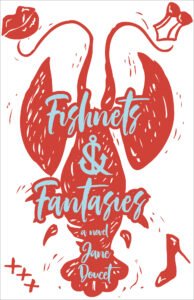
FISHNETS & FANTASIES: A NOVEL by Jane Doucet
Jane Doucet’s FISHNETS & FANTASIES is a witty, warm-hearted triumph that proves it’s never too late to chase your wildest dreams. Wendy Hebb’s bold decision to open a sex shop in her quaint Nova Scotia town sends ripples through her marriage, community, and sense of self. With a cast of delightfully flawed characters and sharp, irreverent humour, this novel explores love, secrets, and second chances with insight and charm. A fresh, fearless tale of reinvention, Fishnets & Fantasies is as daring as it is delightful—a celebration of desire and defiance at any age.