











Discovering The French Revolution With Steven Lazaroff
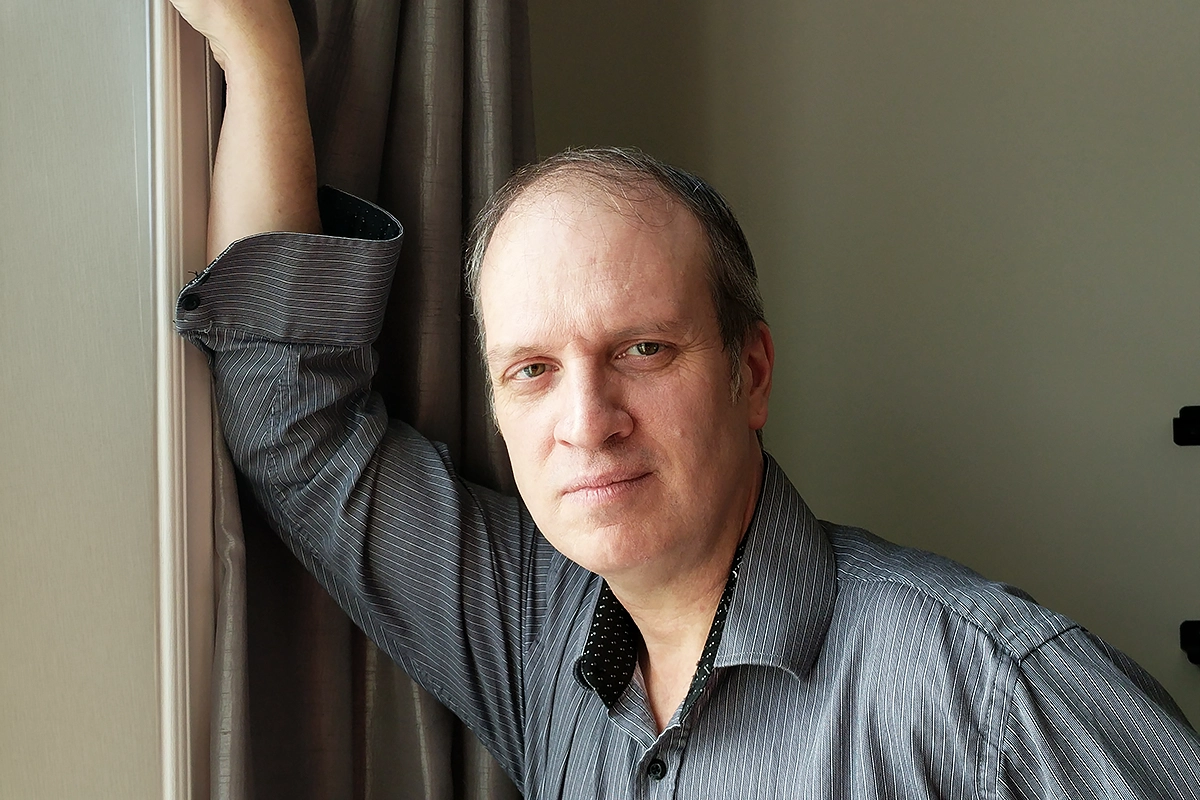
Photo: “Steven Lazaroff – Montreal-based author and historical aficionado transforming the French Revolution and time travel into unforgettable storytelling.”
How An 18th-Century Powder Keg Inspired An Unforgettable Story
Steven Lazaroff, author of A Question of Time, blends historical fiction with time travel. His meticulous research and humour bring the French Revolution alive while exploring the ripple effects of rewriting history.
S teven Lazaroff’s passion for history and storytelling shines brightly in his work. A Montreal-based author with a flair for weaving historical accuracy with gripping narratives, Lazaroff takes readers on extraordinary journeys through time. Known for his meticulous research, sharp wit, and engaging writing style, he has redefined historical fiction with time-travel adventures that delve deep into the human experience. His debut novel, A Question of Time, masterfully blends the explosive era of the French Revolution with the wonders of alternate history, leaving readers questioning what they might do if faced with the same incredible circumstances as his protagonist, Johnathan Lambert. With his love for anthropology, military history, and cosmology, and the story-driven approach to history, Lazaroff’s work not only entertains but enlightens. His upcoming sequel, A Time For Change, promises even higher stakes, further cementing his reputation as a master of the genre. Truly, Steven Lazaroff is a historian of stories, breathing life into the past while asking us to imagine the infinite possibilities of “what if”.
Steven Lazaroff skilfully combines history and imagination, delivering gripping time-travel adventures laced with wit, heart, and unparalleled attention to detail.
What inspired you to write “A Question of Time”?
I have always been a fan of L. Sprague de Camp’s story ‘Lest Darkness Fall’ – A story of a relatively modern man, from 1938, who inexplicably finds himself transported back in time to 535 AD (or for those of you who prefer CE) in the Eastern Roman Empire. Many stories have sprung from De Camp’s initial foray into this form of alternative history writing. Notable writers who were influenced include Harry Turtledove, who writes many offshoots of alternative history. Examples include ideas such as the Byzantine Empire surviving the Fall of Rome or how, in the middle of World War Two, the earth is invaded by a hostile alien species. Other writers influenced by De Camp include Frederik Pohl who wrote “The Deadly Mission of Phineas Snodgrass”, a thought-provoking story of a man that travels back to 1 BC and teaches modern medicine, causing a population explosion. It ends with the fantastically overpopulated alternate timeline sending someone back to assassinate the title character, allowing darkness to fall for thankful billions. A similar story style to De Camp is “Outlander” written by Diana Gabaldon and now adapted for television by Ronald D. Moore. A story of Claire Randall, a married World War II nurse who, in 1945, finds herself transported back to 1743 Scotland, where she encounters the dashing Highland warrior Jamie Fraser and becomes embroiled in the Jacobite risings of Scotland. It was this most recent story that convinced me that a similar tale could be told with a focus on the ‘Ancien Regime’ era of France.
The French Revolution is one of those pivotal moments where everything could have gone differently, and nearly did, several times. I started wondering: what would happen if someone from our time landed in that powder keg with knowledge of what was coming? Would they try to stop it? Could they? And what would that do to the present? The idea wouldn’t leave me alone, so I finally had to write it.
“The human stories are what hook me, not the battles or the kings.” – Steven Lazaroff
How do you balance historical accuracy with creative storytelling in your books?
I treat history as the scaffolding. It has to be solid, or the whole thing falls apart. But once that’s in place, I give myself permission to play. The real people, the dates, the political tensions; those stay accurate. What my fictional character, Lambert, does within that framework is where I get to have fun. I am especially conscious of the impact of the changes Lambert introduces. The Butterfly effect, paradox and the law of unintended consequences. I think readers can sense when you’ve done your homework, and it lets them trust you when you take creative liberties. There are several characters in my novel that were real people of History. Breguet, Cugnot, Turgot, de Lavoisier amongst others. All had to be meticulously researched.
Can you share your process for researching historical events for your novels?
It usually starts with obsessive reading of primary sources when I can get them, academic histories, biographies. I’m a bit of a research hoarder; I collect far more than I’ll ever use. Then there’s the travel. I’ve walked the streets of Paris, stood in Versailles, visited the places where these events actually happened. There’s something you can’t get from books. The way light falls in a room, how far it actually is from one place to another, the feel of cobblestones. I’ve been very fortunate to have visited Paris many times in my life, and each time, I discover something new. For a look at my research notes that I’ve meticulously kept, you can see them here.
“Time travel lets me ask questions straight historical fiction can’t.” – Steven Lazaroff
What challenges did you encounter while writing about the French Revolution?
The sheer complexity of it. There were so many factions, so many shifting allegiances, so many people who were heroes one day and on the guillotine the next. Keeping track of who was doing what to whom, and making it accessible to readers who might not know their Girondins from their Jacobins, was a real juggling act. I did not want to get anything wrong, down to the practice of scratching one’s nail on a door frame in Versailles instead of knocking. These small details paint the larger picture. they bring life to a world that others might see as stale or academic. That being said, I also had to resist the urge to include every fascinating detail I’d uncovered. Sometimes you have to kill your darlings, even if those darlings are really interesting facts about 18th-century bread prices.
How did you develop the character of Johnathan Lambert?
Lambert started as a vehicle, a modern person I could drop into the past. But he quickly became his own man. I gave him a historian’s knowledge but not a hero’s temperament. He’s not trying to save the world; he’s just trying to survive, and later, to protect the people he comes to care about. I think that makes him relatable. Most of us aren’t action heroes. We’d be terrified and improvising, just like Lambert. But I need to emphasize, the story just doesn’t revolve around Lambert. There is an inspector Nadeau of the Central Directorate of the Judicial Police running around in the modern era, trying to find out what happened to Lambert.
Do you have a favourite historical period or event that you enjoy writing about?
The 18th century has a special grip on me. The tension between Enlightenment ideals and brutal reality have always fascinated me. But honestly, I’m drawn to any period where ordinary people got caught up in extraordinary circumstances. The human stories are what hook me, not the battles or the kings.
How has your extensive travelling influenced your writing?
Enormously. When you stand where history happened, it stops being abstract. I’ve walked battlefields, wandered through ruins, gotten lost in old cities. This summer, I spent two entire weeks in Rome. When checking into my hotel room, the hotel clerk seemed surprised that a tourist would spend fourteen days in one spot. I needed to take my time at every monument, every ruin. Those experiences feed directly into my writing. the sensory details, the atmosphere, the sense of place. Plus, travel has a way of reminding you that people in other times and places weren’t so different from us. They loved, they schemed, they made terrible jokes. That’s what I try to capture.
What drew you to combine time travel with historical fiction?
Time travel lets me ask questions that straight historical fiction can’t. What would a modern person actually do with knowledge of the future? How would they cope without antibiotics, Google, or indoor plumbing? And from a storytelling perspective, it creates natural tension. Lambert knows what’s coming, but he can’t just announce it without sounding insane. It’s a fun box to write yourself into.
Are there any personal experiences that influenced specific scenes in your books?
Several Canadian history courses I’ve taken fed me with backstories I included in “A Question of Time.” The references to Lambert’s Quebec, or the Nouvelle France of yesteryear is a great springboard. Ive visited the Latin Quarter in Paris multiple times. Bringing Lambert into this part of Paris early on in the book was born directly from my many walks in this part of Paris. I’ve taken the SNCF TGV many times, and those experiences directly influenced the opening scene of the book
How do you maintain humour and sarcasm while addressing serious historical themes?
I think humour is how humans cope with the unbearable. Even in the darkest times, people made jokes. Probably especially then. Lambert uses sarcasm as a defense mechanism, and I think that feels authentic. The Revolution was horrific, but the people living through it still had to eat breakfast and deal with annoying colleagues. Letting those lighter moments breathe makes the serious parts hit harder.
What can readers expect from the second book in the “A Question of Time” series?
The sequel is called “A Time For Change.” You can expect higher stakes on both ends of the timeline. Lambert has built a life in the 18th century now. He has people to protect, and his attempts to prevent the Revolution are making him powerful enemies. Meanwhile, Agent Nadeau’s modern world keeps shifting under his feet every time Lambert changes something in the past. The question becomes: can Lambert save his new family without destroying everything Nadeau knows? And does Lambert even want to be found anymore?
What advice would you give to other authors interested in exploring historical fiction?
Do the research, immerse yourself in it, then forget you did it. By which I mean: know your period inside and out, but don’t lecture your readers. Show, don’t tell. The details should feel lived-in, not shown off. And find the human stories. The weird, funny, heartbreaking moments that don’t make it into the textbooks. That’s where the good stuff is.