








Aaron Ryan Shines Through His Literary Universe of Faith, Sci-Fi, and Post-Apocalyptic Narratives
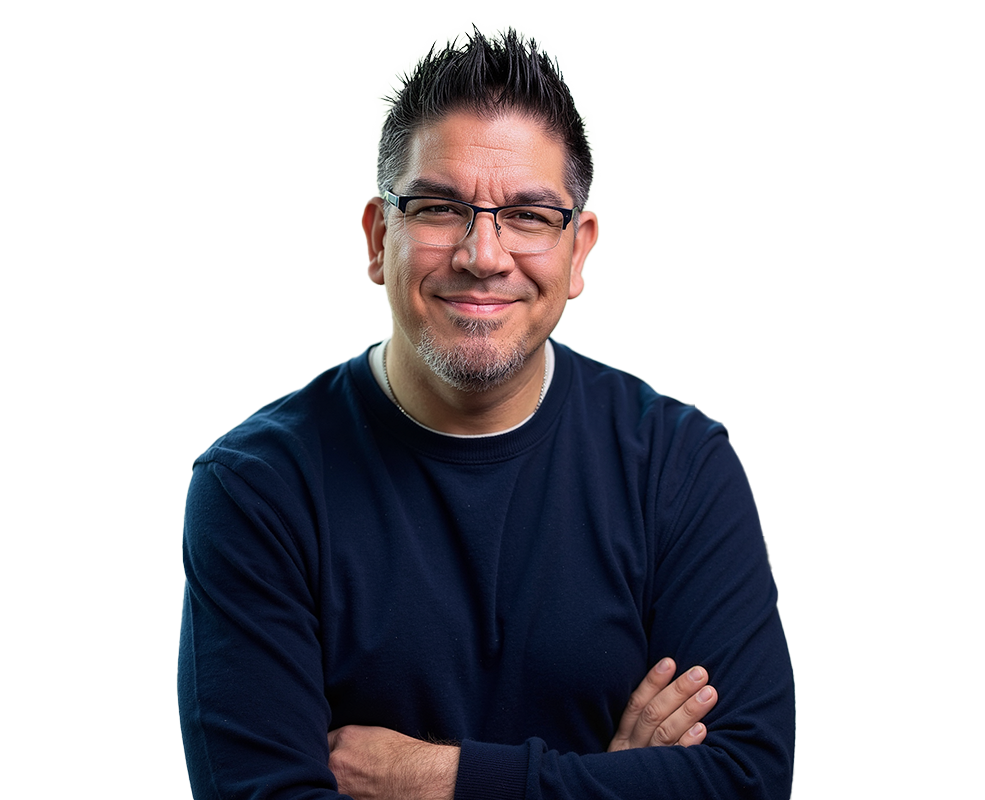
Photo: Aaron Ryan: Master of Imagination, Genre-Bending Author, and Faithful Storyteller Charting New Horizons in Literature
Exploring Faith and Fiction Through
Aaron Ryan discusses balancing faith and fiction, the creative process of writing, world-building, and the inspiration behind his diverse works spanning sci-fi sagas, Christian dystopias, children’s books, and business guides.
A aron Ryan is a creative force in contemporary literature. With an impressive repertoire spanning genres such as sci-fi, dystopian fiction, business guides, children’s literature, and more, Ryan has established himself as a master storyteller with a gift for crafting immersive worlds and relatable characters. His bestselling Dissonance post-apocalyptic alien invasion series sits alongside Christian-themed dystopian works like The End, and brilliantly balances nuanced themes of faith with gripping narratives of survival. From his thrilling Talisman series to his whimsical children’s books like The Sword of Joy, Ryan’s ingenuity and versatility as an author stand out, inspiring readers of all ages and interests.
Not only is Aaron Ryan a remarkably accomplished author, but he’s also a voice actor, speaker, and multi-talented creator who brings a cinematic flair to his writing. His passion for storytelling was ignited at an early age, and his diverse life experiences—ranging from the arts to business—have imbued his works with authenticity and dynamic perspectives. A lifelong devotee of J.R.R. Tolkien’s masterful The Lord of the Rings, Ryan follows in the footsteps of great world-builders, crafting tales rich in depth, heart, and imagination.
Here at Mosaic Digest, we celebrate creators who push boundaries and explore new horizons. Aaron Ryan has carved his own path by fearlessly delving into multiple genres and themes, inspiring readers and fellow authors alike. This interview is a glimpse into the mind of an author whose creativity knows no limits. Whether you’re already a fan or new to his work, Ryan’s passion for storytelling shines brilliantly in everything he creates, and we are thrilled to showcase his insights in this exclusive feature.
Aaron Ryan’s unparalleled creativity, genre-spanning talent, and heartfelt narratives solidify his place as one of today’s most versatile authors.
What inspired you to explore Christian dystopian fiction and themes in your writing?
“The End“ is an inherently Christian dystopian saga and I really wanted to write something in a post-apocalyptic setting. I remain tremendously inspired by the “Left Behind“ book series of the 90’s, and wanted to write something somewhat similar, but with a cruel twist. But many of my novels have a running Christian theme of hope, or faith. It’s the one thing that you cling to when all else is taken away.
How do you balance faith-based messaging with the darker aspects of dystopian storytelling?
One of the best phrases I’ve ever heard uttered in a book or movie is uttered by President Snow in the Hunger Games… He said: “hope! It is the only thing stronger than fear.“ Hope keeps you going when all else is lost… That glimmer of hope that one day there will be change.
Can you describe the creative process behind developing characters like Sage Maddox and Nero?
Sure! Inherently, I am a cynic at heart. I wanted to channel a lot of that into Sage. Also, how many times do we think we are doing God‘s will when, frankly, we are just doing what we want to and assuming that God will bless that and that it is according to his wishes. We can delude ourselves quite creatively. Unfortunately, that is what is happening to Sage here.
With Emperor Nero, I really wanted him to be absolutely disgusting. A totalitarian despot. A deluded technotrillionaire who has all the power, resources, armies, etc., at his disposal. And I wanted to surround him with people who were intent on taking him down. I needed an antagonist who was wretched, utterly wretched, and absolutely frightening.
What kind of research goes into creating the intricate worlds and scenarios in your novels?
I really love world-building, but I love world-building that is grounded in reality. I love verisimilitude and incorporating that into my novels. Thus, I structure a lot of the passage of the characters by using Google maps. Google street view and Google aerial view really helped me enable the characters to thread their way through actual landmarks and actual street names and cities. This inherently grounds it in reality from the start because those landmarks and thos streets and cities exist today and people can walk where their favorite characters walked. Or they live there or have lived there and so it’s instantly relatable and attainable.
How did your early experiences, such as writing “The Electric Boy,” shape your passion for storytelling?
I remember being assigned that project in 2nd grade and loving the creation process. Even more so, I absolutely loved holding it in my hands as a finished product and being able to say, “I did this!” it was legacy. It was a project completed that will stand for all time and it’s something that I deeply cherish as one of my earliest works that showed that I could in fact do this.
How do your diverse life experiences influence your approach to writing fiction and nonfiction?
I think having had the luxury of so many careers over the years enables me to have a lot of experience in different capacities and functions. It’s also really supplied me with a plethora of skills across multiple trades, such as writing, of course, but also graphic design, management, marketing, and business acumen. That has helped me treat my writing – and all my other creative pursuits – as a business rather than a hobby.
What challenges have you faced when writing stories that incorporate both faith and speculative fiction?
Well, obviously, society in general is fairly hostile to Christianity. And in many senses, we have done that to ourselves by being poor witnesses. So I knew at the outset that writing such a saga that incorporates Christianity: overt, Bible,-believing Christianity, would not be met with 100% success by the masses. I had to be prepared for rejection going into it.
What led you to write across such varied genres, including children’s books, sci-fi, and business guides?
I write what I feel compelled to write when I feel compelled to write it. This most recent book that I published (“Talisman: Nexus”) is one of the hardest that I’ve ever written – and it required so much creativity and so much focus. I experienced true writer’s block, and I usually don’t ever experience that. At one point during the fleshing out of my latest novel, I had to simply abandon it and pursue something else that I felt God had placed on my heart, and that was a non-fiction book about being a daddy and how much I love my sons. So I put the first project on hold and pursued and published the second one, and then returned again to the first one. But they are totally different in terms of genre and tone. I really enjoy being a prolific author, but also a diverse one, because that demonstrates a broad reach and a solid handle on producing books that are diverse in tone: it demonstrates flexibility and ability to write in various styles – and variety is, of course the spice of life! 🙂
How has your voice acting and background in performing contributed to your writing style?
I am much more inspired cinematically than literarily. Voice acting is a form of theater, which is of course visual. And there’s a lot of voice acting in movies. Even something as simple as ADR. I very much enjoy narrating my own books, although I absolutely hate narrating audiobooks in general. They take way too long to do and they pay way too little. My bread and butter in voice acting is commercial and e-learning work. Some people absolutely devour audiobook projects to each their own. But I do enjoy recording my own. Doing so helps me to bring them to life, narrating them audibly, which conjures up visual imagery. The truth was that I would be so remiss if I outsourced the narration of my own novels to a fellow voice actor colleague who did them a disservice, or didn’t really bring them to life. I know these characters. I know these worlds. I know how they should sound and how each chapter should come to life. There’s no better narrator than the author themselves. So, as much as I loathe recording audiobooks for others, I really enjoy recording my own.
How do you keep your stories engaging and fast-paced across multi-book sagas?
As with all things, you need to have crescendos and decrescendos. It’s instinctually knowing where to plug those in that is the challenge. It’s a roller-coaster ride… peaks and valleys. And there are calm times before the storm… And then there is of course… The storm itself. You need gaps and you need to allow your readers to come up for air after something exhilarating. It’s all about pacing which I guess I have a natural sense for.
What is the significance of J.R.R. Tolkien’s influence on your own storytelling?
I SO love The Lord of the Rings. I’ve read it over 100 times in full. It is the first creative work that truly captivated me and demonstrated for me that I, too, could be an author. I absolutely love the richness, the scope, the breadth, the depth of it. Tolkien took 15 years slaving over that saga – and it shows. It is enormously powerful and utterly loaded with heart, passion, and thematic depth. It absolutely inspired me to become the author I am today.
What advice would you give to other authors aiming to write in multiple genres or tackle diverse themes?
Well, the first thing I would say is, as Oscar Wilde said, “be yourself. Everyone else is already taken.” Don’t try to copy another author. Do your own thing. Make your own mark. The second thing I would say is make sure you have a mantra or a mission statement that guides you through your writing. One of mine is from a movie I like to pretend does not exist – lol – “Star Wars, the Phantom Menace.” A young Anakin Skywalker was told by Qui-Gon Jinn, “your focus determines your reality.“ That is a mantra that I have adopted in business and in all my creative pursuits. That helps carry me through and drives me toward my goals. The third thing I would say is consider doing something that I do, which is a differentiator between myself and other authors. I like to reverse-engineer my books. I always design the cover first. If it’s captivating, if I really enjoy it, then I have something visual to work toward – an end goal, if you will. It may change along the way, and it often does, but it provides me a visual catalyst for writing my story. Finally, as far as handling multiple genres, you have to write what you’re compelled to write. I don’t really look at it as genre-hopping as much as just simply writing what’s on my heart at the time. It’s a true, authentic expression of my journey as a writer and what I was going through at the time. I cherish the time-capsule and legacy that being an author provides.
What inspired you to explore Christian dystopian fiction and themes in your writing?
“The End“ is an inherently Christian dystopian saga and I really wanted to write something in a post-apocalyptic setting. I remain tremendously inspired by the “Left Behind“ book series of the 90’s, and wanted to write something somewhat similar, but with a cruel twist. But many of my novels have a running Christian theme of hope, or faith. It’s the one thing that you cling to when all else is taken away.
How do you balance faith-based messaging with the darker aspects of dystopian storytelling?
One of the best phrases I’ve ever heard uttered in a book or movie is uttered by President Snow in the Hunger Games… He said: “hope! It is the only thing stronger than fear.“ Hope keeps you going when all else is lost… That glimmer of hope that one day there will be change.
Can you describe the creative process behind developing characters like Sage Maddox and Nero?
Sure! Inherently, I am a cynic at heart. I wanted to channel a lot of that into Sage. Also, how many times do we think we are doing God‘s will when, frankly, we are just doing what we want to and assuming that God will bless that and that it is according to his wishes. We can delude ourselves quite creatively. Unfortunately, that is what is happening to Sage here.
With Emperor Nero, I really wanted him to be absolutely disgusting. A totalitarian despot. A deluded technotrillionaire who has all the power, resources, armies, etc., at his disposal. And I wanted to surround him with people who were intent on taking him down. I needed an antagonist who was wretched, utterly wretched, and absolutely frightening.
What kind of research goes into creating the intricate worlds and scenarios in your novels?
I really love world-building, but I love world-building that is grounded in reality. I love verisimilitude and incorporating that into my novels. Thus, I structure a lot of the passage of the characters by using Google maps. Google street view and Google aerial view really helped me enable the characters to thread their way through actual landmarks and actual street names and cities. This inherently grounds it in reality from the start because those landmarks and thos streets and cities exist today and people can walk where their favorite characters walked. Or they live there or have lived there and so it’s instantly relatable and attainable.
How did your early experiences, such as writing “The Electric Boy,” shape your passion for storytelling?
I remember being assigned that project in 2nd grade and loving the creation process. Even more so, I absolutely loved holding it in my hands as a finished product and being able to say, “I did this!” it was legacy. It was a project completed that will stand for all time and it’s something that I deeply cherish as one of my earliest works that showed that I could in fact do this.
How do your diverse life experiences influence your approach to writing fiction and nonfiction?
I think having had the luxury of so many careers over the years enables me to have a lot of experience in different capacities and functions. It’s also really supplied me with a plethora of skills across multiple trades, such as writing, of course, but also graphic design, management, marketing, and business acumen. That has helped me treat my writing – and all my other creative pursuits – as a business rather than a hobby.
What challenges have you faced when writing stories that incorporate both faith and speculative fiction?
Well, obviously, society in general is fairly hostile to Christianity. And in many senses, we have done that to ourselves by being poor witnesses. So I knew at the outset that writing such a saga that incorporates Christianity: overt, Bible,-believing Christianity, would not be met with 100% success by the masses. I had to be prepared for rejection going into it.
What led you to write across such varied genres, including children’s books, sci-fi, and business guides?
I write what I feel compelled to write when I feel compelled to write it. This most recent book that I published (“Talisman: Nexus”) is one of the hardest that I’ve ever written – and it required so much creativity and so much focus. I experienced true writer’s block, and I usually don’t ever experience that. At one point during the fleshing out of my latest novel, I had to simply abandon it and pursue something else that I felt God had placed on my heart, and that was a non-fiction book about being a daddy and how much I love my sons. So I put the first project on hold and pursued and published the second one, and then returned again to the first one. But they are totally different in terms of genre and tone. I really enjoy being a prolific author, but also a diverse one, because that demonstrates a broad reach and a solid handle on producing books that are diverse in tone: it demonstrates flexibility and ability to write in various styles – and variety is, of course the spice of life! 🙂
How has your voice acting and background in performing contributed to your writing style?
I am much more inspired cinematically than literarily. Voice acting is a form of theater, which is of course visual. And there’s a lot of voice acting in movies. Even something as simple as ADR. I very much enjoy narrating my own books, although I absolutely hate narrating audiobooks in general. They take way too long to do and they pay way too little. My bread and butter in voice acting is commercial and e-learning work. Some people absolutely devour audiobook projects to each their own. But I do enjoy recording my own. Doing so helps me to bring them to life, narrating them audibly, which conjures up visual imagery. The truth was that I would be so remiss if I outsourced the narration of my own novels to a fellow voice actor colleague who did them a disservice, or didn’t really bring them to life. I know these characters. I know these worlds. I know how they should sound and how each chapter should come to life. There’s no better narrator than the author themselves. So, as much as I loathe recording audiobooks for others, I really enjoy recording my own.
How do you keep your stories engaging and fast-paced across multi-book sagas?
As with all things, you need to have crescendos and decrescendos. It’s instinctually knowing where to plug those in that is the challenge. It’s a roller-coaster ride… peaks and valleys. And there are calm times before the storm… And then there is of course… The storm itself. You need gaps and you need to allow your readers to come up for air after something exhilarating. It’s all about pacing which I guess I have a natural sense for.
What is the significance of J.R.R. Tolkien’s influence on your own storytelling?
I SO love The Lord of the Rings. I’ve read it over 100 times in full. It is the first creative work that truly captivated me and demonstrated for me that I, too, could be an author. I absolutely love the richness, the scope, the breadth, the depth of it. Tolkien took 15 years slaving over that saga – and it shows. It is enormously powerful and utterly loaded with heart, passion, and thematic depth. It absolutely inspired me to become the author I am today.
What advice would you give to other authors aiming to write in multiple genres or tackle diverse themes?
Well, the first thing I would say is, as Oscar Wilde said, “be yourself. Everyone else is already taken.” Don’t try to copy another author. Do your own thing. Make your own mark. The second thing I would say is make sure you have a mantra or a mission statement that guides you through your writing. One of mine is from a movie I like to pretend does not exist – lol – “Star Wars, the Phantom Menace.” A young Anakin Skywalker was told by Qui-Gon Jinn, “your focus determines your reality.“ That is a mantra that I have adopted in business and in all my creative pursuits. That helps carry me through and drives me toward my goals. The third thing I would say is consider doing something that I do, which is a differentiator between myself and other authors. I like to reverse-engineer my books. I always design the cover first. If it’s captivating, if I really enjoy it, then I have something visual to work toward – an end goal, if you will. It may change along the way, and it often does, but it provides me a visual catalyst for writing my story. Finally, as far as handling multiple genres, you have to write what you’re compelled to write. I don’t really look at it as genre-hopping as much as just simply writing what’s on my heart at the time. It’s a true, authentic expression of my journey as a writer and what I was going through at the time. I cherish the time-capsule and legacy that being an author provides.