










Don Iannone Shares Insights On Writing, Memory, And The Power Of Place
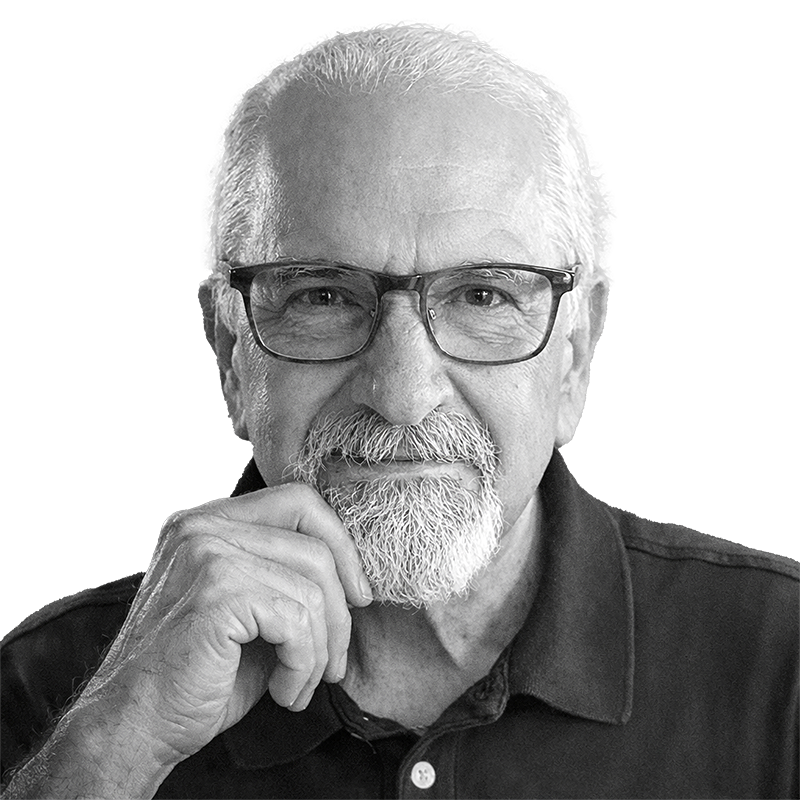
Don Iannone: A literary innovator whose words harmonize poignant emotion, keen intellect, and vibrant curiosity across genres.
Writing That Balances Emotion, Intellect, And Insight
Don Iannone discusses his creative process, the balance of emotion and intellect, and how his diverse experiences shape his work across poetry, fiction, nonfiction, and cultural commentary.
D on Iannone’s voice as a writer is nothing short of a gift to the literary world. His ability to traverse genres—with equal brilliance across poetry, fiction, nonfiction, and cultural commentary—cements him as a multifaceted talent and a deeply insightful storyteller. In his work, ideas breathe through emotion, systems meet humanity, and landscapes yield memory and meaning. Iannone’s books, including Cleveland’s Flats: A Symphonic Essay in Black and White, A Magical Chagrin Valley Christmas Story, and America’s Dream at a Crossroads and The 2024 Presidential Election and Beyond, reflect his intellectual rigor and emotional heart, demonstrating a profound capability to engage readers with both wonder and truth.
Mosaic Digest magazine is honored to feature an exclusive interview with Don Iannone, where readers will gain insight into the mind behind these remarkable works. Iannone’s creative process, shaped by his background in economic development, academia, and a lifelong curiosity, reveals a compelling intersection of individual, place, and system. His recent work, specifically A Magical Chagrin Valley Christmas Story, captures all the enchantment of the holiday season while transcending sentimentality with a thoughtful, deliberate artistry.
As editor of Mosaic Digest, I am thrilled to share Don Iannone’s reflections on the power of writing, the role of honesty, and the delicate balancing act between intellectual depth and emotional resonance. His wisdom as a teacher, his discipline as a creator, and his integration of mediums such as photography and narrative elevate his published works beyond mere stories—they are experiences to be savored.
Don Iannone’s presence in the literary and academic spheres reminds us all of the transformative power of curiosity and creativity. His words resonate far beyond the page, inviting us to see ourselves, our world, and even our deepest questions through freshly lit perspectives.
Don Iannone is an unparalleled creative force whose writing illuminates the intricate connections between place, humanity, and imagination.
What inspired you to pursue writing across such diverse genres, from poetry to nonfiction and fiction?
I never experienced writing as a single lane. Poetry taught me how to listen; nonfiction trained me to account for reality; fiction allowed me to reconcile the two. Different genres became instruments for different kinds of truth. Some experiences demanded lyric compression, others needed argument, and still others required narrative imagination. The diversity wasn’t strategic—it was necessary to who I am. Each genre offered a way to stay honest with the material at hand.
How do you approach balancing emotional resonance and intellectual depth in your work?
I don’t see emotion and intellect as opposites. Emotion is how ideas enter the body; intellect is how they stay. I begin with lived experience, that is something felt, observed, or unsettled, and then interrogate it patiently. If a piece is emotionally persuasive but intellectually thin, it fades. If it is rigorous but emotionally vacant, it fails to reach. The balance comes from respecting the reader’s heart and mind equally, which means good writing embodies both “showing” and “telling.”
Can you share how your background in economic development has influenced your writing?
Economic development trained me to see systems: how power, policy, capital, and culture interact over time. That awareness inevitably enters my writing, even when the subject is personal or lyrical. I’m attentive to scale: the individual life nested within neighborhoods, cities, and economies. It has also given me a healthy skepticism of slogans and a respect for complexity, which shapes both my nonfiction and my fiction. In recent years, my involvement with EU-Based Transcontinental Institution of Higher Education where I teach business to students in Africa and the Middle East, Chagrin Documentary Film Festival, Kent State University Fashion School and Museum, Cleveland Museum of Art, and the Cleveland Civil War Roundtable have been new influences to my writing.
“Different genres became instruments for different kinds of truth.
The diversity wasn’t strategic—it was necessary to who I am.”
– Don Iannone
What was the creative process like for your recent book, A Magical Chagrin Valley Christmas Story?
Christmas, because of family, music, lights and color, imagination, and myth, has always been magical to me since early childhood. The book emerged from memory, place, and a desire to recover wonder without sentimentality. I wanted to write something gentle but not naïve, rooted in landscape and community. The process was slower than expected. I enjoyed digitally illustrating the book. I listened closely to voice and pacing, allowing the story to unfold with restraint. It turned out to be a short book, which made the story stronger. The magic is subtle, earned through attention rather than spectacle.
“Good writing embodies both ‘showing’ and ‘telling.’”
– Don Iannone
How do you decide which ideas are worth developing into a book, article, or essay?
First and foremost, I follow my curiosity. I ask two questions: does the idea persist, and does it resist easy resolution? If it keeps returning and refuses simplification, it may deserve longer form. Essays often answer a question; books live with one. The scale of the idea usually declares itself through its patience.
How has your academic background shaped your perspective as a writer and thinker?
Academia taught me how to argue carefully and how to doubt myself productively. It also taught me the danger of abstraction detached from human consequence. As a writer, I aim to keep rigor without sterility, and to let scholarship serve clarity rather than authority. Big ideas must be “conversationalized” to stick with readers.
What strategies do you use to stay disciplined and productive in your writing practice?
I write every day. I treat writing as a form of attention rather than output. Some days that means pages; other days it means revision or reading. Consistency matters more than volume. I show up, even when nothing arrives, and trust that discipline eventually invites grace. With experience, writing becomes pleasurable. I love the writing journey.
How do you integrate photography and narratives in books like Cleveland’s Flats: A Symphonic Essay in Black and White?
Photography pauses time; prose releases it. In that book, the images carry silence and structure, while the text moves rhythmically around them. I think of it as counterpoint rather than illustration: two mediums listening to each other. The book’s photographs are organized according to the elements (overture, movements, and finale) of Dvořák’s Symphony No. 9 From the New World. This is the first time I used a musical piece to define the flow of a book. It worked!
What lessons have you learned from your experience in teaching that you apply to your writing?
Teaching teaches me humility. Clarity is an ethical obligation. If readers struggle, it’s often the writer’s failure, not their own. Teaching also reaffirmed my belief that curiosity, more than expertise, sustains learning and writing alike. Teaching has taught me: guide the student, trust the student, and guide the reader, trust the reader.
Can you describe the challenges and rewards of writing about complex topics like public policy and economic development?
The challenge is resisting simplification without paralyzing the reader. The reward is making complexity legible, and helping people see how abstract decisions shape lived experience. When readers recognize themselves within policy narratives, something meaningful happens.
What advice would you give to readers seeking to explore poetry or fiction for the first time?
Read slowly and without anxiety. You don’t need to “get it” immediately. Let language work on you the way music does. Trust confusion is often the doorway to understanding.
What guidance would you offer to aspiring authors on creating meaningful and impactful works?
Write toward honesty, not approval. Attend deeply to the world as it is, not as you wish it to be. Craft matters, patience matters, and revision matters more than inspiration. Meaning emerges when attention is sustained.
Editor’s Note
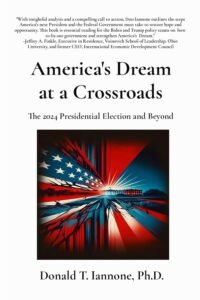
America’s Dream at the Crossroads is a thought-provoking, concise exploration of the 2024 election’s impact on the American Dream. Donald T. Iannone offers a compelling twelve-point strategy and clear insights for voters. Essential reading for anyone reflecting on America’s future, it effectively inspires consideration of leadership choices and national values.