











A Decade After Brexit, Britain Quietly Reopens the Question of Europe
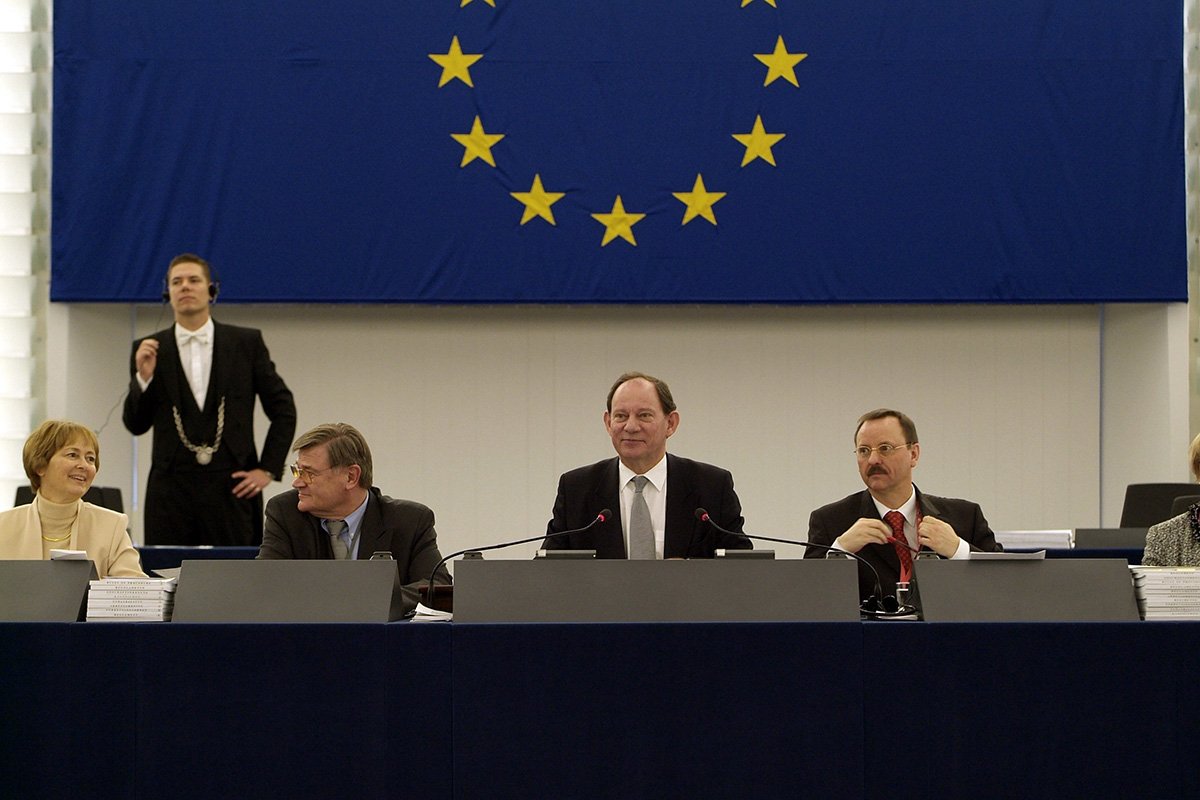
Photo: Wes Streeting’s remarks on rejoining the European Union have reignited Britain’s long-running debate over Brexit and its economic consequences.
Britain and Europe: The Long Road Back – by Edward McMillan-Scott, Former British MEP
Wes Streeting and Andy Burnham reopened debate on Britain rejoining the EU, highlighting Brexit’s economic costs, political challenges, and growing public dissatisfaction a decade after the historic referendum.
Wes Streeting’s call for Britain to rejoin the European Union, and Andy Burnham’s more cautious but still sympathetic noises, signal something important: the question of EU membership is no longer taboo in mainstream politics.
A decade after the Brexit vote, the argument has shifted from whether the UK might return to how—and at what cost.
The case for rejoining is, at first glance, largely economic. Most mainstream analysis suggests that leaving the EU has reduced trade and long‑term productivity, largely through increased barriers with our largest market. The Office for Budget Responsibility, for example, assumes exports and imports will be around 15% lower in the long run than if the UK had remained in the EU, with productivity also reduced by around 4%. The European Central Bank similarly links Brexit to weaker trade performance and labour shortages.
Highlights
- Wes Streeting openly calls for Britain to reconsider EU membership
- Andy Burnham signals cautious support for closer EU ties
- Brexit debate returns to mainstream British politics
- Economic studies highlight trade and productivity losses after Brexit
- Polling shows rising public dissatisfaction with Brexit handling
- EU signals openness to UK return under standard membership terms
- Sovereignty and migration remain central political obstacles
- Incremental alignment may precede any future re-entry
That helps explain Streeting’s argument that Brexit has left Britain “less wealthy, less powerful and less in control.” Rejoining could restore frictionless trade with a market of nearly half a billion consumers, improve investment flows, and stabilise supply chains—all familiar advantages of single market participation.
But economics is only half the story. Brexit’s core promise was sovereignty: the ability to diverge from EU rules, control migration, and strike independent trade deals. Some of these freedoms are real, even if their economic payoff remains contested. Rejoining would therefore require a political reckoning—one that goes beyond technocratic arguments about growth.
Current polling by YouGov on the question ‘How the government is handling the issue of Brexit in the UK? yields the answers that 16 per cent are ‘Don’t Knows’, 23 per cent think ‘Well’ but fully 60 per cent answered ‘Badly’ a record high.
Even with domestic backing, the path to re‑entry would be neither quick nor easy. The UK would have to apply under Article 49, the standard accession process, and meet the EU’s political and economic criteria. Crucially, it would not be rejoining on its old terms. The EU has made clear that returning member states should expect to follow the same rules as others, without the opt‑outs Britain once enjoyed—raising the possibility of commitments to the euro or deeper integration.
So how keen is the EU? The answer is: broadly open, but not desperate. European leaders have indicated that the UK would be welcome back in principle, yet only on standard terms, reflecting a desire to protect the integrity of the bloc. There is goodwill—but little appetite for reopening bespoke British exceptions.
In practice, then, the most likely path back is incremental. Closer alignment—on trade standards, security, or youth mobility—may come first, building trust and demonstrating tangible gains. Full membership, if it comes at all, will be the endpoint of a long political journey rather than a sudden pivot.
For now, Streeting’s intervention serves as a reminder: Brexit may be settled as a legal fact, but as a political question, it is far from over.
* Edward McMillan-Scott was an MEP 1984-2014 and was the European Parliament’s first Independent Vice-President.
He has been a Patron of the European Movement UK since 2014 and is a board member of the Former MEPs’ Association