












Discover Faith And Romance In Tracie Peterson’s Historic Tales
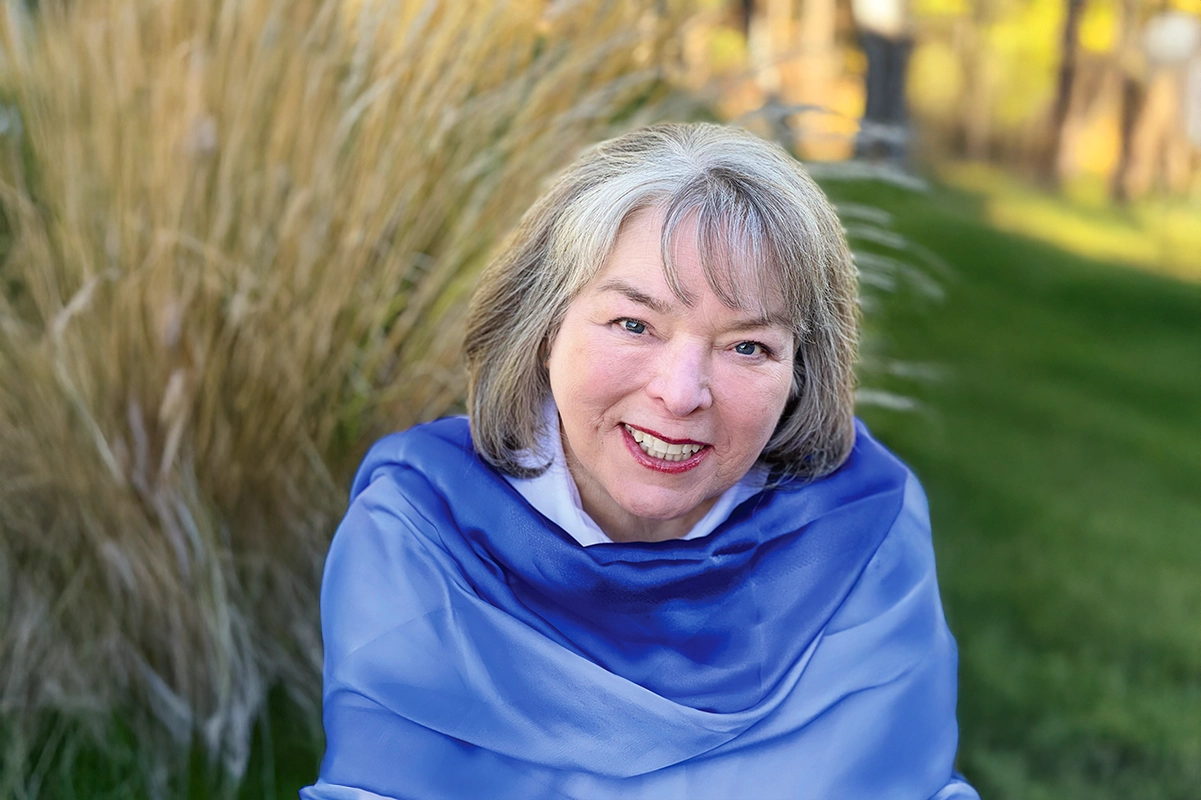
Photo: Tracie Peterson, celebrated author and a pioneer in historical Christian fiction, captures history, faith, and love in her unforgettable novels.
Exploring Wyoming’s Frontier And Spiritual Themes
Tracie Peterson discusses the conclusion of her Hope of Cheyenne series, her passion for faith-driven historical fiction, research process, writing challenges, and advice for aspiring Christian authors.
T racie Peterson, a true luminary of historical Christian fiction, enchants readers with her compelling storytelling and spiritual insights. With over 100 novels to her name, Peterson continues to deliver faith-driven narratives that inspire and uplift while transporting readers to vivid historical landscapes. Her latest work, A Moment to Love, concludes the beloved Hope of Cheyenne series with remarkable depth, romance, and emotional resonance set against the rugged beauty of Wyoming’s frontier. Through her unique ability to balance historical authenticity, relatable characters, and heartfelt spiritual themes, Peterson has firmly cemented her position as the Queen of Historical Christian Fiction.
Peterson’s historical Christian fiction skillfully blends faith, romance, and authenticity, crafting compelling stories that resonate deeply across generations of readers.
What inspired you to write “A Moment to Love” as the conclusion to THE HOPE OF CHEYENNE series?
In the first Cheyenne series, The Heart of Cheyenne, the character of Carrie was a toddler. I knew I wanted to bring her back into the focus of the last book in the series so that readers could see what happened to her. As I thought about what kind of person she would be, the problems and issues she would have going on in her life, her character expanded and developed and so too the plot line. As always, I knew I wanted to give her a romance—enter** our hero, Spencer Duval, a handsome Pinkerton Agent.
How do you approach weaving historical authenticity into your storytelling?
I’m a stickler for historical accuracy. That doesn’t mean I won’t make mistakes, but I try hard to research the details and present an accurate account of the times. I read a great deal that has been written on each time period and location. I also talk to authorities on local history and search through diary accounts. It’s important to me to know all I can about a place and time period, as well as the factual events and people.
“Peterson wraps up the Hope of Cheyenne series with a propulsive tale of a marriage of convenience giving rise to romance. . . .The characters’ fully fleshed-out backstories and the dynamic central mystery intertwine for a plot that’s rich in suspense and emotion. Series fans and newcomers alike will be eager to come along for the ride.”—Publishers Weekly
Can you share the research process for portraying Wyoming’s frontier landscape?
As I mentioned, research is critical. So much of the landscape surrounding the city of Cheyenne hasn’t changed all that much from my time period. The rolling hills, unseen distant Rockies, prairie lands and ranches are still there today. There are also buildings still in existence and the layout of the downtown streets is still much the same, although the streets were renamed. Digging deeper, I talked to local authorities and retrieved maps from the time of my story, as well as local business listings and addresses for some of Cheyenne’s famous folks.
How do faith and spirituality influence the themes in your novels?
It’s critical to me that I share the Gospel of Jesus, as well as Biblical application. I want the books to encourage and uplift the Christian reader and non-Christian alike. For me, writing is a ministry to share light with a dark world.
“Tracie Peterson once again delivers a heartwarming romance about belonging, forgiveness, and trust in a God who honors both reason and feeling.”—Booklist, Starred Review
What challenges do you face when writing characters with deep emotional conflicts?
I want to keep it as real as possible. I don’t want over-the-top, cheesy characters, nor those who are boring and have it all together 100% of the time. I want the readers to be able to bond with and relate to the characters.
How do you manage to maintain consistent creativity while writing over 100 novels?
I pray a great deal over my writing. I also read a lot of non-fiction books for story setting ideas and events that shaped history. And I like to visit the places I write about. Stories are everywhere and I believe God has given me a gift for seeing them.
“A Moment to Love is a satisfying conclusion to The Hope of Cheyenne series. . . . I totally enjoyed this book and highly recommend it and the series.” “Tracie Peterson writes to where it is very hard to put the book down.”—Interviews & Reviews
What message do you hope readers take away from “A Moment to Love”?
That only God can fill those empty places in our hearts and that letting go of the past is critical to moving forward into the future.
Could you share what drives your passion for historical fiction?
As the Bible points out, God is in control of everything. Nothing happens by chance. Therefore, I believe we are to learn from the past. My husband is a historian who has helped me a lot with research. His love of history has only helped deepen my own. I think historical fiction makes for an entertaining and educational way to share history with the reader. It’s a passion God has given me and I’m happy to share it with my readers.
“New from the Queen of Historical Christian Fiction, Tracie Peterson weaves a tale of intrigue, romance, and spiritual hope, set in 1890’s Cheyenne, Wyoming.” – Tracie Peterson
What moments in your career have been most rewarding as a bestselling author?
I’d have to say the letters from readers have been most rewarding. Hearing how God has used the book to encourage or help them is unlike anything else. It’s seeing God in action through something I love to do. That’s exciting.
What advice would you give to authors struggling to balance research and storytelling?
Do your homework and don’t just rely on the Internet and especially not on AI. Talk to people, particularly local historians, museum docents and archivists. Knowing the details will help the story to come alive. Also remember it’s critical for you to know the historical detail, even though you probably will only use ten percent of it in any book. Knowing that other ninety percent allows you to write in an accurate manner for the time period.
How can aspiring writers sustain their commitment to long-term projects like a series?
Be organized. Keep files on the characters, their family tree, their goals and aspirations. The better you are at keeping records and information details, the better you’ll be able to plan out a series. Continuity is critical. Also, always ask yourself, how can I complicate this character’s life? You don’t want the series to slow and complications are a part of real life. Lastly, always be sure to give each character proper motivation for the choices they make. Nothing is worse than characters who do things that go against the nature you’ve given them.
What tips would you share with authors aiming to write faith-based or inspirational works?
Know what matters to you. Are you looking to write as a ministry? Are you looking to just write clean fiction without seeking to share a message of faith? Who are the readers you hope to reacuh and why? Those are critical questions to ask yourself. Why do you want to write what you’re writing? In faith-based work it’s important that you have a strong foundation to work from, so don’t forget to keep growing in the Lord and studying the Word of God. We have a lot to learn, but the better we know Him, the deeper our relationship with Him, the richer and more effective our stories can be for Him.