










H. C. Hewitt Brings Prairie History to Life Through Her Abbington Pickets Series

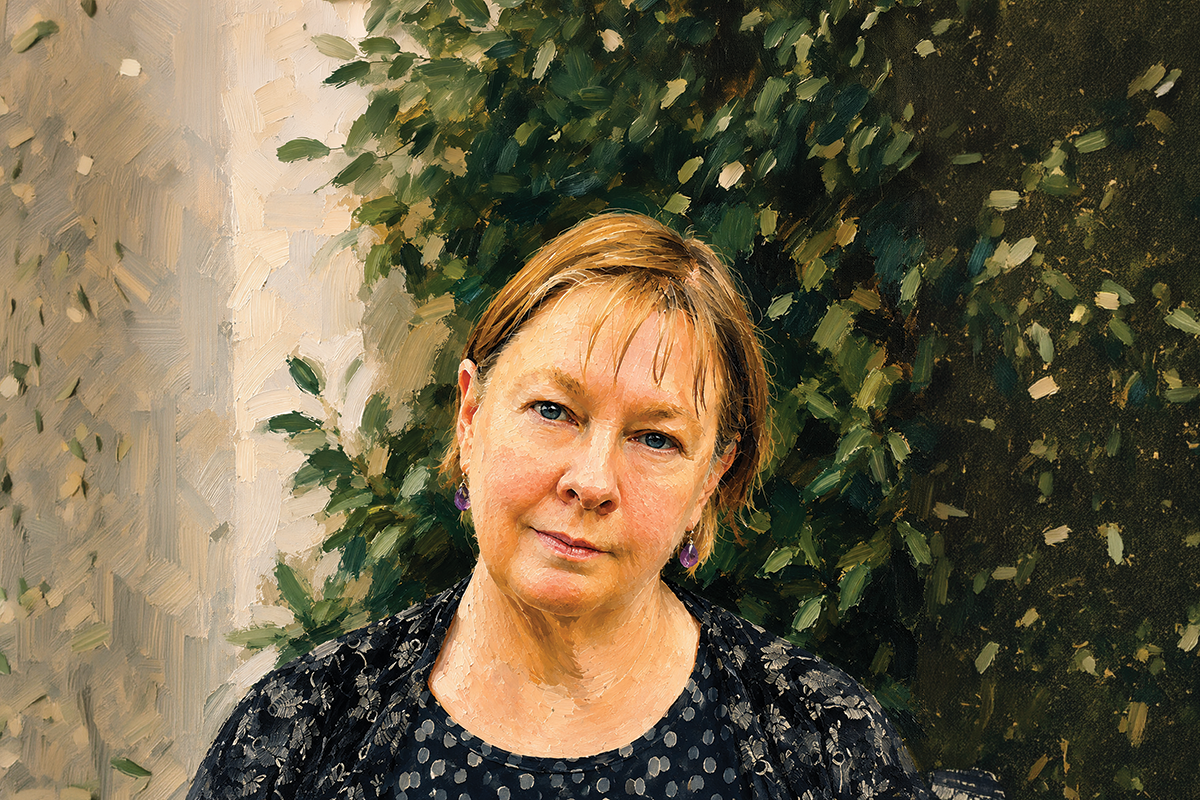
PHOTO: H. C. Hewitt at her writing space surrounded by antiques and inspirations from Saskatchewan’s prairie life.
Exploring Faith, Family, And Historical Richness In Fiction That Resonates Across Generations
H. C. Hewitt blends historical accuracy, Christian faith, and engaging storytelling to create her Abbington Pickets series, capturing the prairie life of Saskatchewan and the timeless struggles of her characters.
HC. Hewitt has captivated readers with her richly detailed historical Christian fiction that celebrates faith, family, and the enduring spirit of prairie life. Her Abbington Pickets series transports readers to the late 1800s and early 1900s in Saskatchewan, blending meticulous historical research with compelling storytelling. Hewitt’s deep connection to her heritage, combined with her passion for quilting, antiques, and prairie culture, infuses her novels with authenticity and warmth. Mosaic Digest magazine is proud to feature this interview, offering readers an intimate look at Hewitt’s inspirations, creative process, and the heart behind her beloved characters.
Hewitt’s novels are masterfully crafted, combining historical depth, relatable characters, and heartfelt faith-driven narratives that captivate readers.
Growing up on a farm in Saskatchewan and steeped in rural prairie influences, how do those early experiences continue to shape the settings, characters or themes in your Abbington Pickets series?
I was raised the old-fashioned way with honesty and integrity and that influenced me for my main character. I have always felt a connection to the pioneer days. My grandma worked at The Cannington Manor Historical Park and would take me along, dress me up in period costume and encourage me to learn the history about the people who had lived there. My grandad gave me my first antique which began my addiction to antiques which now overrun our home. The combination of that knowledge influenced my stories. I intertwined great-grandparents, great-aunts and uncles into my stories so they can live forever in fiction. Since Cannington Manor was a huge part of my childhood, I wanted my stories to take place there. Hence Abbington Pickets was born -fictitious- but the village layout and the characteristic buildings which surround the area are all part of the series.
Your novels are set in a distinct historical period; could you describe your research process? How do you strike the balance between historical accuracy and narrative freedom?
My love for the late 1800’s/early 1900’s inspires me and what I collect. When I obtain an antique, I research it, a lot! This helps with descriptions for accuracy for objects in the homes, barns and farm yards. While I am well versed in the history of the area, which made it easier to write, there was a need to research the technical aspects. For example: how to hitch up a buggy, the time needed to ride a horse from Abbington Pickets to Crocus Flats. I am a stickler for historical accuracy but with fiction I like to put my own spin of what can take place. For example, Jacob builds a round house to please his bride, but seriously who builds a round house in 1911 on the prairies?
As someone who also designs quilts and embroidery patterns, do you find creative cross-pollination between your craft work and your writing? Can quilting ever spark a plot twist or character insight?
Oh, yes of course. I have written about quilting in my series, where they have had a quilting bee (which was popular from that era). I like to include my passions in my writing and that is one of the reasons I created quilt and embroidery patterns to coincide with my novels. Some of my patterns are named for my characters.
In Jacob’s Secret you explore moral dilemmas, hidden truths and inner conflict. When you plot such tensions, do you start from theme, character, or plot—and how do you weave them together?
My characters are the focus when I begin to write. I know the characters who are going to exist, what their struggles will be and I then weave their lives together just as it would happen historically. The fiction is based on the history as it happened in that time period in Canada. For example: Jacob is thrilled to vote for the first time in 1911 for the Prime Minister of Canada. June 30, 1912, a tornado ripped through Regina, Saskatchewan which killed many. I extended that storm to Abbington Pickets in my book. Jacob leaves his family and goes to war in 1914. Meanwhile the characters of Abbington Pickets have their own personal drama happening.
“My characters are the focus when I begin to write. I know the characters who are going to exist.” – H. C. Hewitt
What is the most difficult scene you’ve ever had to write (or rewrite) in the Abbington Pickets series, and how did you manage to get it “right”?
Jacob of Abbington Pickets involves a dramatic family, a sweet first love with tragic events. The first difficult scene I wrote was of Mr. Hudson dropping his youngest daughter down the well. I was so satisfied with myself about that scene… for a moment. Then I realized, while my mind and body were buzzing with excitement, “Did I just write that? Did I really kill off a child and throw her down a well? What kind of person am I?” Other emotions included guilt, shame and “what will my family think?” It was then I knew I could be a writer because as horrible as the scene was, it needed to be written in order for Jacob to fall into Satan’s trap, search for forgiveness and find resolution.
Your personal faith seems integrated into your works and your public persona. How do you approach writing for a Christian audience while still crafting stories that resonate broadly?
I try to write stories that present characters who make mistakes, sin and bump up against many people who do not share their faith, all for an opportunity to share the gospel.
Many novelists talk about moments of “writer’s block” or burnout. How do you navigate dry spells or creative fatigue? Do you have rituals or practices you rely upon?
I have a particular spot where I always write. It’s on my comfy couch, with the laptop on my lap, antiques surrounding me, hot coffee ready. Pray before writing. When I am stuck, I find that explaining my ideas about my story to a friend fires me up and gets the juices flowing. Sometimes, I just need a break, take a walk in nature, work on another project or maybe read a little.
As a writer, farm spouse, quilt-designer, mother and grandmother, you wear many hats. How do you prioritise your time and guard your creative space amidst so many demands?
I find I am busier now than when I owned a full-time business. Even though family comes first and we are absorbed in activities on the farm and with grandchildren, making time for writing is important. The evenings work for me and it helps that I am a night owl. Writing is an outlet for me, I crave it when I am not doing it, I need that creative escape.
Looking back over your published works to date, is there a book or character you’d like to revisit, revise, or expand—if given the chance—and why?
I love my Abbington Pickets characters and have a difficult time writing other manuscripts. I have several on the go, but my mind and heart always trail back to Jacob, Abigail and the people of Abbington Pickets. I would like to revisit the lady doctor that came to the village in Jacob’s Secret. I would like to expand more on Abigail’s character before she came from England to Abbington Pickets since she has become a beloved character. Readers may want to know more about how she ticks.
“I love my Abbington Pickets characters and have a difficult time writing other manuscripts.” –
What advice would you give to emerging or fellow authors—especially those starting historical or faith-based fiction—about sustaining motivation, finding their “voice,” or navigating the publishing world?
Stay grounded in your faith. Do not neglect your own habits of prayer and reading God’s word as both will keep you writing to God’s glory. Be yourself, don’t try to imitate others. Write everyday, same place, same time. Have a goal. Don’t give up until your first manuscript is finished, even if you think it’s terrible. You can’t edit something that doesn’t exist! Finally, give God all the glory.