





Wayne English Shares His Journey To Blend Reality, History, And Imagination In Writing

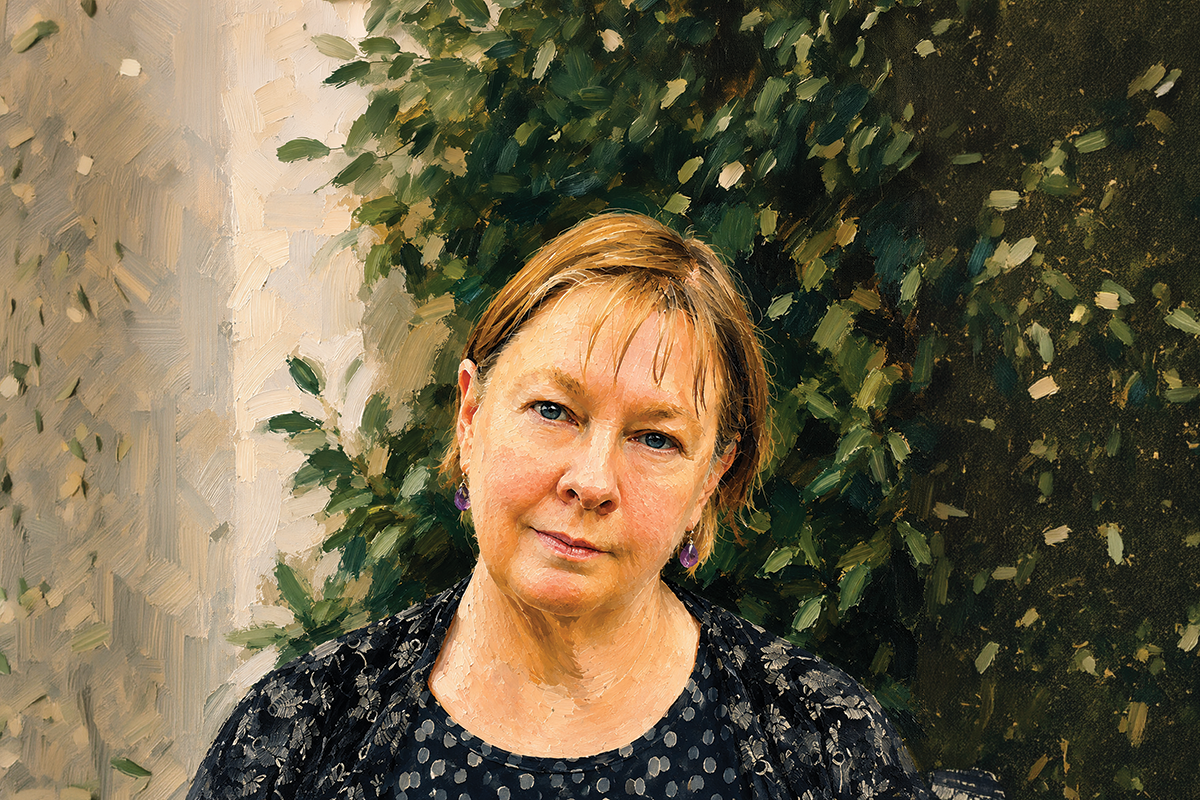
Photo: Wayne English: The multifaceted author behind Attila’s Revenge and future-focused stories that blend historical intrigue with futuristic possibilities. Photo is courtesy of Reader’s House
Exploring The Minds Behind Attila’s Revenge
Wayne English discusses his unique blend of history, technology, and imagination, sharing insights into his books, including Attila’s Revenge and his Mars colonization series, while inspiring aspiring writers to persevere.
W ayne English, a celebrated author and multifaceted talent, exemplifies the rare ability to transform a diverse professional background into a creative and literary force. With residence in Coventry, Connecticut, alongside his supportive family and even a charming canary named Olive, Wayne has carved out a remarkable career spanning local, national, and international publications. His accomplishments include five thought-provoking books, an expansive list of technical and creative articles, and a unique perspective shaped by decades in engineering, nuclear energy, and information technology. In this exclusive feature for Mosaic Digest magazine, we explore the mind of an author who seamlessly blends reality, history, and futuristic imagination into his writings.
Wayne’s literary works stand apart due to their intricate interweaving of technical authenticity and human emotion. From the dystopian brilliance of Shift World, where his deep expertise in electric distribution comes alive, to the historical and richly researched Attila’s Revenge, he showcases a brilliant knack for making history and science not only accessible but unforgettable. His upcoming series on Mars colonization promises to captivate readers with its ambitious vision of human perseverance and scientific ingenuity, underscoring Wayne’s commitment to combining education with entertainment.
Mosaic Digest magazine is proud to present this intimate conversation with Wayne English, where he shares his motivations, creative process, and unwavering commitment to writing stories that resonate deeply with readers. Whether it’s exploring ancient history, unraveling futuristic challenges, or advising aspiring authors to persevere and embrace their unique voice, Wayne’s insights are both inspiring and invaluable. Dive into this fascinating dialogue and discover the depth of an author whose work continues to educate, challenge, and enthrall readers around the world.
Could you tell us about your journey as a writer? How did your various professional experiences, particularly in technical fields like nuclear engineering and information technology, influence your writing style and choice of topics?
My expert knowledge of electric distribution and nuclear generation play a major role in my short story, Shift World, where the main character, Bub, is assigned to ‘the electric power’ as he calls it. In the story the concepts of an electric utility are based on solid fact as is the equipment and personnel Bub interacts with. The second major character, Ted, is a rotating shift worker able to work any shift placing him among the elite in this dystopian society. How Ted solves problems and his knowledge of the system is based on my experience.
Having solid knowledge on the system, its equipment, and how everything works together is a real advantage when electric generation, transmission, and distribution play a role in my fiction.
As to Information Technology (IT), I use that knowledge when writing about computing. As in my short story, “Artificial Intelligence Scapegoat or Killer” where an AI controlled loader bot kills two people. This story also uses my knowledge of electric distribution.
So, my fiction is as reality based as I can make it and does not slide into the realm of what I call ‘silly technology.’ I find it better to base fiction on reality. I think it makes for a better read.
Your historical fiction novel Attila’s Revenge is unique. What motivated you to create a story based on Attila the Hun, and how did you approach the historical research and blending it with fiction?
While at the University of Connecticut library, I stumbled across books on Attila and how he died. For some reason, this captured my imagination and the more I read the more interested I became. After a great deal of research, the outline of Attila’s Revenge became reality and I started writing. In the book, he dies the way he actually died. My main character is Annora, a Roman woman from an elite family. Her mother is sister to the Western Roman Empire’s Emperor. Her father’s family put the emperor on the throne. She’s wealthy, educated, and lovely.
I blended historical reality with fiction by inventing an elite Roman family. The daughter, Annora, Attila uses to revenge himself on her mother because she (the mother) insulted him viciously when Attila was an exchange hostage.
This technique worked well, allowing for the creation of several secondary plots including: pirates, a brilliant Greek scholar, a Roman hound (today we call them dogs) who is integral to the plot. I spent a great deal of time making the hound a character that the reader would accept without question as one that the Huns will give a wide berth. Roman hounds were savage in battle and well known to the Huns.
Another character that I took pains with is Caia, Annora’s slave. Their relationship is like that of trusted colleagues. Annora frees Caia and she makes a perilous trip to tell Annora’s parents that she still lives in the Hun camp.
Your upcoming series on Mars colonization promises to inform readers of the difficulties and dangers of space travel and colonization. What inspired this setting?
My inspiration is the book ‘A City on Mars’ by Kelly and Zach Weinersmith, and Elon Musk’s Space X. I have the greatest respect for, and thank them, for their work. My series is not intended to be critical of Mr. Musk, or Kelly and Zach Weinersmith.
In the Fall of 2026, I will publish book one of this three book series. There you will find the colonization of Mars, advanced robotics, computing, and the problems surrounding human suitability for space travel and colonization.
My current outline includes crew deaths from internal and external factors; including sabotage. My fictional solution to taking the human body into space will surprise you as I believe it to be unique. I have written a draft of chapter one, but it will change significantly as my research continues. Until then, it’s a place to start.
You’ve written across a variety of genres, from technical publications to photography books to social media guides. How do you decide which genre or subject to focus on next?
I’m always been attracted to variety in jobs, writing, and experiences. I write about what interests me and what I think will attract readers. That holds true for my nonfiction as well.
For fiction, you could say that things just strike me. A great help are newsletters, articles, books, and websites where I stumble across concepts and technology that I can create a story around.
To make things more saleable, I choose concepts and ideas that are popular. But all of it needs characters that readers will care about. And editing. I do several edits before the work is publication. Each edit looking for different problems. In this my writers group is an invaluable asset.
You’ve taught and spoken on topics ranging from social media strategies to technical subjects like radiation protection and software quality assurance. What do you enjoy most about teaching, and how does it complement your work as an author?
There’s no more relaxing place in the universe than in front of a group. I like developing the programs and adore presenting them. Developing is a skill that requires knowing the subject matter cold, what the class needs to know, the order of presentation, and how not to let the class get bored. A teacher once told me that the greatest visual aid is the presenter in front of the room. I never forgot that.
I remember one class in particular. Everyone was with me. I could see it in their eyes. It was a class on writing for the web and they were a pleasure to teach. Another excellent experience was a program I gave to a roomful of Adobe designers. I presented on what makes a business website effective. The talk is still on YouTube, I believe. To find it search for, ‘Want To Lose $300,000?’
As a self-professed geek who loves the web and technology, how do you think the digital era has transformed the landscape for writers and marketers? How have you used these changes to your advantage?
The changes that digital technology, the Internet, and the web have made to our society and the world of writing cannot be overstated. Everything is online. Marketing, sales, the phone book, research, information dissemination, social media are all available.
For example, I work with a political committee. Letters to the Editor, once a superb way to reach the public, are on their way to obsolescence. Replaced with boosted posts and graphics on social media sites.
For a writer, we can research, edit, and research, create an ebook, paperback, or hardcover, upload it, market and sell it. All from our computer or smart phone.
With a love for fixing things and machines, how do you balance your creative writing process with your hands-on hobbies? Do these practical activities ever inspire your storytelling?
Fixing things, creative solutions, and using tools in ways they were not intended require creativity and always interested me. My technical background is a real asset because I’ve got an excellent idea of how the parts of something work together. And it’s just plain fun. I love working around the house and will take on most anything. I can’t imagine how people get by without tools.
Inspiration for stories comes from reading, street signs, text on the side of trucks, from anywhere and everywhere. This is especially true when I have a character that is a technician, engineer, mechanic, or scientist. Creating and writing characters far smarter than I am is a real challenge. There’s nothing better than a good challenge.
With experience publishing locally, nationally, and internationally, what advice would you give to aspiring authors who want to break into writing and publishing across various mediums?
Don’t give up. Keep going. Fear nothing. As I wrote many years ago on a forum named WriterL: Collect your rejections proudly because they prove you are firmly in the game. When you have an idea, don’t censor yourself, you may just talk yourself out of a solid publication.
Stay the course. Some time ago I published poetry, and believe me, I’m no poet. I say this so your readers will know that this advice applies to all writers. That’s how writers become successful and well known. They never gave up. Don’t you either.
For some advise that’s more practical: know your reader, and write for the reader, send out a query every week and take every opportunity to write. We’ve all written for free to get published. Stop that as soon as you can because getting giving away intellect undervalues you.
Some writers let AI do the writing. That is dangerous because AI can hallucinate. That’s the technical term for AI lying to you. Verify and edit anything that comes from AI – even research. Use AI for editing, but don’t let it write your work. Why? Publishing false data will destroy your reputation.