












L.E. Summers Shares Wisdom on Dementia Caregiving Through Compassion and Experience
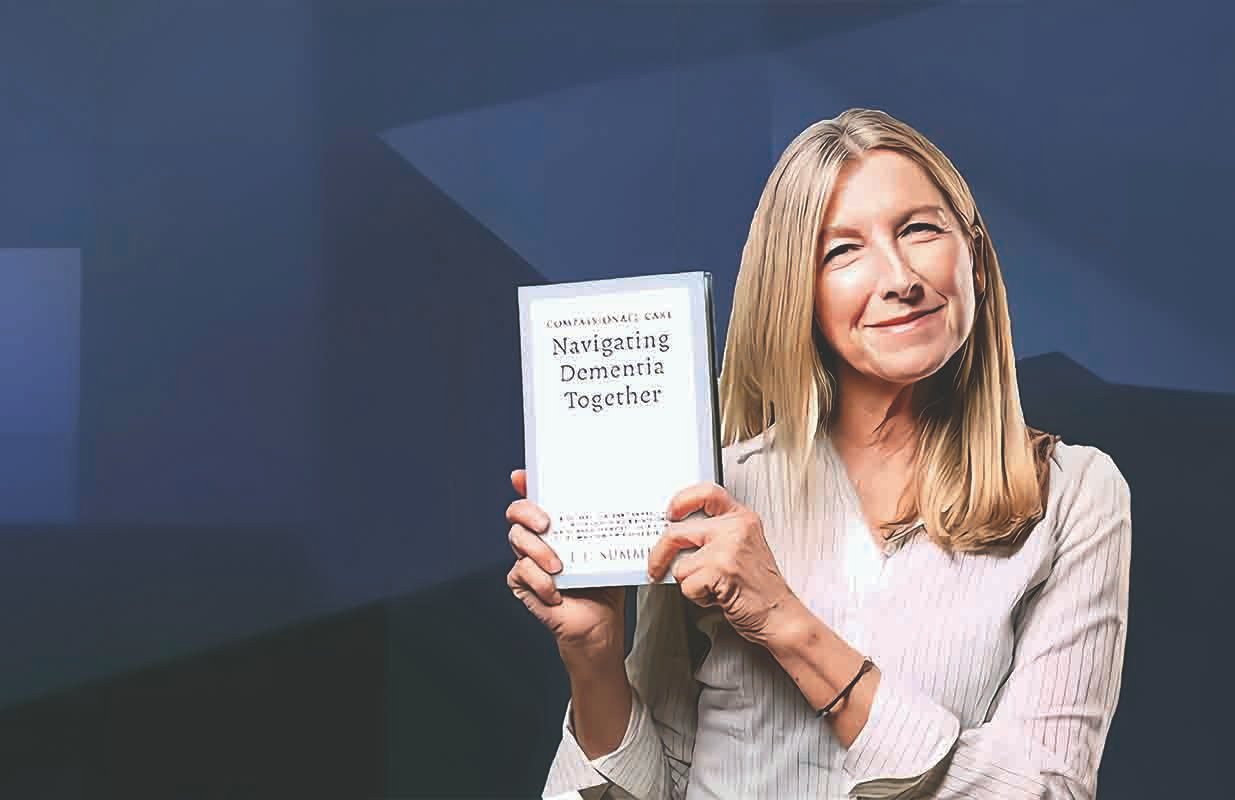
A Former IT Professional Turned Author Offers Practical Guidance and Emotional Support for Caregivers
L.E. Summers, a former IT professional turned dementia caregiving expert, shares their journey, practical advice, and heartfelt insights to help caregivers navigate challenges while prioritizing their own well-being.
L .E. Summers is a beacon of hope and guidance for caregivers navigating the often overwhelming journey of dementia care. With a trilogy of insightful books—Compassionate Care: Navigating Dementia Together, Compassionate Care: A Practical Handbook for Dementia Caregiving, and Compassionate Care: Accepting the Dementia Diagnosis—Summers offers both practical advice and emotional support to those tending to loved ones with dementia. Drawing from personal experience as a caregiver for their mother, Summers’ work is a testament to resilience, compassion, and the power of shared knowledge. Their dedication to helping caregivers maintain their own well-being while providing tender care is both inspiring and invaluable.
Here at Mosaic Digest, we are honored to feature L.E. Summers in this heartfelt interview, where they share their journey, insights, and the profound lessons learned along the way. Their story is a reminder that even in the face of immense challenges, understanding and empathy can light the path forward.
What inspired you to write about your caregiving experience with your mother who had dementia?
I started on my dementia caregiving journey during the COVID outbreak. My sister was expecting her first grandchild. As health concerns dominated the early days of 2020, I became the natural choice for caregiving for my mother. I had just retired as an IT professional and earned a real estate license. I traveled 1,600 miles from my home to once again sleep in my bedroom from age 11. On my first day of care, my mom’s doctor wanted to meet with me to discuss hospice care. I vowed to keep up the fight to ensure that my mother got to meet her first great-grandchild. This was never a path that I anticipated for myself, but it taught me so much about growing old, family, love, and perseverance. I struggled at first, but I kept notes on what worked and what didn’t. I couldn’t find much information on dementia and caregiving. With my books, I am sharing my notes, my experience, and writing what I wish I had found but didn’t.
“You cannot provide compassionate care when you are stressed and running on empty.” – L.E. Summers
How do you think your books can help alleviate the feelings of isolation and uncertainty that many caregivers face?
Caregiving can make you feel incredibly isolated, especially when you are making decisions about someone you love while watching them change before your eyes. With my books I hope to provide practical guidance and emotional validation. Reading reviews of my books, I see that they help people like me feel less alone. When you question yourself about whether you are doing enough or doing the right thing, having a book that tells you “this is normal, and here is what helps” is incredibly reassuring.
Can you discuss the importance of prioritizing one’s own wellbeing whilst caring for a loved one with dementia?
As a caregiver, you must learn that you cannot sacrifice yourself and still be effective. Neglecting your own well-being makes you a depleted caregiver. You cannot provide compassionate care when you are stressed and running on empty. In my books, practical self-care is emphasized. You need a backup, directly in caregiving and indirectly in the day-to-day requirements in your own life. I embraced meditation and found great benefit in my 15-minute “vacations.”
How do you think the DICE model can be applied in real-life caregiving situations?
The DICE model helped me in resolving issues that seemed too challenging for me. Describe, Investigate, Create, Evaluate serves to break down behaviors and discover potential triggers. Are they hungry, tired, in pain? By taking a logical approach, trial and error can avoid chaos. It became a sort of toolkit for me. My notebook was filled with my experiments and what worked and what to avoid.
What role do you believe support networks play in the caregiving journey?
There is no question that support networks are essential. Support comes in various ways and tiers. It is about finding the right people for different needs. Practical support like grocery shopping or picking up medications is invaluable. Others can support you and your loved one emotionally. It is important to express to others the specific support that you need and let them provide that help. In my books, I help identify, build and maintain these critical support systems. Online support from groups like the Alzheimer’s Association and local hospital groups provide a wealth of information for no charge at all. Faith groups are a true gift to caregivers.
How did you find the process of writing a Spanish edition of your first book, and what prompted you to do so?
My own upbringing was immersed in the Hispanic community. When a fellow author offered to translate my first book into Spanish, it felt like a natural progression. Of course, the Hispanic community has the same struggles with dementia and caregiving. The language barriers can make an already challenging situation even more isolating. It is always best to navigate challenges without dealing with language differences. I found so little available for caregivers in Spanish. I hope to translate my other books soon.
What do you hope readers take away from your series of books on caregiving and dementia?
Ideally, I want readers of my books to feel less isolated and more confident in their caregiving responsibilities. There is no map, and often they wonder if their decisions are the right ones. I want them not to feel that they are failing when things don’t seem to be working. Trial and error is key. I offer suggestions and encouragement. Self-care is so important. Their loved one cannot drink from an empty cup. Find new ways to communicate and cherish the times together, even when they seem so different from earlier times.
What advice would you give to fellow authors who are considering writing about their experiences with caregiving or dementia?
Write from your heart. Share your practical experience. Your authority comes from what you have learned. I have no certificate to provide medical advice, but I do have what I have learned, and I want to share that. I feel that my readers appreciate the authenticity and compassion that I offer. Remember that your perspective is unique, but it is still relevant to others. Your story matters!
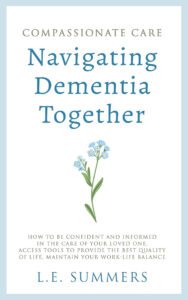

Editor’s Note
Compassionate Care: Navigating Dementia Together by L.E. Summers is a must-read for anyone supporting a loved one with dementia. This book combines practical advice, emotional support, and expert tools to empower caregivers at every stage of the journey. From effective communication strategies and behavior management to creating a safe environment and prioritizing self-care, the book addresses all aspects of caregiving with clarity and compassion. The inclusion of actionable frameworks like the DICE Model and in-depth explanations of dementia stages makes it an invaluable resource. Summers masterfully balances professional advice with an empathetic tone, offering hope and guidance. This book is both informative and uplifting, equipping caregivers with the confidence to provide compassionate care while maintaining balance in their lives.