











Lizz Lund Brings Humor, Mystery, And Culinary Charm To Her Delightful Series
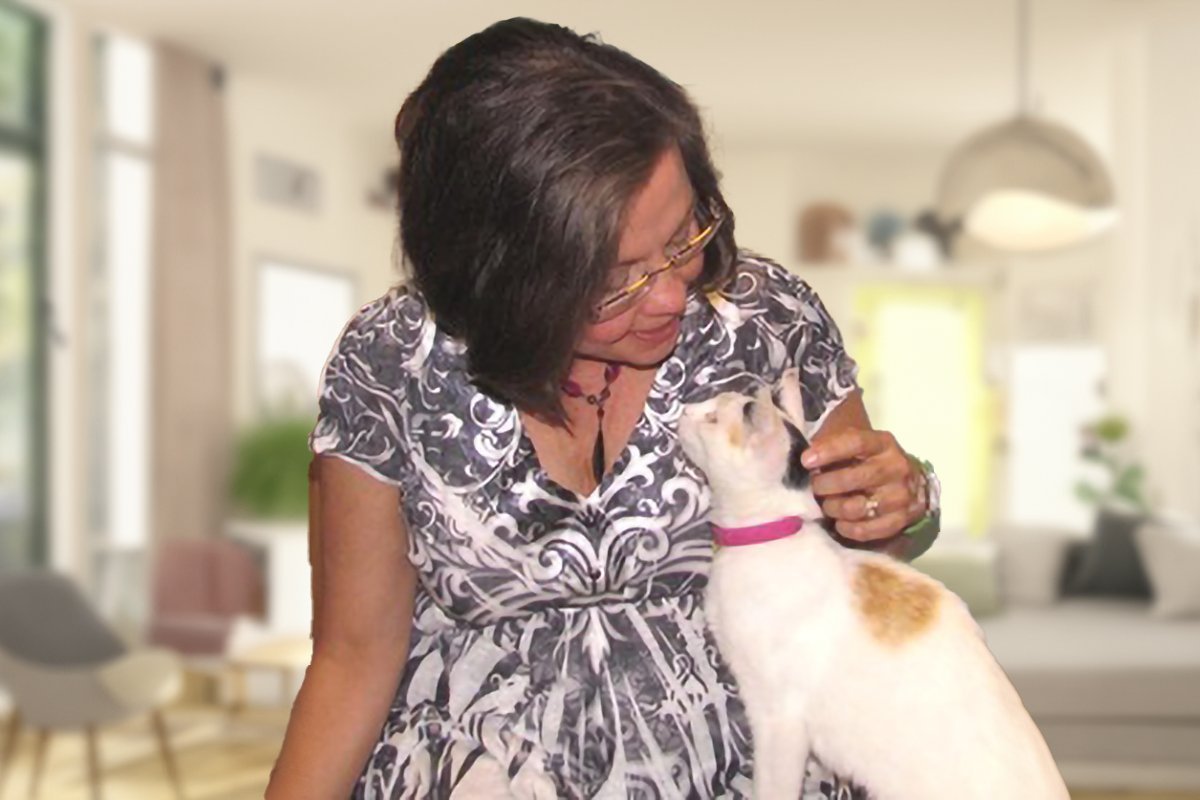
Photo: Author Lizz Lund, creator of the Mina Kitchen mystery series, combines culinary flair, hilarious characters, and captivating mysteries in her heartfelt stories.
Exploring Mina Kitchen And Lancaster’s Cozy Charm
Lizz Lund shares her creative process, blending humor, mystery, and recipes into her Mina Kitchen series, inspired by Lancaster’s charm, quirky life moments, and her theater background shaping dialogue and characters.
L izz Lund is a masterful storyteller whose works are as rich and satisfying as the recipes featured in her delightful Mina Kitchen mystery series. Her unique ability to blend humor, mystery, quirky characters, and culinary charm has made her a standout voice in the world of cozy mysteries. From her roots in New Jersey to her deep affection for Lancaster, Pennsylvania—where her novels are set—Lizz paints a colorful mosaic that combines the charm of small-town life with the chaos of comedic whodunits.
Her flair for crafting eccentric characters, from chatty pets to Swiffer-obsessed neighbors, demonstrates a creative brilliance that refuses to be confined by convention. Lizz’s protagonist, Mina Kitchen, is as endearing as they come: a clever, yet slightly scattered amateur sleuth navigating murder mysteries while juggling oversized cats, delicious chaos, and Vito-ized recipes. With a background in musical theatre, Lizz’s mastery of dialogue and character-driven humor adds a theatrical vibrance to her stories, effortlessly drawing readers into her world.
Here at Mosaic Digest, we are thrilled to shine a spotlight on an author whose whimsical tales and sharp wit offer a refreshing and laugh-out-loud escape. Whether through her chef-husband-vetted recipes or her playful ability to find the funny in the everyday, Lizz Lund’s books are not only a celebration of life’s quirky joys but also a delightful reminder that even the simplest moments can inspire extraordinary stories. We invite you to dive into this fascinating interview and discover how Lizz brings her imagination to life, one hilarious page-turner at a time.
You’ve set your Mina Kitchen series in Lancaster, Pennsylvania, yet you yourself moved there from New Jersey—how has living in Lancaster since 1999 influenced the setting, characters, or tone of your novels?
As someone who holds a BA in Musical Theatre, how, if at all, has your theatrical training shaped your approach to character development and dialogue in your humorous culinary mysteries?
Being involved in theater since high school really instilled an awe of acting and directing. A lot of my stories use a great deal of dialogue to further the plot and to provide humor. From a directing perspective, writing a novel is very much the same as directing a play, because you get to play all the parts. I also have a physical image of each of my characters, based either on friends/family, or famous actors.
Your books consistently blend humour, mystery, quirky animals and recipes—how do you balance these diverse elements and decide what comedic or culinary twist to weave into each story?
The main genre that my stories seem to fall into is cozy mystery. I noticed early on that these books lean towards humorous characters and situations, and most include recipes. So, the food thing is pretty much woven throughout the stories, because of the main characters (Mina working in a kitchen, her boyfriend Jack being Chef Jacque.) As for comedy — I don’t think you can have enough. I mainly hope to make people laugh. I base each story around a mystery-type plot, and provide humor in terms of situations, as well as character/dialogue.
Several of your novels include “free recipes” vetted by your chef-husband—can you tell us about that collaborative process and how it enhances the storytelling?
Working with my husband on the first set of recipes for Kitchen Addiction! Umm, nope. Way too much “sturm und drang” as the German half of my family would have said. Moving forward, he and I simplified our process. I jot down recipes as I write a novel, and I do attempt to tie the food in with the storyline. And yes, he vets each and every recipe. No worries.
In your blog you describe writing “humorous fiction” by taking “truth, dusting it off and topping it off with a lie” (“fun-house views”)—could you share your creative process and how you discover the funny in everyday life?
I honestly think the funny discovers me. There are many times I’ve witnessed something and actually said out loud, “Wow. More fiction fodder.” As the proverbial “they” say, truth is stranger than fiction.
Case in point: a very good friend of mine speaks fluent French. Her boyfriend at the time traveled to Paris for business. He was pretty much a gym rat, and of course decided to try out the hotel’s exercise equipment. The following excerpt from Confection Connection is pretty much verbatim from my friend’s email regarding her boyfriend’s Paris workout experience:
Ethel slapped at his arm. “What did you do?”
Ike stood up. “I did this!” He pantomimed motions of lifting weights. “Allaiter!”
Ethel looked puzzled.
Ma padded at her smartphone. “Well, no wonder.”
Ike whirled around. Ethel peered at the screen, then palmed Ike’s forehead.
“Halter means dumbbell, the ‘h’ is silent.”
“Oh. So?”
“Allaiter means to breastfeed.”
Mina Kitchen is a delightfully quirky protagonist navigating murder mysteries, culinary chaos, and chatty pets—where did the idea for Mina originate, and how has she evolved across your series?
Sadly, all of our pets do talk and we are routinely reprimanded.
Mina Kitchen is actually named after my mother’s grandma, my great grandma who I never met. She passed away just two days after giving birth to my grandfather. So, the family speculation around Mina was always there. Especially for my mom, Marjorie. I thought it would be a nice family homage to name this quirky gal after a great grandma I never met. Consequently, a lot of my other characters are named to honor other family members, too. In terms of Mina’s evolution — I think she is becoming less naïve, and certainly is a lot more kitchen savvy. I thank my husband for that input. I certainly have learned that as far as being a chef goes, you never want to be “in the weeds.”
Many of your stories feature off-beat characters—like Vito, the ex-leader who “Vito-izes” recipes—and humorous scenarios involving oversized cats and Swiffer-obsessed neighbours—how do you come up with these wonderfully eccentric characters and situations?
I drink a lot? No honestly — I don’t know how to answer this. I daydream a lot, I make pretend a lot… and rather than talking to myself (and getting conflicting answers from the other voices in my head) I legitimize these fancies by jotting them down.
I also grew up in a family that laughs a lot — we’re always cracking jokes, making up voices, doing impersonations. One of my fondest memories is staying up to the wee hours with my sister and my mother and guffawing over our impromptu made-up language which we dubbed, “Mel-Brook-ese.”
The following remnant is what we can remember of that silly conversation:
Ich habe bin be-Phlegm-elled by Schnooks.
Wass? Wass?
Ja! Ja! Mit de all-around-de-hausen achtoo-ee machen.
Finally, what advice would you offer to other authors hoping to fuse humour, culinary elements, and mystery in their fiction—particularly in terms of pacing, tone, and reader engagement?
It took me awhile, but I basically came up with a very loose “template” (recipe?) for myself. The first book in the series took me forever to write. I use a personal outline ONLY as a guide, a plot device. I feel this helps continuity and to keep me focused. But if I decide to deviate? I readjust my outline and make sure the change(s) make sense all the way to the conclusion.
As far as reader engagement, I’m woefully tardy. I do reply to all emails or comments on the website eventually, but I’m admittedly not very timely. But I’m trying to get better — honestly.
Everybody has a story. Your first novel will not be an instant best seller — mine certainly wasn’t. I was re-reading mine (the first novel, Kitchen Addiction!) a few months ago and realized boy, I’ve learned a lot.
So, tell your story. And yes, sometimes you have to take some time off for real-world events and life challenges. But just like the proverbial bicycle, eventually you hop back on and start peddling again. And heck – progress isn’t always linear. Sometimes you have to go two steps backward to go one step forward. Try to think of it like the cha-cha.