











Cartagena Beyond the Painted Facade
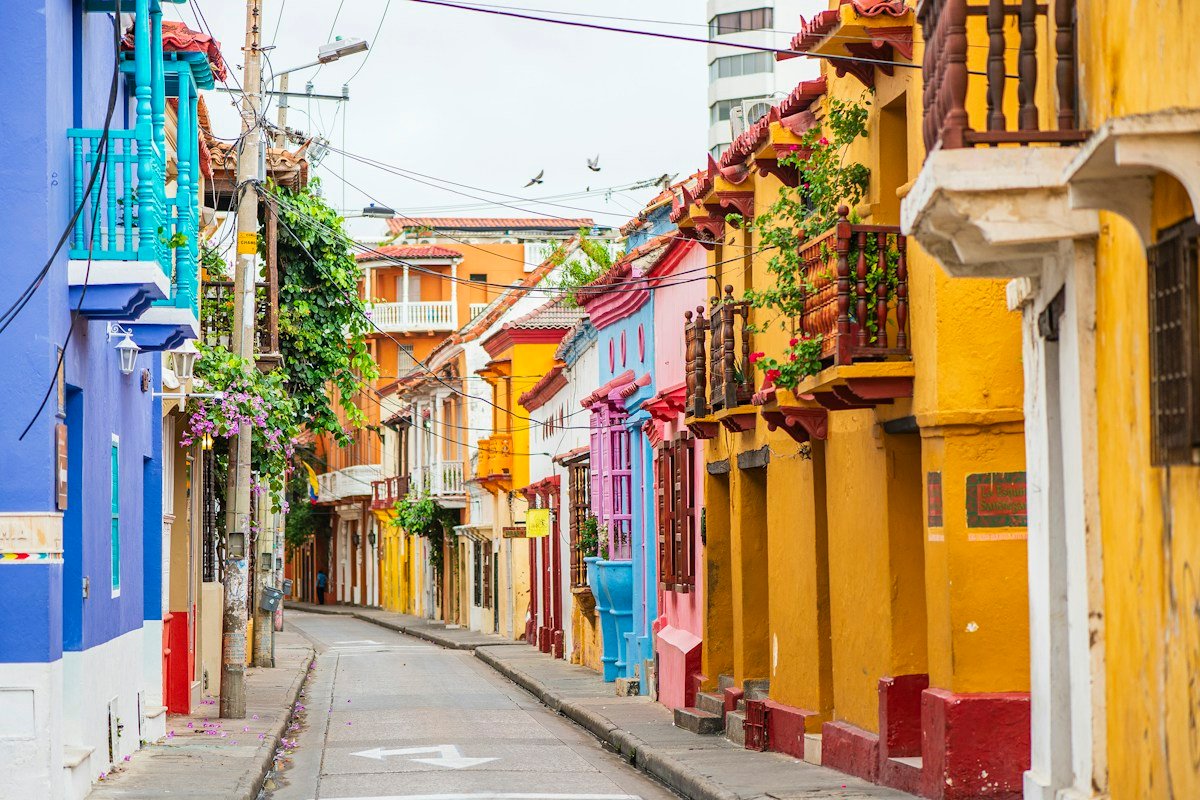 A narrow Cartagena street lined with colourful facades and balconies. Photo by Ricky Beron.
Colombia’s Caribbean port offers colour and architectural drama, but its walls also open a larger story about trade, power and the sea.
Cartagena’s streets make colour feel architectural. A painted wall, a timber balcony or a flowering frontage can hold the attention long enough to slow a whole afternoon. Yet the city’s visual appeal becomes more substantial when placed beside the defensive structures surrounding it.
On Colombia’s Caribbean coast, Cartagena developed as a strategically important port. UNESCO recognises its fortifications and monumental heritage as evidence of that role. The walls are not merely a scenic route around attractive buildings: they express the pressures and ambitions of a city tied to maritime networks.
A visit can usefully move between these two scales. Spend time with the streets and their details, then step back to consider the larger defensive landscape. The change helps connect domestic architecture with the systems that protected and controlled the port. It also invites questions about who benefited from the movement of wealth and who bore its costs.
Within the historic districts, avoid making the busiest streets the whole itinerary. Look for opportunities to understand the neighbourhood as a place of work and residence. Ask before photographing people closely, and distinguish public street life from a performance supplied for visitors. Colour is a feature of the setting, not permission to turn its residents into props.
Cartagena is best approached with room for shade, pauses and revisiting a place under different light. Its architecture is rewarding enough to justify that slower rhythm. What remains afterwards can be more than a sequence of bright facades: an understanding of a Caribbean city where local life and the history of overseas exchange are inseparable.
Further reading: UNESCO World Heritage Centre.
Photo by Ricky Beron.