











Edinburgh Tells Two Stories in Stone
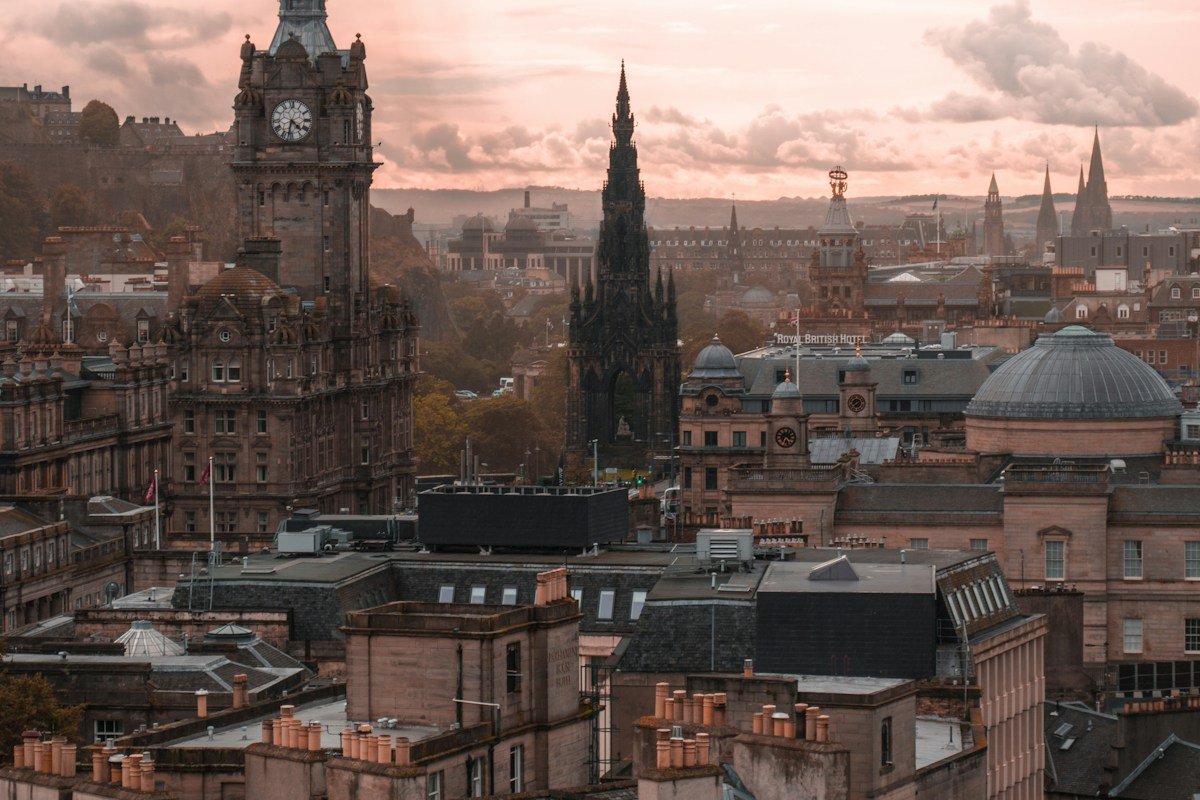 Edinburgh skyline with historic towers and layered rooftops. Photo by Alex Azabache.
The Scottish capital’s Old and New Towns make urban history unusually visible, from close-packed medieval streets to Georgian planning.
Edinburgh can change character within a single walk. A narrow passage opens into a busy street; a view across a valley reveals a more ordered pattern of terraces and squares. These shifts are central to the city’s appeal, rather than interruptions between its better-known attractions.
UNESCO recognises the Old and New Towns together. The relationship between the medieval urban form of the Old Town and the planned Georgian New Town gives the heritage area its particular interest. Visiting only one side leaves a significant part of that explanation unseen.
Begin with the street itself. In the Old Town, pay attention to changes of level, the depth of buildings and the small routes branching away from the principal thoroughfares. Then move towards the New Town and look at proportion, alignment and the organisation of space. The contrast becomes legible without specialist architectural knowledge.
There is room for a less formal Edinburgh too. A bookshop, a public garden or a cafe can provide the pause that turns a route into a day. Choose one or two substantial visits and allow walking time between them. Trying to compress every landmark into a short break can flatten a city whose pleasures depend on texture.
The weather will influence what a visitor sees, but a grey sky need not empty the streets of interest. Stonework, silhouettes and changes in light can be as compelling as a broad panorama. Edinburgh rewards returning to the same view after a few hours. The city’s two great urban stories are fixed in its fabric, yet the experience of moving between them is continually changing.
Further reading: UNESCO World Heritage Centre.
Photo by Alex Azabache.