











Emirates Chief Sheikh Ahmed Bin Saeed Calls For Clear Resolution To Middle East Hostilities
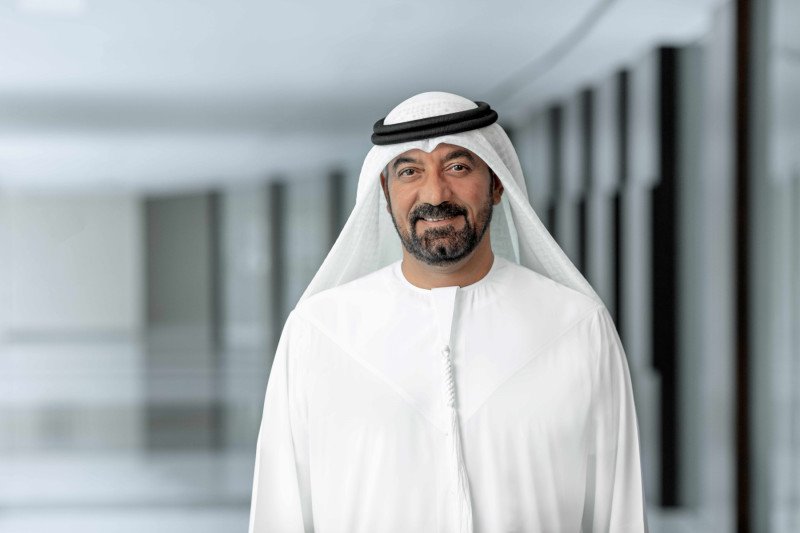
Photo: Sheikh Ahmed bin Saeed Al Maktoum speaks on Emirates’ resilience, regional stability, and record financial performance amid ongoing Middle East tensions.
Emirates Urges Stability Amid Gulf Crisis
Emirates Chairman Sheikh Ahmed bin Saeed urged a peaceful resolution to Middle East tensions while highlighting the airline’s resilience, strong profits, secured fuel supplies, and confidence in Dubai’s aviation future.
T he head of a major airline has called for a “clear resolution” to hostilities in the Middle East. The call from Emirates comes amid continuing economic and political uncertainty caused by the bitter conflict between the U.S and Iran. The war has impacted badly on global air travel with fears of shortages of aviation fuel in the coming weeks.
But Sheikh Ahmed bin Saeed Al Maktoum, Chairman and Chief Executive of Emirates airline and group, has sought to strike an optimistic note. He said, “From a fuel perspective, Emirates is well-hedged until 2028-29.
“We have worked with our suppliers to secure the volumes required to support our current operations and our scaling up to pre-disruption levels. At dnata and across the Group, our business streams, scale, portfolio mix, and years of investments give us the resilience and agility to address any near-term challenges.”
Turning to the ongoing conflict involving Iran, the U.S and Israel, the airline boss added, “Right now, military activities between the US, Israel and Iran are paused under a ceasefire agreement.
“We hope for a clear resolution to the hostilities soon, and a return to market stability. But in the meantime, we are not sitting on our hands.”
Reflecting on the repercussions of the war, he added, “On 28 February, military activity massively disrupted global commercial air traffic in the Gulf region, including in the UAE.
“Emirates and dnata quickly mobilised to support our people and affected customers, protect our assets, and ensure business continuity.”
He continued, “We are fortunate to be based in Dubai, where years of infrastructure investments and a cohesive aviation ecosystem has enabled the government to quickly secure safe corridors for commercial flights.
“Emirates and dnata have since gradually restored operations at DXB. Although we are still operating at a lower passenger capacity than pre-disruption, cargo operations have ramped up to support the movement of essential goods into and through the UAE.”
He admitted that both the airline and the aviation sector in general had faced “significant challenges.”
But, looking to the future, he added that the Emirates Group “has navigated crises and disruptions before.
“Each time,” he continued,”we placed our focus on our customers and our people, and each time, we have bounced back stronger.”
He said that his company “enters 2026-27 with very strong cash reserves, which enable us to progress with our plans to strengthen our business without knee-jerk cost control measures.”
He said, “Our aircraft deliveries and retrofit programme will continue apace, as well as our planned investments in new facilities and equipment.”
Despite fears over its long-term future, he also reinforced his confidence in Dubai remaining a key transport hub in the region, saying its “place at the nexus of global commerce, trade and travel flows is unchanged.”
His comments come as the airline released its 2025-26 annual report which says it achieved new record profit, revenue and cash balance levels.
These “outstanding results”, he said, “reaffirm the strength and resilience” of its business model.”
For the financial year ended 31 March 2026, the Group reported record profit before tax (PBT) of US$ 6.6 billion, up 7% from last year, and record revenue of some US$ 41.0 billion, up 3% over last year’s results.