








From Brexit to Bre-entry?
Starmer Seeks A Pragmatic Return To Europe After Brexit’s Turbulent Years
Keir Starmer’s government is gradually rebuilding Britain’s relationship with Europe after Brexit, focusing on practical cooperation, economic recovery, defense partnerships, and restoring political trust across the continent.
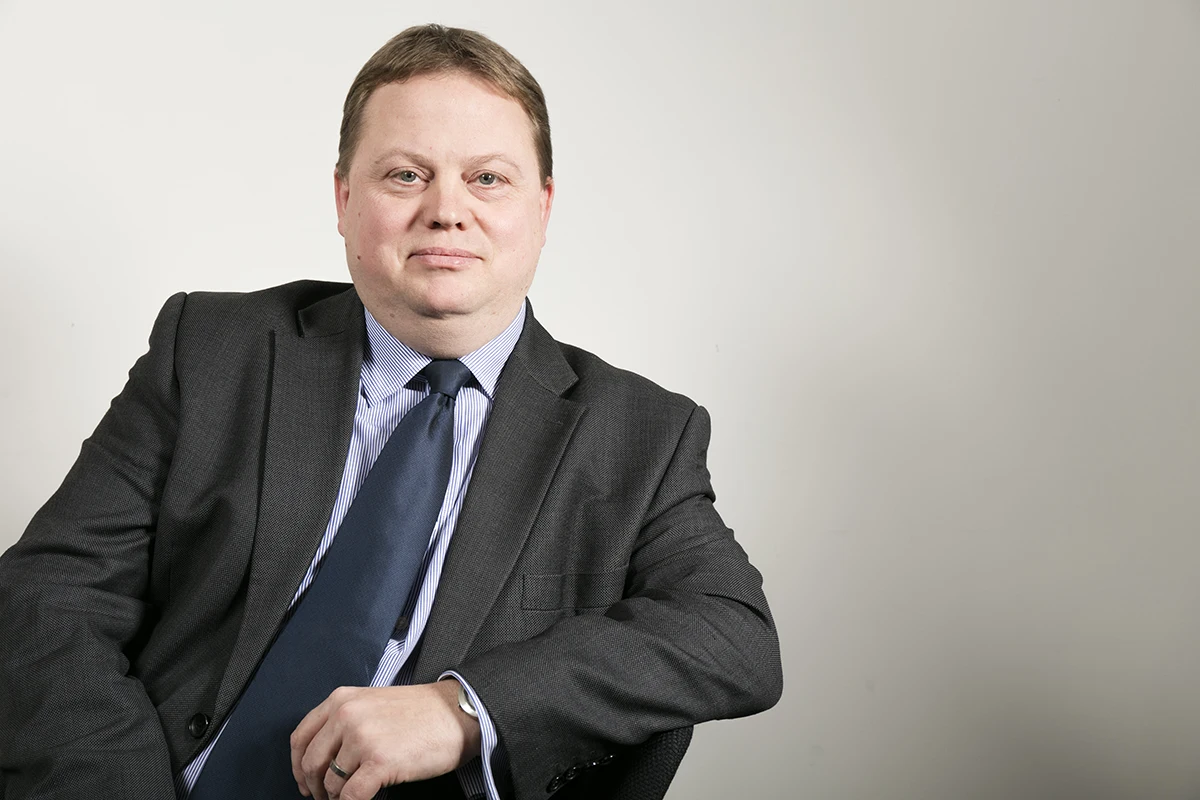
By Fabian Zuleeg
The uncertainty surrounding Keir Starmer’s political future has reopened a debate Labour had tried hard to avoid: Britain’s long term relationship with the European Union. Starmer himself had already shifted considerably towards closer cooperation and dynamic alignment with the EU. Some potential future Labour leaders are now going further still, openly speculating on the possibility of rejoining.
This debate is long overdue.
For years, Labour calculated that reopening the Brexit debate was politically imprudent. Europe was treated as an electoral minefield best left untouched. Yet that caution has yielded few obvious rewards. Brexit remains deeply unpopular with large parts of the British public. Poll after poll shows widespread regret and frustration with its economic consequences. At the same time, Nigel Farage, the chief architect and political salesman of Brexit, has become Labour’s strongest domestic challenger.
That creates both a danger and an opportunity.
Assigning responsibility for Brexit matters politically. Farage cannot simultaneously claim ownership of Brexit while distancing himself from its outcomes. But assigning blame is not enough. Voters also want to know what comes next.
So far, the answer has been incrementalism: veterinary agreements, closer regulatory cooperation, security partnerships, participation in selected programmes and a gradual reduction of friction. These steps are sensible and necessary. They improve on the damaging status quo.
But the stark underlying truth remains. Even the closest conceivable relationship outside membership falls well short of what EU membership provides.
This matters more today than it did in 2016. The world has become harsher, more fragmented and more dangerous. Economic security, energy resilience, defence industrial capacity, technological competition and geopolitical leverage increasingly require scale and collective action. In such a world, standing alone is not sovereignty. Often, it is simply diminished influence.
For the UK, the costs are becoming increasingly visible: weaker growth, lower investment, reduced strategic influence and diminished capacity to shape the rules that still affect Britain profoundly. For the EU, too, there is a growing recognition that Europe is stronger with the UK inside rather than permanently half-detached, not least because defence and security are increasingly becoming an EU matter and the UK remains one of Europe’s most significant military and strategic actors.
Of course, rejoining would not be straightforward. The EU would expect commitments and clarity. Questions around opt-outs, budget contributions, free movement and institutional participation would have to be addressed. But these are ultimately details within a much bigger strategic picture.
The bigger picture is about prosperity, sustainability, resilience, security and the ability to act in a harsh global environment. It is about whether Europe, including the UK, can retain agency in a world of increasing economic and political confrontation and fragmentation.
Yes, reopening this debate carries political risks. But what Britain has done so far is plainly not working. Pretending otherwise will not reverse economic stagnation or political fragmentation.
Iceland, after years of hesitation and reluctance, is now once again applying to join the EU, having recognised the signs of the time. Britain may soon have to reach a similar conclusion.
Perhaps the real meaning of “taking back control” today is not distancing Britain from Europe, but recognising that genuine control often requires pooling sovereignty, precisely what the EU was constructed for.
About Fabian Zuleeg
Chief Executive and Chief Economist
Since October 2013, Dr. Fabian Zuleeg has been Chief Executive of the European Policy Centre, with overall responsibility, including providing strategic direction, managing its staff and resources and representing the EPC. He remains Chief Economist at the same time (a post he has held since January 2010). Fabian holds a PhD on the political economy of EU accession from Edinburgh University. Before coming to the EPC, he worked as an economic analyst in academia, the public and the private sector.
His analysis focuses on the political economy of the future of European integration in the context of political dis-cohesion within the EU and a contested, challenging global landscape. His current work is concentrated on determining how EUrope can meet the triple challenge of the watershed of Russia’s invasion of Ukraine, the fundamental transformations EUrope has to go through (technological revolution, climate change mitigation and demographic change), and the Permacrisis, a term he coined with EPC colleagues in 2021.
Fabian also focuses on transnational cooperation between European Think Tanks, with the aim of increasing the capacity, ethics and sustainability of the sector. He is currently a Member of the Executive Board of Transparency International EU, Honorary Fellow at the Europa Institute of the University of Edinburgh and Honorary Professor at Heriot-Watt University. He also chairs the International Philanthropy Committee for the King Baudouin Foundation.
Fabian works closely with decision-makers in the European institutions, the EPC members and partners, European think tanks and the wider Brussels and member state stakeholder community. Fabian regularly comments on current political and economic issues in the EU in the media. He also chairs and contributes to a wide range of debates, conferences and seminars and has researched and published widely on the future of European integration, global challenges, Brexit and on European economic and social policies.