










Jane Stevenson Uncovers the Hidden Truths Behind Renaissance Power, Memory, and the Making of History
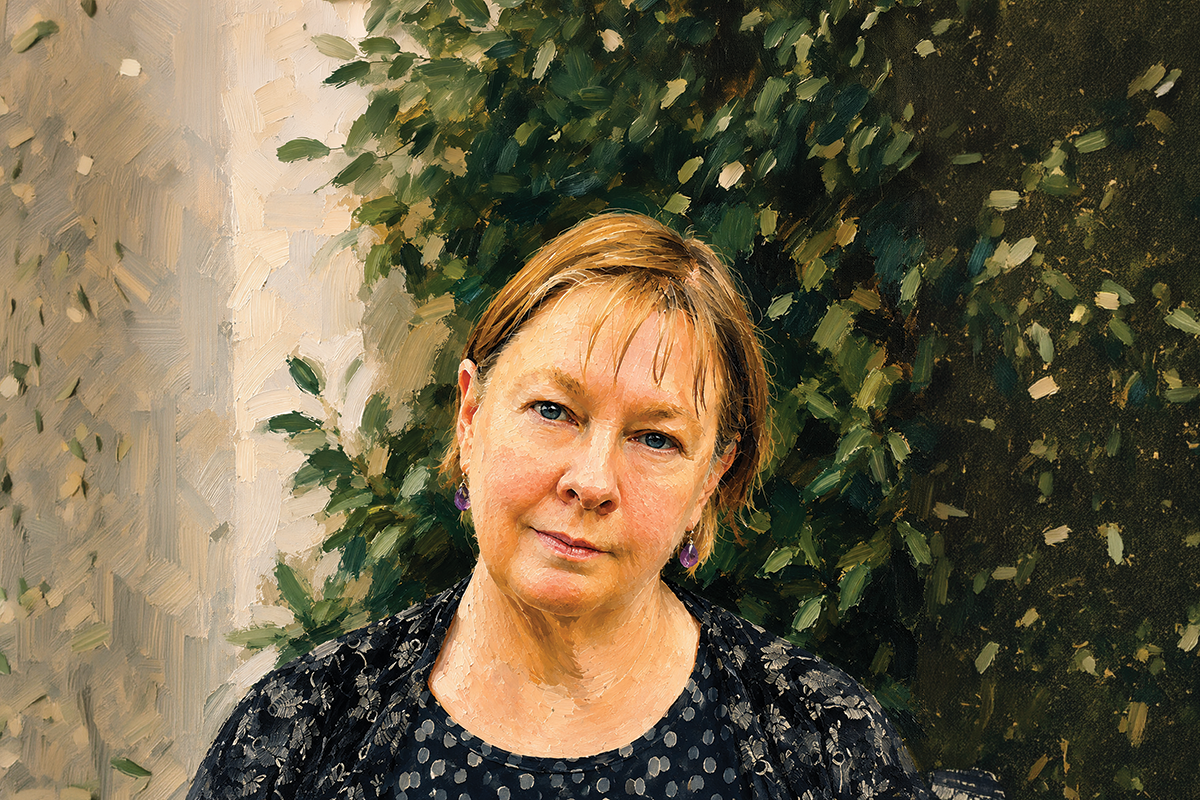
Photo: Jane Stevenson, acclaimed historian and novelist, whose work uncovers the remarkable people and hidden stories that shaped Renaissance Italy and beyond.
The Renaissance Was Never Quite What We Were Told
The distinguished historian, biographer and novelist discusses Renaissance Italy, the creation of political legends and the overlooked women whose lives have transformed her understanding of the past.
J ane Stevenson has built an exceptional career by looking where others have failed to look. A Senior Research Fellow at Campion Hall, University of Oxford, and formerly Regius Professor of Humanity at the University of Aberdeen, she is an accomplished historian, biographer and novelist whose work moves confidently between rigorous scholarship and compelling storytelling.
Her books range from the groundbreaking Women Latin Poets and the Edward Burra biography Twentieth-Century Eye to Baroque Between the Wars, Siena: The Life and Afterlife of a Medieval City and The Light of Italy: The Life and Times of Federico da Montefeltro, Duke of Urbino. Across these works, Stevenson returns repeatedly to a central question: what lies behind the stories that people, rulers and cities choose to tell about themselves?
That question sits at the heart of her study of Federico da Montefeltro, one of Renaissance Italy’s most recognisable figures. Yet Stevenson’s interest in the Duke of Urbino began not with Federico himself, but with his second wife, Battista Sforza.
While researching Renaissance women, Stevenson discovered that Battista was exceptionally well educated and trusted with considerable authority. Federico was prepared to leave her in charge of Urbino for extended periods while he was away fighting as a condottiere, or military commander.
“That suggested that he was interesting too,” Stevenson says. A visit to Urbino, where she encountered Federico’s hauntingly beautiful palace and the famous profile immortalised by Piero della Francesca, prompted her to wonder what lay behind the carefully cultivated image.
Highlights
- Began researching Federico da Montefeltro through his remarkable wife, Battista Sforza.
- Reveals that Urbino itself was carefully crafted as political propaganda.
- Explains how history is often shaped by those who control the narrative.
- Believes every historic city tells a carefully constructed story.
- Argues that understanding history enriches every travel experience.
- Discovered more than 300 overlooked women Latin poets after a decade of research.
- Combines archival research with compelling storytelling to bring historical figures to life.
- Emphasises that untold stories still exist for curious historians.
- Encourages writers to stay true to their passions rather than follow trends.
- Believes research should always serve the story, not overwhelm it.
- Says fiction and biography rely on the same process of understanding character.
- Would spend a day in Renaissance Milan dining with Bianca Maria Sforza.
- Thinks Federico would admire his biography—but hate losing control of his own story.
Creating the Great Duke
Urbino appears to present a harmonious and complete vision of Federico’s rule. His initials are found throughout the palace; commissioned histories celebrate his achievements; and his celebrated portrait places him beside Battista as though the couple had always presided over a prosperous ducal court.
Stevenson’s research revealed a much more complicated reality.
Battista gave birth to a succession of daughters—probably eight—before finally producing a male heir. She died shortly afterwards. Federico became a duke in the same year, meaning that Battista herself was never Duchess of Urbino. During their marriage, the couple occupied only a fraction of the palace visitors see today.
The monumental building, magnificent library and impressive collection of art were therefore not simply expressions of culture and taste. They also formed part of a highly effective political narrative designed to establish Federico’s legitimacy and secure his son’s position.
Federico had been born illegitimate and may have been involved in the murder of his legitimate half-brother. According to Stevenson, the glorious image preserved at Urbino amounts to a “massive great fiction” intended to persuade posterity that Federico had always been the natural and rightful Duke of Urbino.
The strategy succeeded. Centuries later, visitors still step into a story constructed largely on Federico’s terms.
A City as a Work of Storytelling
Urbino’s remarkable coherence is part of its enduring power. The city and palace reflect the vision of one man who could call upon some of Italy’s greatest artists, architects and craftspeople. Piero della Francesca contributed to its visual identity, while the gifted Francesco di Giorgio helped to realise Federico’s architectural ambitions.
For Stevenson, however, Urbino’s beauty cannot be separated from its role as a carefully composed narrative. Its buildings, artworks and inscriptions work together to deliver a particular version of the past.
She found a comparable process at work while writing Siena: The Life and Afterlife of a Medieval City. Following the loss of its independence in the sixteenth century, Siena devoted much of its collective energy to curating the memory of its former glory. The city that modern visitors regard as an exceptionally preserved medieval treasure is, in important respects, a later interpretation of medieval Siena rather than an untouched survival.
This does not mean that visitors must possess extensive historical knowledge to be moved by such places. Stevenson believes beauty can be experienced without complete understanding. Knowing that a city has a deeper cultural story, however, can profoundly enrich the encounter.
“When you visit any place, you bring along your own knowledge and experience,” she says. “To my mind, you get more out of looking at a place if you know about the history and culture behind it, but the really important thing is to know that it has one.”
Scholarship in the Service of Story
Stevenson’s books are admired for combining academic authority with an accessible, absorbing narrative. She describes historical research as an effort to establish what was truly happening: reading letters and chronicles, consulting archaeological reports, examining pictures and physical remains, and considering what a subject’s enemies had to say.
Yet discovering a fact does not automatically justify placing it in a book.
“It can be tempting to bang on about something just because it took you three weeks to find the fact in question,” she observes, “but it’s your duty as a writer to be interesting.”
Her approach is guided by character and story. Facts earn their place when they illuminate a life, reveal a motivation or deepen the reader’s understanding of a place. This principle also explains why she sees less difference than might be expected between fiction and historical non-fiction.
A novelist must research the worlds inhabited by fictional characters, including their professions, social backgrounds and private histories. A biographer begins with documented facts but must use them to realise a convincing human character. Both forms require disciplined research and imaginative understanding.
Stevenson encourages writers to enter as fully as possible into the physical and cultural experiences of their subjects. They should read letters, seek authentic voices, listen to the music their characters might have heard and consider how their clothing affected their movements. While researching Federico, she spent days investigating what it actually felt like to wear armour.
Recovering Overlooked Women
Stevenson’s determination to question inherited assumptions is perhaps most clearly demonstrated by Women Latin Poets, a project that occupied ten years of her career.
When she began discussing the subject, the response was frequently dismissive: there were no women Latin poets, people told her. Stevenson’s reply was simple and incisive—had anyone actually looked for them?
Locating the evidence required considerable ingenuity and persistence. Her research ultimately uncovered approximately three hundred women who had written poetry in Latin, along with many fascinating individual lives. The experience confirmed one of her deepest convictions as a historian: the world is filled with untold stories whose existence has not yet been recognised.
The same principle shapes her interpretation of Federico’s life. Although history celebrates the duke and the famous men associated with his court, Stevenson points towards women such as Giovanna degli Alidosi, Federico’s foster mother.
Federico later emphasised his association with the renowned humanist educator Vittorino da Feltre. Stevenson argues, however, that Giovanna played a much more substantial role in his education. Federico spent only three years at school in Mantua, much of that time devoted to military training rather than Greek scholarship.
She also believes that Francesco di Giorgio remains unfairly neglected. An architect, engineer, artist and sculptor, he possessed a breadth of talent comparable to Leonardo da Vinci, yet his name is unfamiliar to most readers.
Asked which historical figures deserve greater recognition, Stevenson admits that it is tempting to answer simply: “all the women”.
The Continuing Allure of Italy
Renaissance Italy remains central to Stevenson’s intellectual imagination because it represents one of those rare periods when a relatively small group of exceptionally gifted people redirected the course of history.
Its attraction lies not only in great paintings, buildings and books, but also in the human ambitions behind them. The Renaissance was an age in which rulers invested heavily in the creation of their reputations. Art and scholarship could serve beauty, but they could also project authority and transform political uncertainty into the appearance of permanence.
Federico understood that power depended partly upon controlling the story. Stevenson suspects that he would have approved of receiving a modern biography, since Renaissance biographies traditionally celebrated great men. He would have been far less pleased by what she uncovered.
“He would be furious that he wasn’t able to control my narrative,” she says. “The authors who worked for him wrote the stories he wanted told.”
That remark captures the distinctive value of Stevenson’s work. She approaches history not as a passive inheritance but as a living argument between evidence and image, memory and invention, the powerful and the forgotten.
Staying Curious
Stevenson’s advice to aspiring historical writers begins with research. Authors must discover how their characters spoke, worked, dressed, listened and moved through the world. Accuracy is not merely decorative; it provides the foundations upon which believable lives can be built.
She also urges writers to remain loyal to their genuine interests. A lasting career may benefit from a recognisable identity, enabling readers who enjoyed one book to know what they might find in the next. But pursuing a calculated brand at the expense of curiosity carries its own danger.
“If you don’t stay true to your own interests, you’ll become boring,” she says. “So stick to your guns.”
Her own curiosity remains wonderfully expansive. Given a day in Renaissance Italy, she would travel to Milan and dine with Bianca Maria Sforza, whom she imagines as a fascinating conversationalist and an excellent host. For a modern city break, she would choose the seventeenth-century antiquary John Aubrey—a charming observer who lost his estates, lived largely through the hospitality of friends and recorded the quirky details he noticed around him.
Presented with a Renaissance library, Stevenson would first reach for Virgil, the foundational author of Renaissance humanism, preferably in a beautiful Aldine edition printed in Venice.
These imagined encounters reveal the qualities that animate her scholarship: wit, curiosity and an enduring desire to understand people not merely as historical names, but as individuals who ate, travelled, argued, loved, schemed and fashioned stories about themselves.
Jane Stevenson’s work shows that the past is never as settled as it appears. Behind a magnificent palace may lie a struggle for legitimacy; behind a beautifully preserved city, centuries of reinvention; and behind the claim that certain people left no literary legacy, hundreds of voices waiting for someone to search for them.
For Stevenson, history’s greatest promise