











Jay Hartlove Unlocks The Secrets Of Storytelling, Science And The Human Spirit

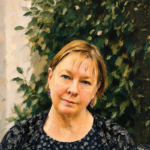
PHOTO:Award-winning author Jay Hartlove, a master of blending science, emotion, and moral exploration in his fiction.
A Visionary Author Who Merges Science, Morality, And Imagination To Redefine Modern Fiction
Jay Hartlove masterfully fuses science, emotion, and moral complexity, creating unforgettable stories that explore transformation, identity, and the fragile balance between light and darkness in the human condition.
Jay Hartlove stands among the most fearless voices in speculative fiction, weaving narratives that are as intellectually rigorous as they are emotionally resonant. His works defy easy categorisation—merging elements of science fiction, psychological depth, and moral exploration—to craft stories that challenge the reader to think, feel, and question. From the supernatural suspense of Goddess Rising to the hauntingly cerebral The Insane God, Hartlove’s writing consistently pushes the boundaries of what fiction can achieve.
A celebrated figure in the literary world, Hartlove’s work has earned widespread acclaim. Horror legend John Shirley hailed The Goddess Rising Trilogy as “crazy” in the most enthralling way, while Mermaid Steel drew praise from Kirkus Reviews as “thoughtful and erotic.” His latest novel, The Insane God, described by Kirkus as “Nightmare on Elm Street meets The Stand,” further solidifies his reputation as an author unafraid to merge the scientific with the spiritual, the real with the surreal.
Hartlove’s writing blends intellect, empathy, and imagination, crafting thrilling and thought-provoking stories that linger long after the final page.
At the heart of Hartlove’s creative process lies his empathy and his belief in the transformative power of storytelling. A dedicated LGBTQ ally and father of two queer children, his fiction often reflects the courage and resilience of marginalised voices. Discussing The Insane God in an interview with Reader’s House Magazine, he explained, “I could not resist the urge to tell a story about such a marginalised person, a trans woman, saving the world that only wants to destroy her. The fact that she is willing to transform herself makes her uniquely suited to solve the story’s conflict.”
Hartlove’s fascination with the human mind and morality also drives his blending of scientific realism with narrative imagination. Drawing on his background in neuroscience, he grounds his speculative fiction in plausible science while exploring the mysteries of consciousness. “The fact that consciousness is no more than a happy accident of many interactive processes means it can be changed with only tiny shifts in chemistry,” he said. “This is fertile ground for speculation in fiction.”
His approach to structure and theme is equally meticulous. In Goddess Chosen, Hartlove boldly flips the traditional hero’s journey by casting a villain in the central role. “He wants very good things,” Hartlove explained, “but he is willing to do very bad things to get them. I loved stretching the reader’s sympathies.”
A deep sense of justice underpins all of Hartlove’s work. Having endured childhood trauma, he channels that pain into art that seeks not vengeance but understanding. “Justice matters to me a lot,” he admitted. “If I’m going to spend two years writing a book, I think I should say something more than just entertainment.” His novels thus explore weighty themes—radicalisation, revenge, betrayal, and racism—through characters who evolve from victims into heroes.
For Hartlove, craftsmanship and research are vital. He encourages aspiring writers to “do your homework,” emphasising that authenticity makes even fantasy worlds feel true. “You end up doing more research than what shows on the page,” he advised. “You only include what applies to the story. That means you know what should be left out.”
Whether crafting supernatural thrillers, fantasy romances, or science-infused speculative fiction, Jay Hartlove remains a rare storyteller—one who fuses intellect with heart, logic with wonder, and darkness with redemption. His works remind readers that the greatest transformations often begin not with heroes, but with humanity itself.