








Luang Prabang Between Two Rivers
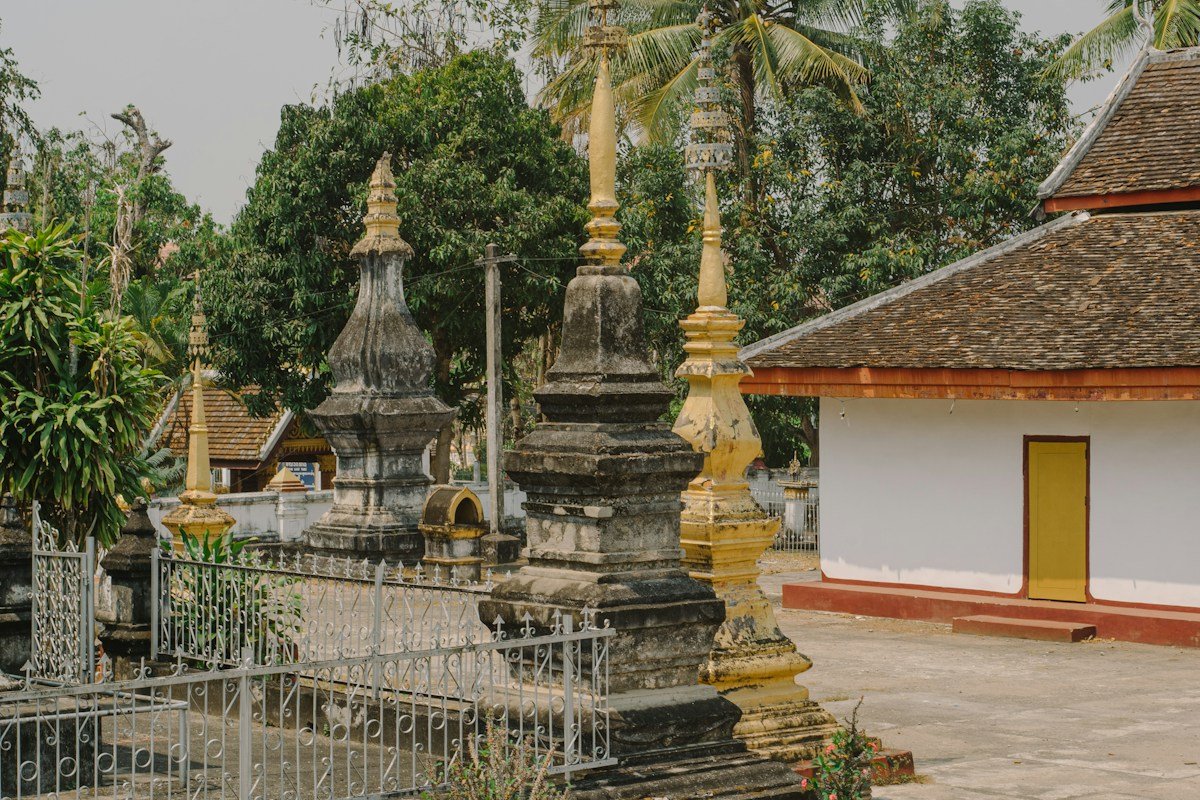 A white and yellow temple building beside trees in Luang Prabang. Photo by Bo Pan.
At the meeting of the Mekong and Nam Khan, the former royal town reveals how buildings, water and religious life shape one another.
Luang Prabang makes most sense when approached through its rivers. The old town occupies a peninsula between the Mekong and Nam Khan, with mountains around it. Water helps explain its shape, its views and the feeling that the surrounding landscape remains close even within the streets.
The town’s architecture brings Lao traditions into contact with buildings introduced during the European colonial period. UNESCO recognises this distinctive urban mixture, rather than an isolated monument. Religious buildings, homes and the spaces connecting them belong to the same story.
A walk can therefore be deliberately modest. Follow a riverside stretch, turn inland to examine a roof or veranda, then return towards the water. Instead of trying to see every landmark in succession, notice how scale changes between a temple enclosure and an ordinary street. The town’s appeal lies partly in those transitions.
Religious life requires particular care from visitors. A ceremony should never be treated as a performance arranged for a camera. Observe local guidance, give worshippers space and ask before making a close portrait. Choosing when to put a phone away can improve both the experience and the welcome extended to the next traveller.
Luang Prabang also invites a broader question about what preservation means. Maintaining an attractive townscape matters, but so does allowing residents to continue using it. Shops, homes and places of worship give the buildings their purpose. A longer stay, with spending spread among locally run businesses, offers a more thoughtful relationship with the place than a rapid circuit of its most photographed corners. Between the rivers, the most interesting discoveries are often the ones that do not demand a queue.
Further reading: UNESCO World Heritage Centre.
Photo by Bo Pan.