











Hoi An Was Connected Long Before the Tourist Arrived
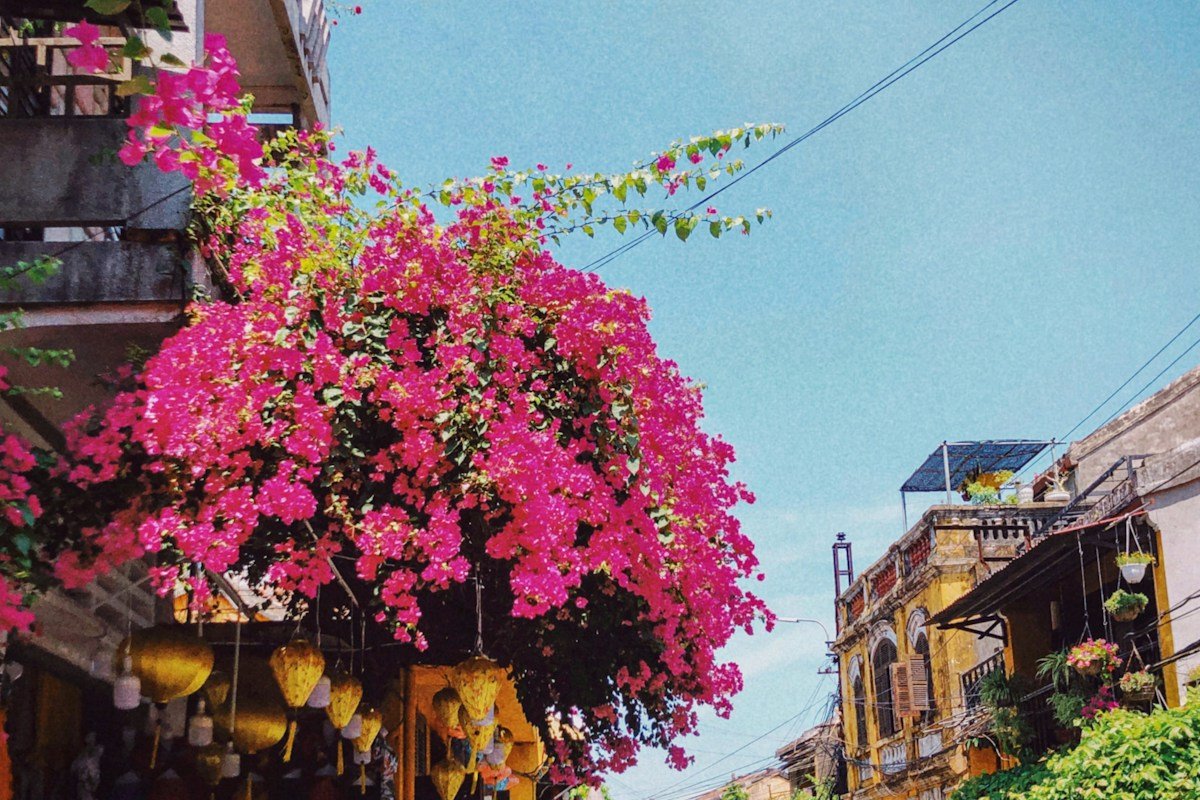 Flowering bougainvillea above a street of yellow buildings in Hoi An. Photo by Thuy.
Vietnam’s historic port offers more than lanterns and yellow walls, with a street plan that still tells the story of overseas trade.
Hoi An’s lanterns can dominate the first impression. Yet the deeper attraction of this Vietnamese town is the evidence it preserves of people arriving, trading and building lives across cultural boundaries. The decorative surface is only the beginning.
From the fifteenth to the nineteenth century, Hoi An functioned as an international trading port. Its architecture reflects local traditions alongside Chinese, Japanese and later European influences. UNESCO’s account draws attention to both its buildings and its surviving street plan: this is a place whose layout helps explain its past.
Start with the relationship between the river and the streets. Commercial buildings were arranged to serve exchange, with access shaped by the movement of customers and goods. Seen in that light, a row of old houses becomes more than a pleasing backdrop. It is evidence of how a port worked.
The most useful itinerary alternates landmarks with ordinary details. Look at a roof, a doorway or the depth of a shopfront; then find a place to sit and watch present-day commerce. Hoi An’s heritage remains entangled with buying, selling and making. That continuity deserves as much attention as the evening lights.
There is no need to turn every hour into an activity. Give the riverside and the lanes separate visits, and allow the changing light to reveal different aspects of the same buildings. Supporting a maker is more meaningful when there is time to ask about materials and methods. Hoi An’s strongest travel story is not that it has remained untouched. It is that generations of outside contact produced a recognisable local character, one still being negotiated by the people who call the town home.
Further reading: UNESCO World Heritage Centre.
Photo by Thuy.