










Kristel Baldoz Pushes BoundariesThrough Multidisciplinary Art
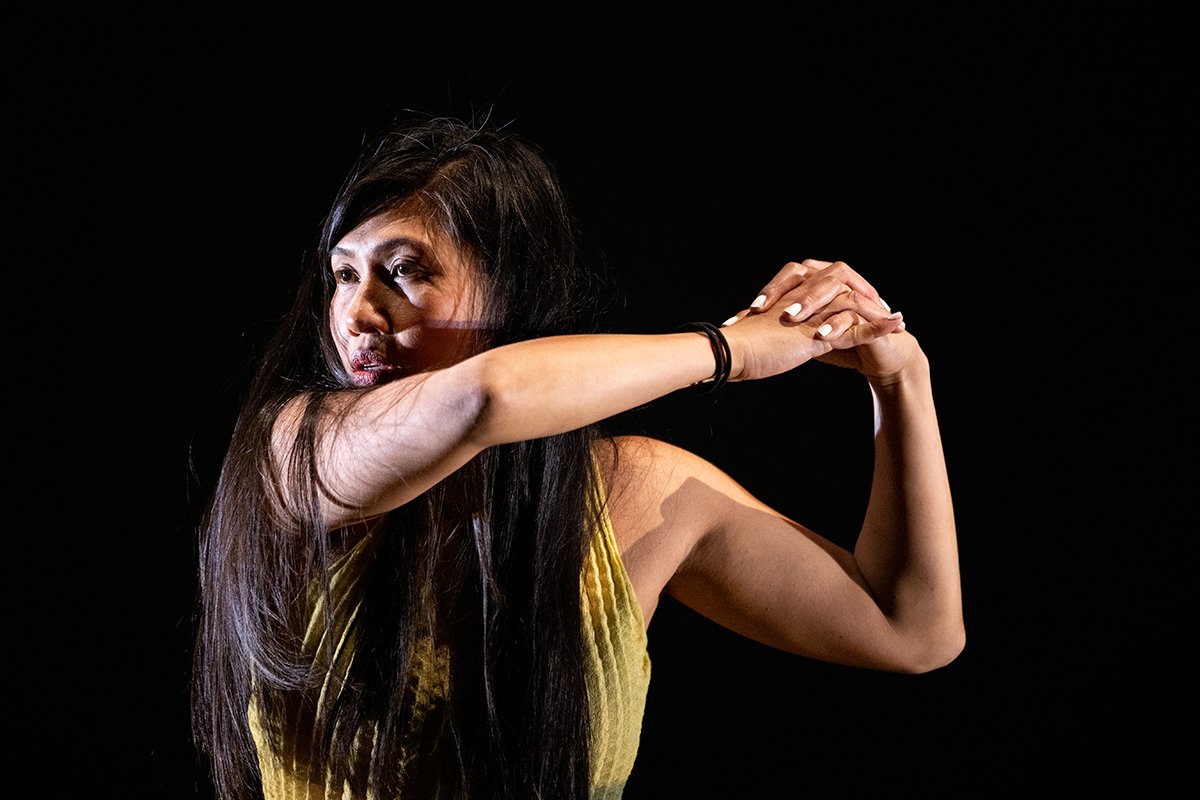
Exploring Identity, Labor, And Power Through Dance, Performance, And Ceramic Creations
Kristel Baldoz’s art challenges societal structures, plays with object animacy, and reflects immigrant labor and femininity through ceramics, dance, and performance works.
K ristel Baldoz, a New York City-based multidisciplinary artist of Filipina-American heritage, is a rising force in contemporary art, celebrated for her evocative and innovative approach to exploring themes of identity, labor, materiality, and power. Using a combination of dance, performance, and ceramics, her work transcends conventional artistic boundaries, confronting deeply rooted societal structures while inviting audiences into a space of introspection.
Raised in Delano, California—a community steeped in the history of migrant labor activism and the historic Table Grape Strike led by Larry Itliong and Cesar Chavez—Kristel’s art is profoundly shaped by her upbringing. Her parents, former immigrant farmworkers, inspire her work with their stories of resilience and labor in the fields. “From a young age, I witnessed the repetitive and monotonous motion of picking grapes, an act that illustrates the invisibilization of immigrant labor,” Kristel shares.
Kristel Baldoz exemplifies bold creativity, masterfully reimagining narratives, breakingboundaries, and inviting transformative reflection through her provocative and multifaceted artistry.
This intimate understanding of the intersection between identity and labor informs her art. Kristel channels the physicality and rhythm of her family’s work into her experimentation with dance, connecting it to the broader landscape of racialized histories and the multifaceted, often unseen labor of Asian women. Her heritage becomes not only a foundation for her art but also a lens through which she interrogates power structures and cultural narratives.
A cornerstone of Kristel’s artistic vision is “indictment”—using art to confront and draw attention to the unseen and unspoken. Through silence and abstraction in her work, she reclaims agency from colonial and gendered fetishizations. In her performance *Yellow Fever*, Kristel employs silence as a powerful form of communication, subverting stereotypes of Asian female docility. “It is a silence that demands to be heard,” she explains, challenging audiences to listen to what cannot be ignored.
For Kristel, objects in her work are not mere props but active participants in her storytelling. Drawing on Anne Anlin Cheng’s concept of Ornamentalism, she explores the fetishization of Asian women, often likened to ornamental objects. By intentionally blurring the lines between objecthood and personhood, Kristel critiques the dehumanizing aspects of colonialism and identity politics.
Her performances and sculptures reframe objects by imbuing them with agency. For example, in *Yellow Fever*, she uses ceramic wigs and cinder blocks to reimagine these items as symbols of fragility and power. The ceramic wig becomes a persona that interrogates the objectification of Asian women, while the cinder blocks, traditionally recognized for their strength, are recontextualized as fragile, poetic objects. In creating and animating these objects, Kristel liberates them from their colonial and patriarchal associations.
Kristel’s practice is deeply tied to the histories of labor, colonialism, and femininity, particularly as they relate to immigrant experiences. Her personal history connects with larger global and historical narratives, from the legacy of farmworkers in Delano to the export labor trends shaped by colonial systems in the Philippines. “Export labor was born of colonialism: sending Filipinos to other countries to perform labor that is tied to the economic landscape of the Philippines,” she says.
Through her art, Kristel prompts reflection on these realities, challenging the audience to consider the historical and modern-day implications of systems that exploit labor, particularly that of women and immigrants.
Rather than telling a linear or narrated story, Kristel employs abstraction and absurdity, intending to create an active dialogue between her art and its audience. Dance, one of her chosen mediums, plays a pivotal role in this process. “Dance is incredibly powerful in its ability to conjure a unique, visceral experience—one which both evades and engages with narration,” Kristel notes.
By eschewing traditional storytelling, Kristel allows her audience to approach her art through their own perspectives and experiences, creating space for reflection on critical issues such as colonialism, immigration, and identity. Her priority, she says, is cultivating an experiential connection—one that leaves a lasting impression rooted in the audience’s memory.
As an artist, Kristel Baldoz continues to receive recognition from prestigious institutions, including New York University’s Production Lab, New York Live Arts, Jonah Bokaer Arts Foundation, and Brooklyn Arts Exchange. Her art is both a call to action and an invitation to reflect, as it redefines the boundaries of multidisciplinary art. At its core, her work celebrates the transformative power of creativity, challenging audiences to confront societal systems of marginalization and recognize the resilience behind often invisible narratives.
Through her evocative use of materials, movement, and meaning, Kristel reframes inherited histories, creating deeply thought-provoking works with a revolutionary sense of agency. Both poetic and provocative, her art is a testament to her commitment to challenging the status quo and envisioning new possibilities for art and identity. In a world where labor, identity, and power are deeply intertwined, Kristel Baldoz is a shining example of how contemporary artists are reshaping the cultural dialogue with courage, creativity, and authenticity.