













Jaime Jo Wright Reflects On Gothic Storytelling Faith And The Shadows That Shape Her Fiction

Jaime Jo Wright, award-winning novelist, brings faith and gothic suspense together in stories that explore love, loss, and identity.
Haunting Stories Of Faith And Mystery
Jaime Jo Wright discusses identity, faith, and loss, revealing how personal experiences shape her gothic suspense novels, blending psychological depth, spiritual themes, and haunting explorations of love and memory.
J aime Jo Wright writes with a rare and compelling blend of emotional depth, spiritual resonance, and gothic intrigue—qualities that have firmly established her as a distinctive voice in contemporary fiction. In the pages of Mosaic Digest magazine, it is both a privilege and a pleasure to spotlight an author whose storytelling does more than entertain; it invites readers into the shadowed corners of the human soul while illuminating them with threads of hope. Wright’s work stands as a testament to the power of narrative to explore identity, faith, and the fragile, often haunting nature of love.
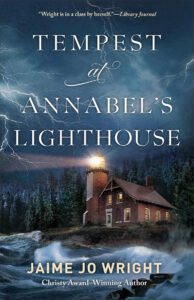
Her latest novel, Tempest at Annabel’s Lighthouse, exemplifies her remarkable ability to weave together dual timelines, psychological suspense, and deeply personal themes. Drawing inspiration from literary greats while grounding her stories in lived experience, Wright crafts worlds that linger long after the final page. Her characters are not easily forgotten—they are raw, complex, and achingly real, reflecting both the brokenness and resilience of the human condition.
What makes Wright’s voice especially powerful is her willingness to confront difficult truths. Her stories do not shy away from grief, loss, or the unanswered questions of faith. Instead, they embrace these tensions, offering readers a narrative space where fear and faith coexist, and where hope emerges not as a cliché, but as a hard-won truth. This authenticity has cultivated a loyal readership who find not only suspense in her novels, but also reflection and meaning.
Jaime Jo Wright masterfully blends faith, suspense, and emotional depth, crafting unforgettable stories that resonate with authenticity, courage, and haunting beauty.
In this exclusive interview, Wright shares the personal experiences and spiritual insights that shape her storytelling, offering a glimpse into the heart behind her hauntingly beautiful prose.
Highlights from the Interview:
- Explores identity shaped by adoption and personal history
- Examines different forms of love, from sacrificial to destructive
- Inspired by Edgar Allan Poe’s Annabel Lee
- Combines psychological suspense with spiritual depth
- Draws setting inspiration from Lake Superior’s haunting history
- Emphasizes faith as inseparable from fear
- Writes complex, realistic characters facing real-life struggles
- Challenges the question of suffering and God’s goodness
Tempest at Annabel’s Lighthouse delves into themes of memory, identity, and sacrifice. What personal experiences or reflections in your own journey as a writer inspired these emotional undercurrents?
Having been born into the foster care system and adopted as an infant, the idea of identity has long been a part of me. As I review my life and, more specifically, those who defined what love was and how they chose to love me, it became very clear that there are different forms of love. These can be positive and negative. There is sacrificial love, yet, but also obsessive and narcissistic love—or at least masquerading as such. Having experienced extremes of both sides, I felt this journey was one that should be explored within the safer confines of fiction.
“There are different forms of love… sacrificial love, yet also obsessive and narcissistic love.”
– Jaime Jo Wright
This novel pays homage to Edgar Allan Poe’s “Annabel Lee.” Can you tell us what drew you to reinterpret that particular poem, and how it shaped the gothic tone of the story?
Poe’s “Annabel Lee” has long resonated with humanity, and I believe it is because we relate to the brokenness within the poem. The haunting nature of love, the distortion of heartbreak, the grief of loss, and the question of who is the one we loved so deeply to begin with. I wanted to write a story that explored the various interpretations of this writing by Poe, and what better place to that but in a haunted lighthouse on the shores of Lake Superior?
Both timelines in your novel explore the haunting nature of love—lost, distorted, and redemptive. How do you approach writing such layered love stories while maintaining the suspenseful drive of a gothic mystery?
I think suspense becomes more so when it’s layered with soul. It’s one thing to run from a killer, but an entirely other thing to be haunted by one’s memories—or lack thereof. So, I try to approach the story by merging a tangible suspense with a psychological and soulful journey that parallels it.
With the lighthouse almost functioning as a living character, how did your sense of place evolve throughout the writing process, and what research or personal connection helped you bring the setting to life?
I used to play on the shores of Lake Superior as a kid. It was my father’s childhood home. The Upper Peninsula of Michigan boasts so much history and lore, and I’ve always been fascinated by it. The lighthouses that still exist there today were witness so many shipwrecks, and the lake itself, seems to speak with its own voice if you only pause to listen.
Your books often explore the boundary between the spiritual and the supernatural. How has your faith influenced your creative decisions when writing scenes that blur the line between fear and faith?
I find it impossible to separate fear and faith. One is the hunter and the other is the weapon with which to defend oneself. Hope isn’t something often merged with the concept of horror or darkness, but I believe—and it is because of my personal faith—that hope is given by our Creator and something He has made accessible. I also believe in the existence of God, and because of that, there is an inevitable world beyond what we can see. Our limitations make us wonder and pursue because of our curiosity, so my desire is to merge the spiritual with the truth of who God is, and explore the nuances of what it means to search for our Creator and the hope He offers.
You’ve built a loyal readership with your signature dual-timeline suspense. What has surprised you most about how readers connect with your characters—and how has that shaped your storytelling over time?
I have been pleasantly surprised that readers have connected with the rawness of my characters. I don’t write pleasant stories and while there is hope infused in my tales, there isn’t a happily-ever-after with a perfectly tied bow. But I think what I’m discovering is that readers want to read characters they can relate to, and they want representation within those pages. I do so as I am able and qualified to do, and I’ve created primary characters who aren’t thrown in as complimentary but are critical to the story. These characters have chronic autoimmune disorders, Autism, mental health diagnosis, failing marriages, abuse in their past, and more. Because my readers have responded so positively to the inclusion of these character types, it’s encouraged me to continue to explore the real-ness of who we are as humankind, and try to give insight into the ongoing question: if God is good, then why do bad things happen?
Editor’s Note
Jaime Jo Wright brilliantly crafts suspense, gothic atmosphere, and unforgettable characters, making this dual-timeline mystery utterly captivating and thrilling.
Tempest at Annabel’s Lighthouse masterfully blends dual timelines, gothic suspense, and rich characterisation. Rebecca’s haunting past and Shea’s present-day struggles intertwine seamlessly, delivering a gripping, atmospheric story. Jaime Jo Wright’s evocative prose, suspenseful plotting, and intricate mystery create an unforgettable reading experience that lingers long after the final page.