












Dubrovnik Is More Than a View From the Walls
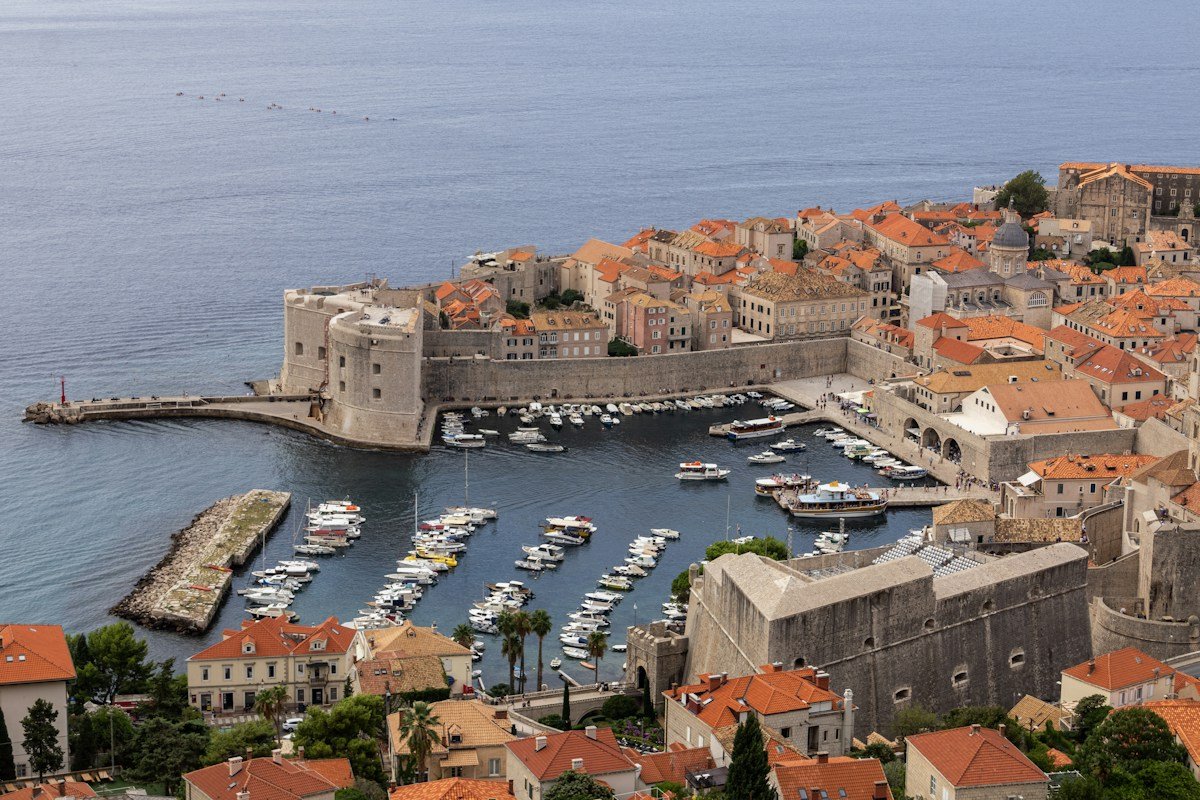 Dubrovnik old harbour with boats and stone buildings. Photo by Kristijan Arsov.
Behind the Adriatic skyline, Croatia’s famous walled city asks visitors to consider the relationship between beauty, reconstruction and everyday life.
Dubrovnik’s outline is so recognisable that arrival can feel like stepping into an image already seen. Stone defences, red roofs and the Adriatic form a composition of unusual clarity. The challenge for a visitor is to let the place become more than that composition.
The old city is recognised by UNESCO for its historic importance and architectural character. Its heritage also includes damage and repair, a reminder that an apparently unified townscape can contain difficult interruptions. Looking carefully means allowing those histories into the experience, rather than treating the buildings as timeless scenery.
The walls provide one perspective, but street level supplies another. Move between the open spaces and smaller lanes, noticing how the scale changes. Doorways, steps and the arrangement of buildings reveal a city designed for use as well as defence. Where interpretation is available, give it enough time to complicate the postcard view.
The harbour offers a useful pause. It places the old town beside the sea that helps explain its wider connections, and encourages a shift from individual landmarks to the city’s setting. There is no requirement to make every pause productive. Watching a place without photographing it can be part of understanding it.
Dubrovnik’s popularity makes courtesy especially valuable. Avoid blocking narrow routes, respect residential entrances and spread a visit beyond the busiest corners when possible. Choose depth over the desire to prove that every famous spot has been reached. The reward is a city with texture and human scale, whose appeal continues after the first spectacular overview has ceased to surprise.
Further reading: UNESCO World Heritage Centre.
Photo by Kristijan Arsov.