








Marrakech Between the Square and the Courtyard
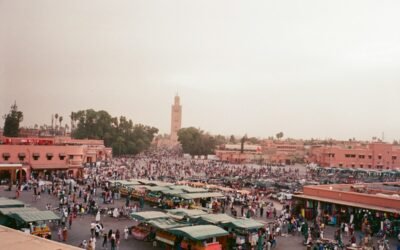
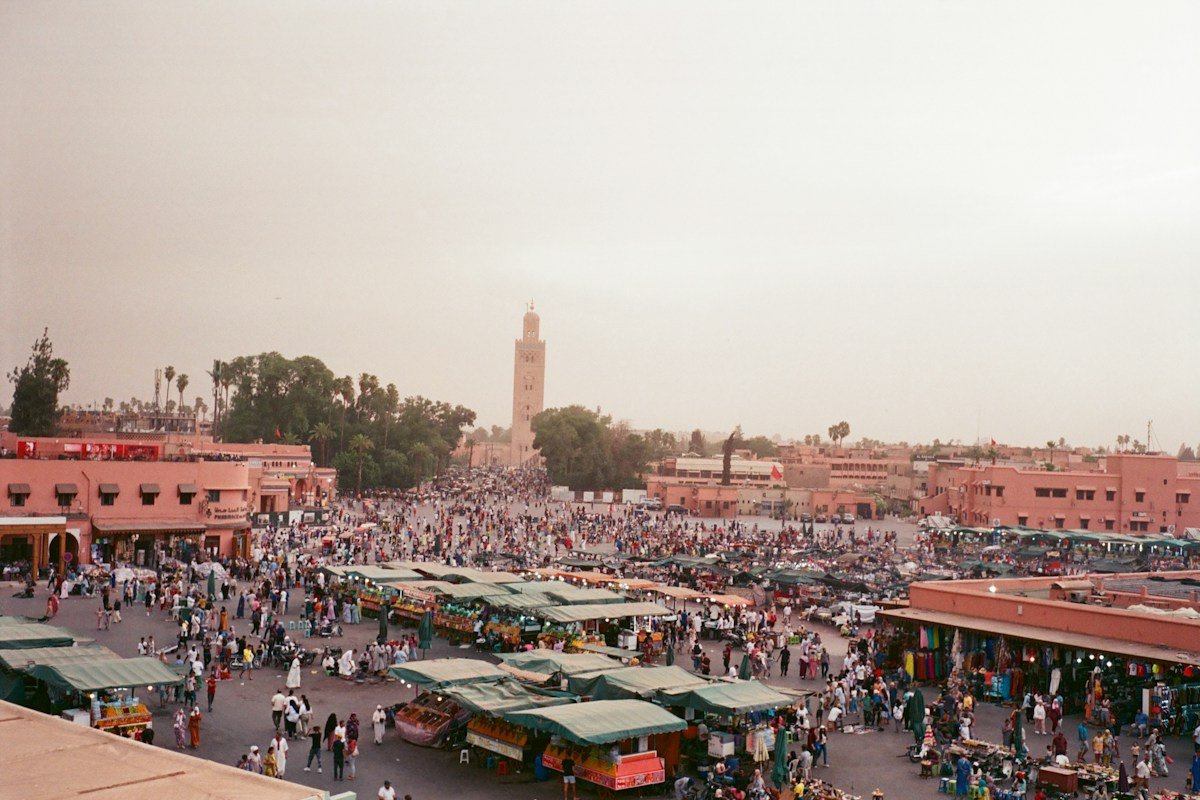 Stalls and people gathering in Jemaa el Fnaa in Marrakech. Photo by Beatriz Troncoso.
Morocco’s historic city reveals its character through changing scale, from busy public spaces to the detail of a doorway or garden.
Marrakech invites attention in every direction. A market display, a decorated entrance and the movement of a public square compete with one another, making it easy to mistake the first impression for the whole experience. Slowing down helps separate those elements into a city that can be understood.
Founded under the Almoravids in the eleventh century, Marrakech became an important political, economic and cultural centre. Its historic medina contains monuments, gates, walls and gardens that reflect that influence. UNESCO’s account places the city within a wider history extending across North Africa and towards Andalusia.
The most useful itinerary moves between public space and architectural detail. Start with a clear point of orientation, then explore a manageable area rather than attempting to master the medina in one outing. A doorway or a carefully interpreted building can reveal more than another hurried circuit of shops.
Jemaa el-Fnaa is an obvious focal point, but it need not dictate every hour. Look for the changes that occur between a busy route and a quieter adjoining street. Agree prices clearly when buying services, ask before making close portraits and accept that some religious or private spaces are not available to visitors. These are ordinary courtesies that help keep an encounter comfortable.
Marrakech is particularly rewarding when its energy is balanced with time to sit and reflect. What appears overwhelming can become legible through repeated short walks. The city’s lasting appeal lies in that movement between scales: a large history of power and exchange expressed in walls and monuments, and the immediate life of people using the streets around them.
Further reading: UNESCO World Heritage Centre.
Photo by Beatriz Troncoso.