











How Rajesh Suri Helped Indian Dining Claim Its Place at the World’s Finest Tables
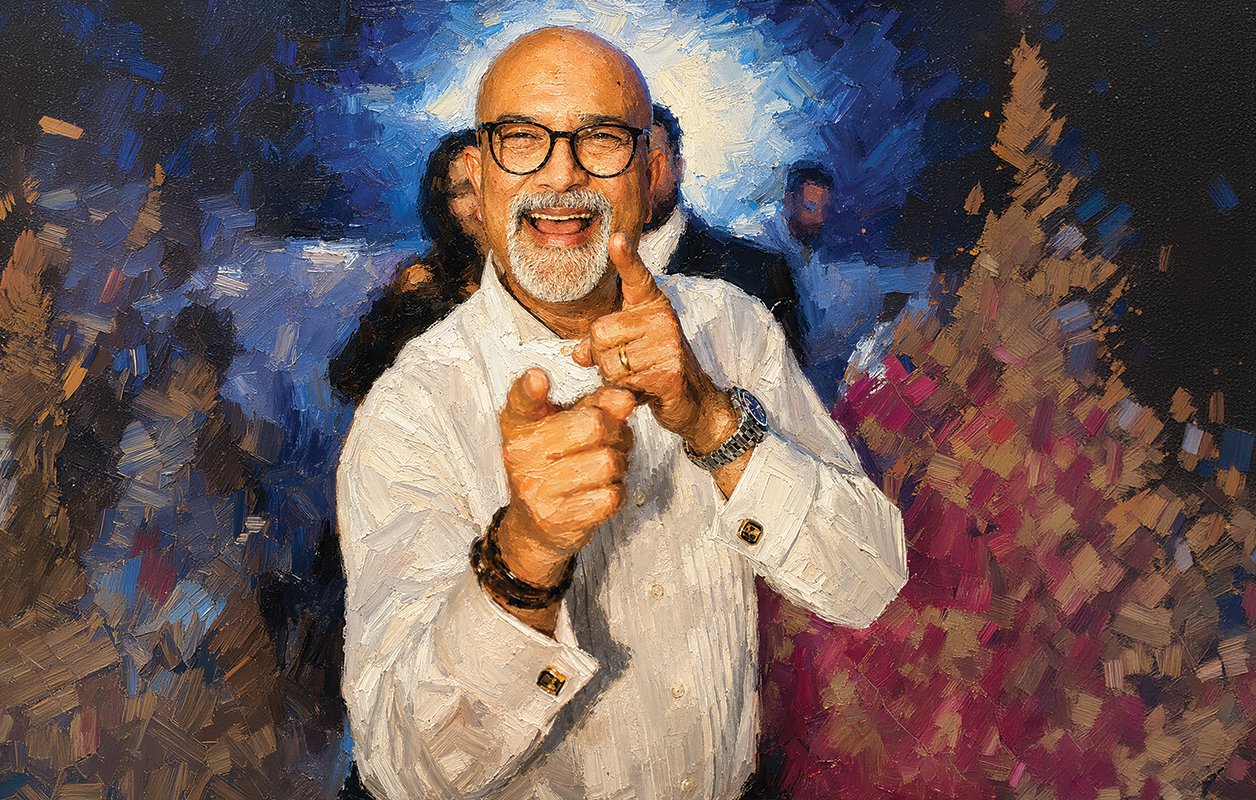
Rajesh Suri combines vision, discipline and warmth, helping elevate Indian hospitality while mentoring teams and preserving the spirit of service.
Standards Shape Legacy
Rajesh Suri reflects on four decades in hospitality, Michelin-starred Tamarind, Grand Trunk Road and his belief that leadership, consistency and genuine human connection remain the foundations of memorable dining experiences.
Veteran hospitality leader recognised for a four-decade career that has helped elevate Indian dining on the international stage
Veteran hospitality leader Rajesh Suri has been featured on the cover of Taste Asia magazine alongside an exclusive interview exploring a remarkable career spanning more than four decades in the international restaurant industry.
The cover recognition comes as Suri is also honoured with the magazine’s Flavours of Asia Award, recognising his long-standing contribution to Indian cuisine, restaurant leadership and the wider hospitality profession.
The print edition of Taste Asia is available internationally across more than 190 countries and over 40,000 platforms and distribution networks, giving the feature a global audience.
In the exclusive interview, titled “The Man Who Helped Indian Dining Earn Its Place at the World’s Finest Tables,” Suri reflects on a career that has taken him across India, the Middle East, Europe and the United Kingdom.
A defining chapter came at Tamarind of Mayfair, where Suri took over as General Manager in 1998. In 2001, Tamarind became the first Indian restaurant in the world to receive a Michelin star — a milestone that Suri describes as one of the proudest moments of his career and an important moment for the international perception of Indian cuisine.
Highlights
- More than four decades of experience in international hospitality.
- Became General Manager of Tamarind of Mayfair in 1998.
- Helped lead Tamarind during the period in which it earned a Michelin star in 2001.
- Played a significant role in raising the profile of Indian fine dining in Britain.
- Created Grand Trunk Road in South Woodford.
- Built a career spanning India, the Middle East, Europe and the United Kingdom.
- Believes outstanding hospitality depends on people as much as food.
- Advocates strong leadership, staff development and consistent standards.
- Sees technology as a tool to support hospitality rather than replace human interaction.
- Continues to mentor and advise restaurants and hospitality professionals.
- Recognised by Taste Asia with the Flavours of Asia Award.
- Featured on the cover of Taste Asia in recognition of his contribution to the industry.
His career later included the creation of Grand Trunk Road in South Woodford, a restaurant inspired by the historic route connecting cultures and culinary traditions across South Asia. Today, Suri continues to contribute to the industry through restaurant consultancy, mentoring and advice covering operations, menu engineering, profitability, staff development and brand strategy.
Throughout the interview, however, one principle repeatedly emerges: hospitality is ultimately about people.
Suri argues that successful restaurants require far more than exceptional food. Leadership, culture, consistency, genuine warmth and investment in employees are equally important. His philosophy towards technology is similarly human-centred: innovation should make operations more efficient without replacing the personal connection at the heart of hospitality.
His four-decade career represents an important period in the development of Indian fine dining, from a time when the cuisine was frequently viewed through a relatively narrow lens internationally to an era in which Indian restaurants and chefs increasingly occupy some of the world’s most prestigious dining rooms.
Taste Asia praised Suri as a hospitality professional whose influence extends beyond individual restaurants, recognising his role in developing teams, mentoring professionals and championing Indian cuisine with both commercial discipline and enduring respect for hospitality traditions.
The magazine said its cover selections are intended to recognise notable people whose work, stories and contributions merit lasting editorial attention.
The Editor-in-Chief said:
“A magazine cover is more than simply a photograph on the front of an issue. For us, it is an editorial statement. It says that this is someone whose story, work and contribution we believe deserve particular attention.
“In a world where social media posts can disappear within hours, editorial recognition has a different kind of value. It becomes part of your professional history — something that can be shared, referenced and rediscovered for years to come. It brings credibility, strengthens your public profile and provides independent recognition of the work you have built throughout your career.”
The Flavours of Asia Award further recognises Suri’s contribution to a profession to which he has devoted much of his life.
More than the restaurants he has helped build or the accolades associated with them, Suri’s story is one of sustained commitment to people, standards and the advancement of Indian hospitality.
As his Taste Asia interview reveals, perhaps the most meaningful legacy for Suri would be a simple one: that future hospitality professionals remember that they learnt from him how to genuinely look after people.
That philosophy, combined with decades of leadership and advocacy for Indian cuisine, makes his appearance on the cover of Taste Asia both a recognition of an accomplished career and a record of a significant chapter in the evolution of modern Indian dining.