





R.E. Pendragon Brings Science And Spirituality Together Through Thoughtful, Transformative Narratives
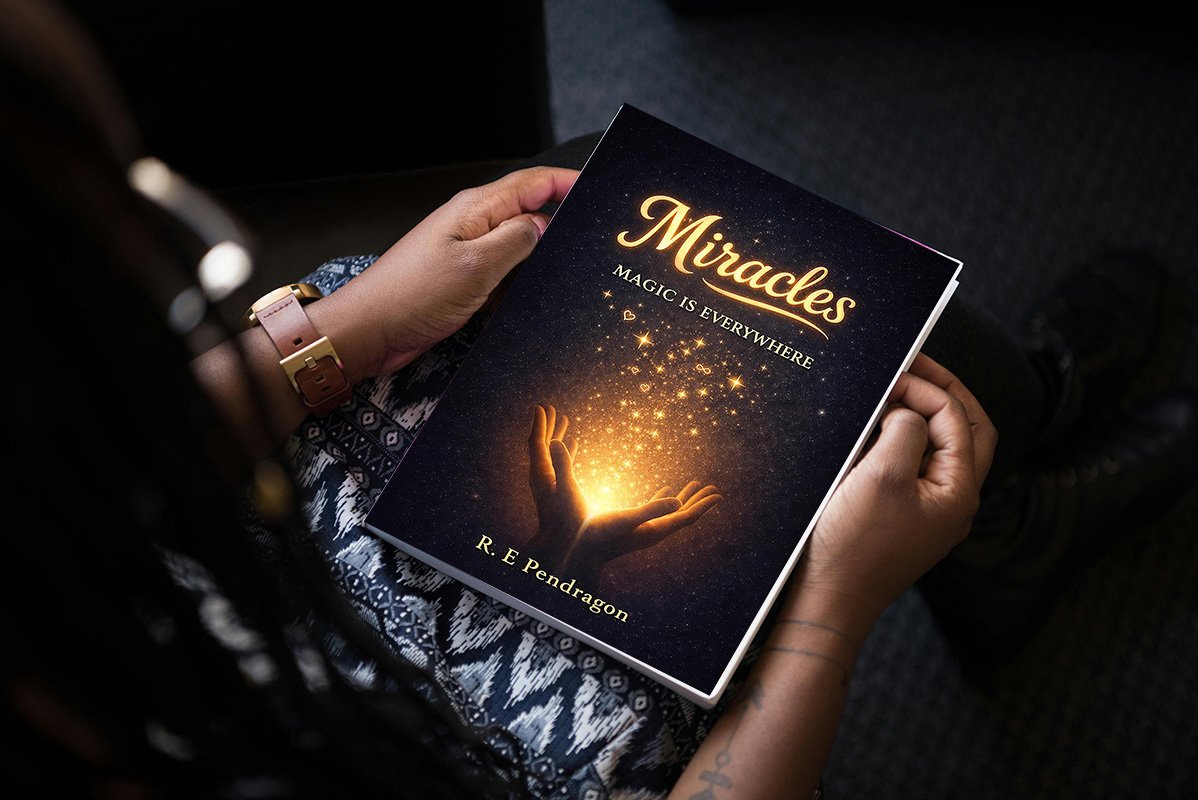
R.E. Pendragon, author and thinker, blending science and spirituality to create stories of inner transformation and quiet wonder.
Bridging Logic And Intuition In Profound Ways
R.E. Pendragon masterfully combines science and spirituality in his writing, offering gentle reflections on consciousness, manifestation, and creativity, inspiring readers to explore meaning, curiosity, and inner transformation in accessible yet profound ways.
R .E. Pendragon is a rare voice in today’s literary landscape—a writer who bridges the gap between science and spirituality with remarkable depth, clarity, and grace. Here at Mosaic Digest Magazine, we are captivated by his ability to navigate the intricate dance between logic and intuition, effortlessly translating profound, abstract ideas into accessible narratives that resonate deeply with readers. His books, which explore themes like manifestation, consciousness, and energy, are not just works of reflection but also gentle invitations for readers to reconnect with the often-overlooked dimensions of their inner lives.
Through his eloquent prose, Pendragon imbues his writing with a sense of calm wonder, striking the perfect balance between storytelling and teaching. His unique journey—from a science-rooted childhood to a profound spiritual awakening—infuses his work with authenticity and insight. A master at weaving together the rational with the mystical, Pendragon invites us to see the hidden intelligence within existence, serving as a quiet guide for those seeking meaning and transformation in modern life.
As you read this interview, you’ll come to understand why R.E. Pendragon’s books feel not like instructions, but experiences—sparking curiosity, inspiring growth, and leaving a lasting impression on the heart and mind. We at Mosaic Digest are honored to feature this thoughtful author in our latest issue, and we hope his reflections will inspire you as much as they have inspired us.
R.E. Pendragon crafts transcendent works, blending profound wisdom with clarity, inspiring meaningful journeys of self-exploration and spiritual awakening.
What inspired you to write about spiritual concepts like manifestation, consciousness, and energy?
I’m drawn to spiritual concepts because they bring clarity back into life. When I understand something deeply, there’s a natural urge to share it in a way that feels grounded and accessible. Themes like manifestation, consciousness, and energy genuinely excite me because they reopen a sense of wonder and remind us that life is far more intelligent and meaningful than it often appears. Writing about these subjects allows me to translate complex ideas into reflections that help people reconnect with their own awareness and inner experience.
How do you approach explaining complex spiritual and metaphysical ideas in a way that readers can understand and relate to?
I approach these topics with honesty and logic. Science, especially physics, was one of my favorite subjects growing up, and I was always drawn to science-based educational and entertainment shows. After my spiritual awakening, that same logical curiosity naturally guided me deeper into what I see as the hidden intelligence behind existence. For me, science became a doorway rather than a contradiction — a way to explore the underlying patterns and principles that give rise to what many describe as mystical or magical experiences. This balance helps me explain abstract ideas in a way that feels relatable, grounded, and thoughtful.
Can you share your personal journey with spirituality and how it influenced your writing?
I wasn’t particularly spiritual while growing up. My worldview was rooted in logic, science, and constant questioning — science felt like the most reliable way to understand reality. Things began to shift during my college years, when I experienced a profound inner awakening that changed how I perceived life. It became a turning point where I started noticing deeper layers of reality, both inwardly and energetically. To make sense of these changes, I naturally turned toward spirituality, studying, observing, and learning from various sources. Writing became a way to process this transformation — through notes, reflection, and eventually forming my own frameworks that helped me see a larger, more integrated picture of existence.
How do you balance storytelling with teaching spiritual principles in your books?
Storytelling has always come naturally to me. I began writing stories, especially fiction, during my school years, and participating in writing and storytelling competitions helped me understand how narrative can hold attention and convey meaning. That early experience taught me that ideas land more deeply when they are felt, not just explained. In my books, I use storytelling as a gentle framework, allowing spiritual principles to emerge organically through reflection and narrative rather than instruction. This balance helps readers absorb deeper concepts in a way that feels intuitive and human.
What role does personal experience play in the content of your books?
Personal experience plays a central role in how I understand and write about spirituality. Real learning and realization tend to happen when something is lived, not just intellectually absorbed. In my view, spiritual concepts become meaningful only when individuals encounter them through their own experiences. My books are not meant to replace that process — they are meant to spark curiosity, reflection, and a renewed desire to explore. They offer direction rather than destination, pointing toward a path that each reader must ultimately walk for themselves.
Why do you think readers are drawn to topics like manifestation, timelines, and energy healing?
Readers are drawn to these topics because they offer a sense of agency and meaning in their lives. Ideas like manifestation, timelines, and energy healing invite people to reflect on their inner state and its relationship with outer life. Rather than promising control, these concepts encourage awareness — how thoughts, emotions, and choices shape experience. For many readers, this feels empowering and restorative, especially at a time when traditional frameworks often fail to address deeper questions about purpose and connection.
How do you see the connection between spirituality and creativity?
For me, creativity is a natural way to translate inner experience into the outer world. Writing, in particular, allows me to give form to thoughts and reflections that are otherwise difficult to express. While spirituality is a personal path, integrating it with the creative process adds depth and intention to the work. When creativity is guided by inner awareness, it carries a quiet intensity — an energy that can move, inspire, and resonate with others in meaningful ways.
What challenges did you face while writing books on such profound and abstract topics?
I usually begin writing only after I’ve reached a certain level of understanding and clarity around a subject, which helps the process feel intuitive rather than forced. The main challenge, rather than grasping the ideas themselves, is translating inner understanding into language that others can relate to. Finding words that communicate depth without losing simplicity requires patience and careful expression, especially when dealing with abstract or subtle themes.
Who or what are your biggest influences when it comes to your spiritual philosophy and writing?
I’ve always been influenced more by books and ideas than by any single school of thought. Writers like Leo Buscaglia shaped my appreciation for love, humanity, and emotional honesty, while novels such as The Alchemist reminded me of the symbolic and intuitive nature of personal journeys. I’ve also been influenced by the writings of Helena Blavatsky, along with ancient philosophical and esoteric traditions, including ideas found in The Kybalion. Together, these influences have helped shape a worldview that blends reflection, symbolism, and timeless spiritual inquiry.
How do you want your readers to feel or think after reading your books?
I don’t aim to make readers feel or think in a specific way. I believe reading is a personal experience, and each person takes away what resonates with them in their own time. My intention is simply to create a space for reflection and curiosity. Those who connect with the ideas naturally will find their own meaning within the work. In that sense, the books tend to reach readers who are already open to exploring these themes, rather than trying to persuade or direct anyone.
What advice would you give to other authors who want to write about spirituality and metaphysics?
My advice would be to begin with clarity and preparation. Before writing, it helps to develop a personal framework — an inner reference built from understanding, reflection, and lived experience. This foundation brings coherence to complex spiritual and metaphysical ideas. From there, the focus should be on communicating gently, using language that invites rather than instructs. When ideas are shared without being harsh or preachy, readers are more likely to engage, reflect, and find their own connection with the material.