







The Art of Simplicity: Perry Offer’s Blueprint for Business Success

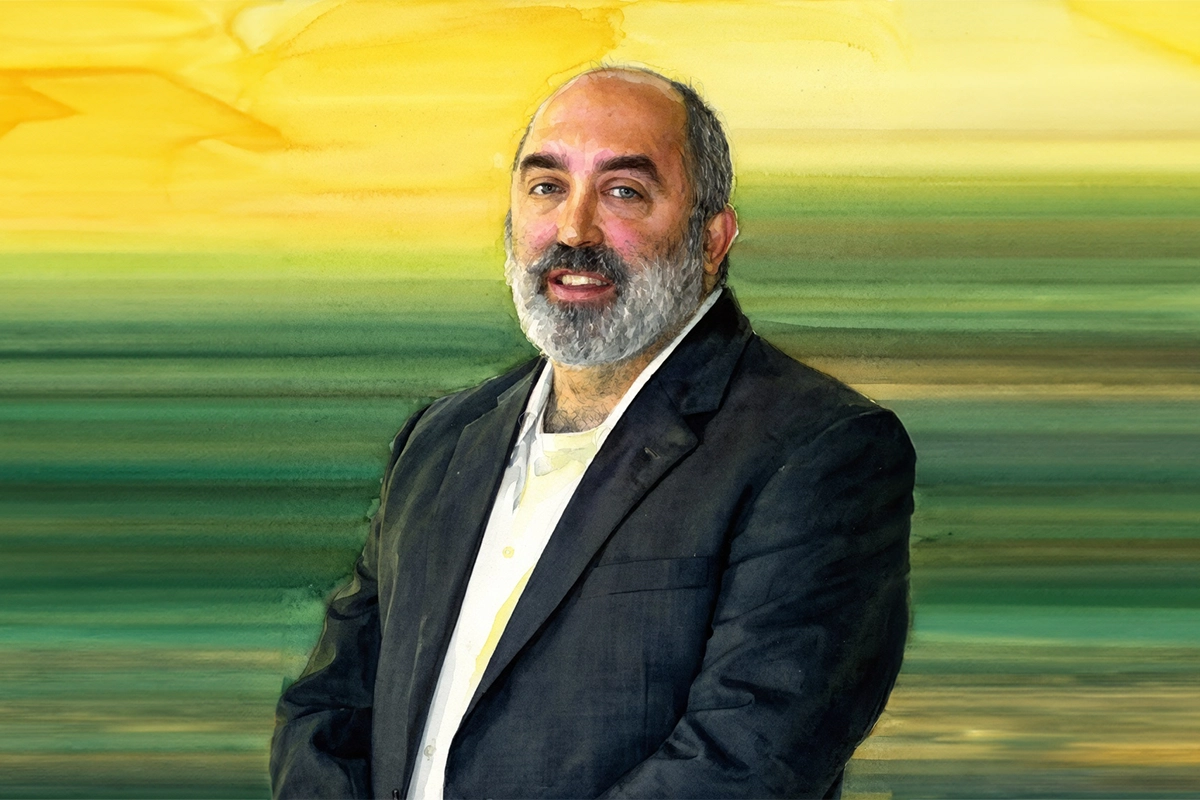
Photo: Perry Offer in action, leading the charge for innovation and success at Wood Hosiery with a focus on simplicity and strategic growth.
Harnessing Simplicity to Revolutionize the Business Landscape
Perry Offer discusses his philosophy of simplicity in business, outlining how it transformed Wood Hosiery into a market leader while fostering resilience and adaptability to overcome modern challenges in the corporate environment.
P erry Offer stands out as a beacon of clarity in the often chaotic world of business. Known for his transformative influence on companies struggling to navigate complexity, he has forged a remarkable career based on the guiding principle that simplicity is essential for success. Through his own experiences—shaped by personal challenges and professional triumphs—Perry has developed a unique approach that resonates with entrepreneurs and seasoned business leaders alike.
From an early age, Perry faced significant adversity. His father’s sudden departure when he was just six years old instilled in him a deep sense of resilience and independence. “As a child, I didn’t dwell on my family situation; my instinct was to ensure my own survival,” Perry recalls. This formative experience laid the groundwork for his business ethos: a commitment to facing challenges directly and adapting to change without hesitation. “You cannot ignore problems when they arise. Instead, you must confront them, prepare for the inevitable changes, and push forward,” he asserts.
Perry Offer is a dynamic leader who embodies innovation, inspiring others with his vision and dedication to making businesses thrive through simplicity and efficiency.
Perry’s perspective on business takes shape during his tenure at Wood Hosiery. At the age of 22, he took on the role of Director of Finance for a company that was thriving but beginning to stagnate. “We understood that stagnation could quickly lead to decline, and decisive action was necessary,” he reflects. His research and analysis revealed a unique opportunity to streamline operations. Rather than continuing to produce tights solely to order—resulting in lengthy delivery times—Perry spearheaded a change in production strategy. By maintaining a large stock of white tights that could be dyed as needed, he significantly reduced delivery times from weeks to mere days. This innovative shift helped Wood Hosiery soar to prominence, eventually producing a million pairs of tights each week.
Perry’s philosophy of simplicity has turned stagnating businesses into thriving market leaders.
The success of Wood Hosiery became a testament to Perry’s belief that a clear focus can lead to profound improvements. “We learned how to enhance profitability and service without compromising our existing strengths,” he explains. This principle of simplifying processes while honing in on core objectives has become a hallmark of Perry’s consultancy work across a variety of industries.
Early life challenges shaped Perry’s resilience, independence, and leadership style.
As Perry ventured beyond individual companies, he emerged as a vocal critic of the wider business landscape in the UK. He attributes the struggles faced by many businesses to excessive complexity and mismanagement. “Excessive regulation and bureaucracy stifle innovation,” he argues, highlighting a growing concern in an increasingly convoluted regulatory environment. Perry’s advocacy for simplicity extends to both business leaders and policymakers, urging them to eliminate obstacles that hinder progress. “Take a step back, assess your operations, and you will quickly identify inefficiencies that complicate your business,” he advises.
Advocates balancing modern technology, including AI, by treating it as a tool.
Perry also stresses the importance of perspective when navigating the complexities of modern commerce. He encourages leaders to regard technology—such as artificial intelligence—not as a panacea but as a tool to enhance operations without adding confusion. “When technology is treated merely as a tool rather than as a team member, it can complicate rather than simplify,” he cautions. This view plays a vital role in an era where reliance on technology can sometimes create more challenges than solutions.
“Simplicity is the only way forward.” – Perry Offer
With years of experience advising businesses of all sizes, Perry has identified a common pitfall: the tendency to seek incremental changes within already complicated systems. “Making minor adjustments to address complex issues does not solve the problem; it simply adds more layers to an already tangled web,” he states. Instead, he urges businesses to embrace simplification as a core principle. “When faced with a crisis, streamline your strategy, eliminate what’s not working, and return to the essentials.” This mantra is applicable across the board, regardless of whether a company is a small startup or a large corporation.
Perry’s insights are particularly timely in the current global landscape, which is rife with rapid change and uncertainty. He encourages business leaders to stay focused on their fundamental missions, resisting distractions that could lead them astray. “Opportunities might feel fleeting, but do not abandon a good idea simply because it presents challenges,” he insists. “If your vision remains valid, it might just be your approach that needs refining, with simplification as your guiding principle.”
In discussing contemporary threats to businesses, Perry points to the financial instability of governments and the resulting political upheaval. “The potential bankruptcy of governments and an unstable geopolitical environment pose significant challenges,” he warns. Addressing these broader threats requires businesses to maintain adaptability and resilience while embracing a strategy rooted in simplicity.
“Don’t let AI become more important than a tool—it’s not a staff member.” – Perry Offer
Additionally, Perry has tackled the impact of political correctness on innovation, arguing that excessive regulation can burden businesses. He likens such regulations to weights that hinder a runner’s speed. “The critical question is, who will prevail: the runner bogged down by complexity or the one who is streamlined and focused?” he muses. He believes that many businesses have become ensnared in systems that, while well-intentioned, obscure their original goals and hinder their potential.
For startups and new ventures, Perry outlines three guiding principles intended to foster success while maintaining simplicity: First, concentrate on a specific niche, ensuring that capturing even a small percentage of demand can yield considerable returns. Second, identify the key feature of your product or service that will resonate most with your target audience. Finally, focus intensively on consistently delivering that core value, and when you achieve your goals, be ready to pivot toward new challenges.
Perry’s commitment to simplicity is not just a practical business strategy; it embodies a deeper philosophy that brings clarity in difficult times. Both aspiring entrepreneurs and experienced executives can learn valuable lessons from his journey. In today’s marketplace, success tends to favour leaders who can navigate through chaos and maintain a focus on what truly matters.
Looking to the future, the assertion is clear: The case for simplicity in business has never been more urgent. Perry Offer’s insights remind us that in an age marked by distractions and uncertainties, having a clear purpose and a dedication to simplifying operations can pave the way for sustained success. It is those who dare to embrace simplicity in a complex world who are poised to emerge as leaders, guiding their businesses toward new heights in an ever-evolving global landscape.
For Perry Offer, simplicity is more than just a method; it is a philosophy capable of transforming organisations and redefining industries. By adopting this mindset, business leaders can navigate today’s challenges and seize opportunities for tomorrow. As Perry succinctly puts it, “In times of chaos, having the courage to simplify can be the most revolutionary act of all.”