











John Hilliard Redefines Photography Through Intentional Imperfection
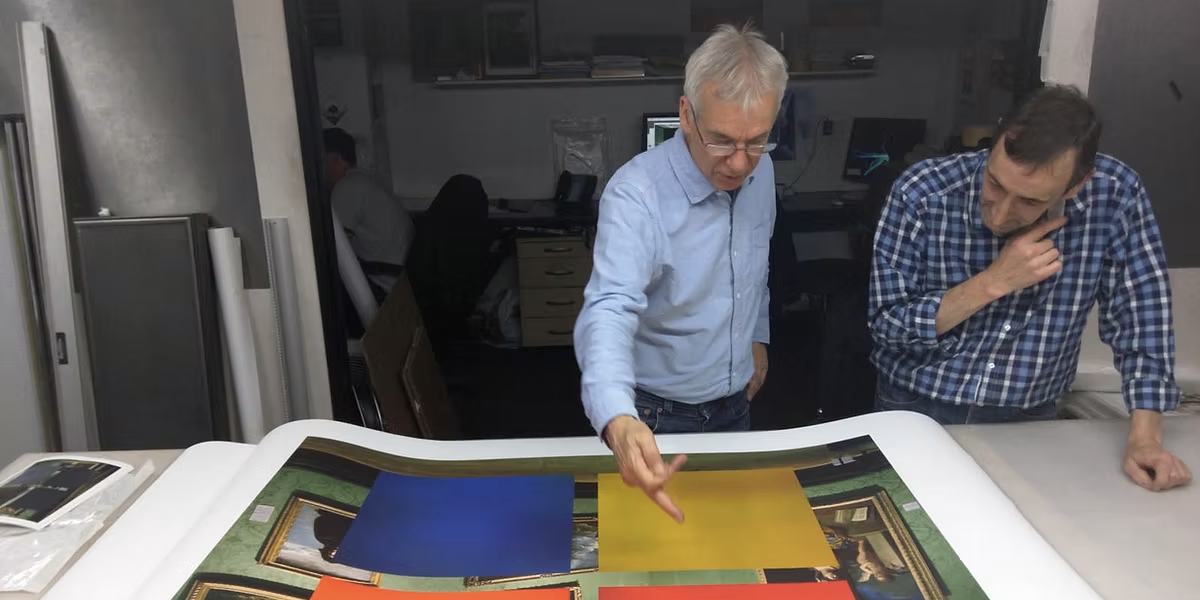
Photo: Photography’s credibility as evidence is now in jeopardy in a post-truth environment.
Exploring The Boundaries Of Medium And Perception
John Hilliard’s groundbreaking artistry redefines photography, transforming perceived errors into creative tools, while challenging notions of truth, representation, and the transience of reality in the modern world.
J ohn Hilliard is a monumental figure in contemporary art, celebrated for his groundbreaking work that merges photography and sculpture to challenge our perceptions of reality. Born in Lancaster in 1945 and educated at London’s prestigious St Martin’s School of Art, Hilliard has spent decades reshaping the boundaries of photographic representation. His career is marked by a relentless exploration of photography not merely as a tool for documentation but as a profound medium worthy of deep investigation.
Hilliard’s artistic journey began with site-specific installations in the United States, but it was his pivot to photography that solidified his reputation as a visionary artist. His work is characterized by intentional “errors” such as motion blur, variable focus, and multiple exposures—techniques that force viewers to reconsider the concept of the “perfect” image. These elements, often dismissed as technical flaws, are instead celebrated by Hilliard, highlighting the intrinsic qualities that make photography a unique and expressive art form.
“My practice is a catalogue of errors—a joke with a serious intent.” – John Hilliard
In a recent interview with WOWwART magazine, Hilliard offered insights into his creative process and the philosophical underpinnings of his work. When asked about the influence of his early use of photography for documenting sculptures, Hilliard noted, “In recording my own work as a student at St Martin’s in the Sixties, I was aware of the inevitable difference between the photograph and its object. This awareness prompted an interrogation of the medium, which has shaped all the work I’ve made since.”
Hilliard’s experimentation with the materials and instruments of photography is both meticulous and innovative. He explained, “With analogue photography, the equipment and materials fall within industry-defined parameters, yet the potential for producing radically different versions of the ‘same’ image is enormous. My experimentation is concerned with testing those combinations, especially where their pairing might be deemed unlikely or undesirable.”
The intentional use of “errors” like blur and overexposure is central to Hilliard’s practice. He described his work as “a catalogue of errors,” a phrase that balances humor with seriousness. “Blurred, unfocused, or overexposed images may be seen as mistakes,” he said, “but these qualities are specific to photography. They are to be celebrated, not denied.”
Balancing technical precision with emotional depth is a hallmark of Hilliard’s work. He shared, “My first step is often an idea, transcribed into notes or sketches. Techniques are either embedded in the original idea or selected afterward. Any emotional content emerges as a final part of the process, often surprising me as much as the viewer.”
One of Hilliard’s most profound observations is about photography’s role in capturing the transient nature of the world. He described photography as a “fugitive medium” that parallels the impermanence of life. “Photography itself is always decaying, always transient,” he said. “Yet, it remains a useful tool for arresting and affirming events at a particular time and place.”
However, Hilliard acknowledged the challenges posed by the digital age. “In a ‘post-truth’ environment facilitated by digital technology, the photograph’s credibility as evidence is undermined,” he cautioned. “We need to be doubly alert to the wilful dismantling of photographic veracity.”
John Hilliard’s work transcends the visual, engaging viewers in a dialogue about truth, representation, and the fleeting nature of reality. His innovative approach and philosophical depth continue to inspire artists and audiences alike, cementing his legacy as a true pioneer in the art of photography.