









Samarkand Beyond the Blue Dome
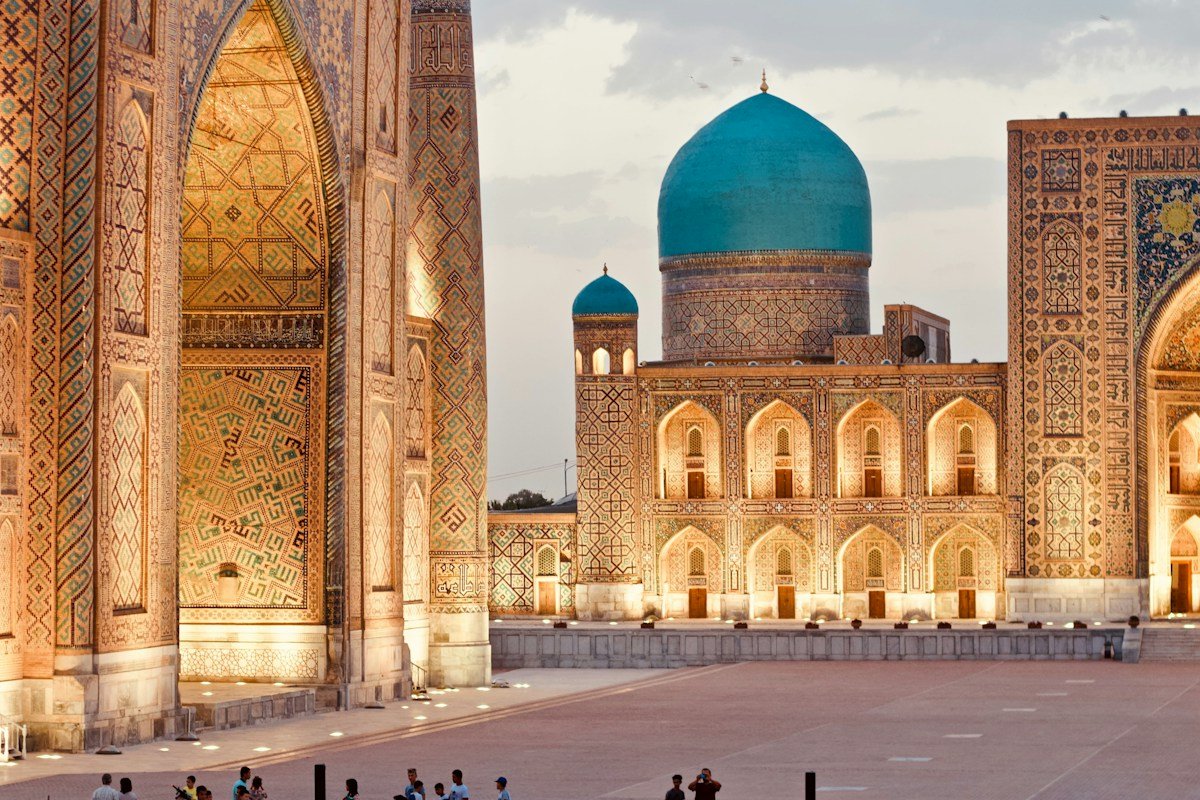 Decorative tiled architecture and a dome at the Registan in Samarkand. Photo by Ozodbek Erkinov.
Uzbekistan’s celebrated city rewards visitors who look past its monumental beauty towards the histories of knowledge and exchange that produced it.
In Samarkand, scale arrives before explanation. A tiled facade or a great dome can fill the field of vision, making it tempting to move straight from admiration to the next photograph. The buildings become more interesting when the question changes from how they look to why they are there.
The city developed at a crossroads of cultures, with particularly important growth under the Timurids in the fourteenth and fifteenth centuries. Its major historic ensembles include the Registan, Bibi-Khanum, Shah-i-Zinda and Gur-e-Amir, while Ulugh Beg’s observatory adds a different dimension to the architectural story.
That combination suggests an itinerary organised around ideas. Consider spaces associated with learning alongside those expressing political authority or commemoration. Decorative detail can then be read as part of a wider ambition, rather than as a pattern detached from context. An informed guide can be especially valuable for distinguishing periods and functions.
Leave breathing room between the monumental sites. Look at the city beyond the edges of the formal view, and remember that a historic centre sits within a contemporary urban community. Restoration, daily use and tourism all influence what a visitor encounters. A polished surface should prompt curiosity about its history, rather than an assumption that every element has remained unchanged.
Samarkand is often described through the Silk Roads, but the phrase is most useful when treated as a network of relationships. Travellers, goods and ideas moved along many connected routes. Here, the monuments give that abstract exchange a physical scale. The memorable visit is one that makes space for the scholarship and human ambition behind the blue.
Further reading: UNESCO World Heritage Centre.
Photo by Ozodbek Erkinov.