





James Minter Inspires Generations With Heartfelt Stories Across Diverse Genres

James Minter, a prolific storyteller, inspires readers through emotional, creative narratives that span children’s literature, self-development, and paranormal fiction.
Crafting Stories That Motivate And Entertain
James Minter shares his transformative writing journey, exploring themes of emotional growth, humour, and creativity in children’s stories, paranormal fiction, and self-development books. His work connects deeply with readers.
J ames Minter is a shining example of storytelling brilliance, bringing both heart and intellect to every page he writes. At Mosaic Digest magazine, we have long admired his remarkable ability to craft narratives that are as thought-provoking as they are entertaining. With a versatile repertoire spanning children’s literature, adult fiction, and now self-development titles for Gen Z readers, James has cemented his place as a powerful voice in modern literature. His journey from technical author to an accomplished writer with fifteen books, screenplays, and plays under his belt is as inspiring as the stories he tells.
James’s “Billy Growing Up” series is a standout in children’s literature, effortlessly blending captivating storytelling with life lessons that build emotional intelligence and moral understanding. Whether it’s helping young readers navigate the complexities of bullying, friendship, or inner courage, James’s books leave a lasting impact, offering children the tools to grow into thoughtful, kind-hearted individuals. His ability to weave humour and warmth into even the most serious themes makes his work invaluable for parents, educators, and children alike.
For adult readers, James demonstrates his talent for balancing humour with nuanced, often poignant themes, as seen in his unforgettable “Hole Trilogy” and the deeply personal yet incredibly empowering The Unexpected Consequences of Iron Overload. His sharp wit, emotional depth, and uncanny insights into human behaviour consistently make his writing a joy to discover, whether on the page, screen, or stage.
In this Mosaic Digest interview, James shares his creative process, motivations, and heartfelt advice for aspiring authors. We invite you to dive into his world, where imagination knows no bounds, humour gently confronts life’s challenges, and each story carries a meaningful message.
James Minter creates meaningful literary experiences, blending heart, humour, and life lessons to inspire and impact generations of readers.
What inspired you to begin your writing career and explore different genres?
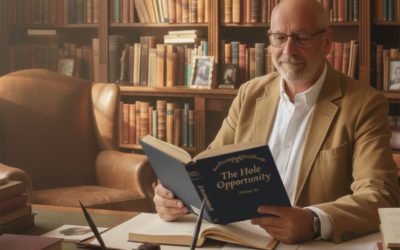
I started writing late in life, in 2009, to be precise. While on holiday, I brought a pad of paper and, unexpectedly, began writing a story that became “The Hole Opportunity.” It was inspired by a barely remembered bedtime tale my mother told me about a farmer who carried holes in his trailer. Going up a steep hill, the holes fell off, and he and his tractor tumbled into them.
How did your daughter’s suggestion to revisit bedtime stories influence your “Billy Growing Up” series?
I am a father of two and a grandfather of seven. Children matter greatly to me, and the world they are growing up in is challenging. Positive beliefs and values offer a strong foundation for building a meaningful and rewarding life. These are central to the Billy books.
What do you think makes the “Billy Growing Up” series unique compared to other children’s books?
The Billy Growing Up series stands out because it helps children connect emotions, values, and real-life situations through engaging, relatable stories. Each book follows Billy and his friends as they navigate experiences that every child faces—friendship, honesty, courage, and kindness—encouraging readers to think about how choices shape who we become. The books are designed as early chapter stories for 7-to-10-year-olds, with a supportive structure for developing readers. An illustration begins each chapter, helping children who find it challenging to visualise scenes purely from text. This balance of storytelling, moral growth, and visual engagement makes Billy Growing Up both accessible and meaningful. The free activity books and creative competitions also give children a fun, interactive way to reflect on the themes and express themselves beyond the page.
How did your real-life pets influence the creation of Jacko and Malibu in your stories?
Our family pets are the dogs in the story, their personalities, mannerisms, and idiosyncrasies. Hopefully, I captured them accurately.
Why did you decide to integrate themes such as emotional development and behavioural issues into children’s literature?
Each story is highly engaging on its own, but the added life lesson gives each one focus, direction, meaning, and purpose. The book features a section for parents and teachers on how to use the story as a starting point for a conversation about the issue it addresses.
What challenges did you face while writing for children compared to adults?
Assumptions about understanding – for example, Jacko, Billy’s pet, is a dog, a golden retriever, and a dog. Hence, there are three valid ways to refer to him. For a young child, it’s challenging to appreciate that a single entity can be referred to in several ways.
Can you share more about the writing process behind “The Hole Trilogy”?
I always begin with the title and move forward, allowing the characters and plot to unfold naturally. I write the first draft by hand and don’t set any limits on where the story might go. In essence, I let it flow freely. It’s essentially a brain dump. Only during subsequent revisions do I add structure, arcs, and most importantly for readers, a satisfying ending.
What was your motivation for creating “The Unexpected Consequences of Iron Overload”?
The motivation came from a very personal place: haemochromatosis has shaped my life and my family’s story in devastating ways. I carry the genetic mutation for iron overload, and my parents and sister all died prematurely because of this silent condition. Faced with that reality, it felt essential to do something constructive with my experience. I chose to use the tool I know best – humour – because laughter lowers defences and makes difficult subjects easier to face and discuss. I wanted to create a book that could raise awareness without scaring people into denial, encourage honest conversations within families and with doctors, and ultimately help others recognise the signs early. If the book prompts even a handful of people to get tested, seek treatment, and avoid the suffering my family went through, then it has done its job.
How do you balance humour with more serious themes in your books for adults?
For me, there is always a place for humour in every situation. That’s not trivialisingor downplaying the seriousness of an issue; it’s about looking at things differently and helping drive a path through what can seem like an impossible situation.
What’s your favourite part about writing in the paranormal and romantic genres?
In fiction writing, you have almost complete freedom, and when including paranormal phenomena, the only limit is your imagination. Suspending belief, without becoming absurd, ideally encourages the reader to wonder if something is genuinely possible. While romance or, more broadly, relationships are the foundations upon which we build and sustain our lives, intertwining these two themes is a challenge I embrace.
How has your approach to writing changed over the years?
Having finished fifteen books and with many more ideas in mind, I need to decide how and where to direct my creative efforts. I’m interested in both the small and large screen and have been working on adapting “The Hole Opportunity” for television. Additionally, I’m developing a stage play based on my Gen Z book, “Navigating Relationships in Modern Times.”
What advice would you give to aspiring authors looking to balance creativity with meaningful storytelling?
Balancing creativity with meaningful storytelling starts with being curious about people. Spend time understanding your readers’ fears, hopes, and everyday challenges, then let your imagination play inside that emotional landscape. Give yourself permission to draft freely and follow quirky ideas, but always come back to the question: “What will a reader take away from this scene?” Meaning grows when characters face consequences, learn, and change, even in humorous or fantastical situations. Use structure as a supportive framework, not a cage: clear arcs, relatable stakes, and satisfying resolutions allow inventive ideas to land with impact. Finally, remember that meaningful does not mean heavy; humour, warmth, and playfulness often make deeper themes more accessible, especially for children and young adults.