










Sean Paquet Explores The Boundaries Of Reality Through Spiritual Reflection And Metaphysical Fiction
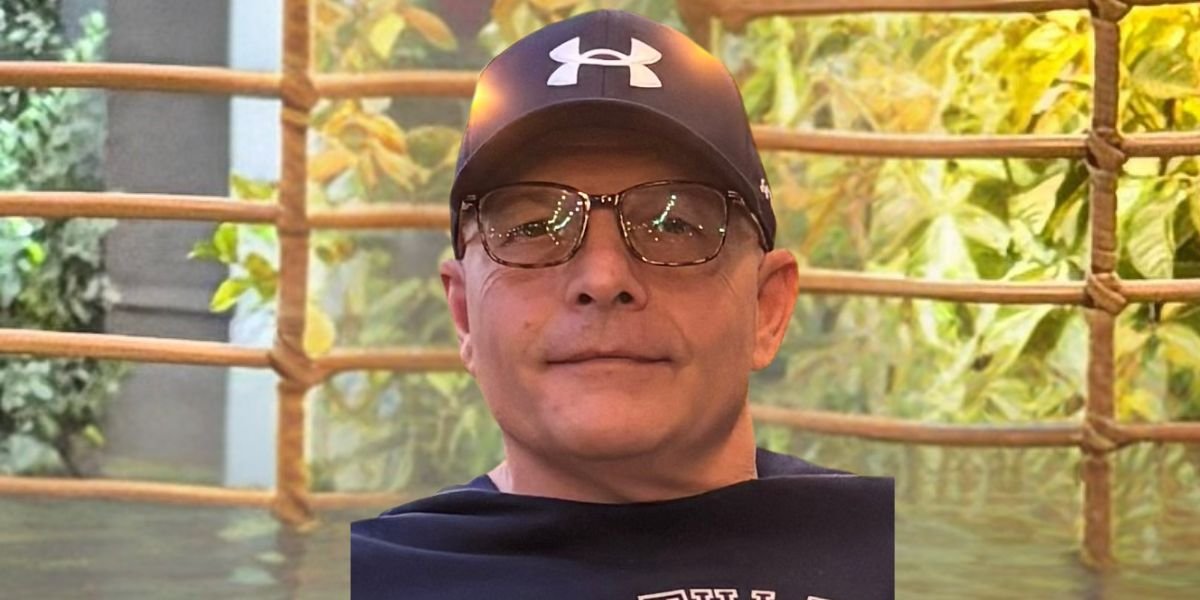
PHOTO: Author Sean Paquet Reflects On His Spiritual Journey And The Mysteries That Inspire His Fiction
Discover How Sean Paquet Transforms Military Experience And Spiritual Awakening Into Profound Works Of Imagination And Insight
Sean Paquet crafts visionary fiction that blends metaphysics, spirituality, and psychological depth, guiding readers through transformative journeys of self-discovery, cosmic mystery, and human connection.
Sean Paquet is a storyteller who bridges worlds—both literal and metaphysical. Drawing from a remarkable life of service in the United States Air Force and years spent abroad, Paquet’s writing fuses his experiences in diverse cultures with his deep exploration of spirituality, metaphysics, and the unseen. Now calling the Philippines home, he continues to craft narratives that question reality itself, blending ancient mythologies with contemporary reflections on humanity’s search for meaning.
Through novels like A Game of Gods and The Jarl’s Shadow, Paquet pushes the boundaries of speculative fiction, weaving together cosmic forces, lost civilizations, and profound psychological insight. His Echoes of Change series invites readers into a deeply personal spiritual journey—offering light amid darkness and wisdom through introspection.
Sean Paquet’s writing illuminates the unseen, merging reality and the metaphysical with powerful emotional and spiritual resonance.
In this illuminating interview with Mosaic Digest magazine, Sean Paquet discusses how his military background, spiritual awakening, and fascination with the metaphysical world shape his storytelling. His thoughtful reflections on truth, reality, and transformation reveal an author dedicated not only to his craft but also to guiding others toward self-understanding and connection. Sean Paquet’s work stands as a testament to the power of storytelling to explore both the mysteries of the universe and the depths of the human soul.
What first drew you to weave heathen and metaphysical ideas into your fiction rather than writing a straight memoir of your experiences?
To be honest, I decided to use a fictional world because often, truth is stranger than fiction. If I were to tell my life story as a memoir, I could well be branded a lunatic. Moreover, fiction is a place where people go to escape, and the world I created in A GAME OF GODS, and the Jarl’s Shadow is a world where everything we want to believe is real. Thus, it allows for escape while simultaneously providing lessons and insights.
During your year-long daily reflections, did any entry ever make you uncomfortable enough to consider abandoning the project, and how did you push past that resistance?
It certainly happened several times. No one is comfortable talking about their inner darkness. Most people would rather not even acknowledge it. Yet, somebody needs to. People need to know that it’s ok to talk about those uncomfortable things; the things we stamp down to the bottoms of our souls and hope they never surface. Every time I wrote or considered writing something that was heavy or dark, I cringed and almost stepped back. However, something inside me would always say, “Someone needs to read this.” That was what kept me going.
How did your deployments in the Middle East shape the way you portray “unimaginable alien forces” and lost civilizations in The Jarl’s Shadow?
Whenever we operate in environments that are foreign to what we are accustomed to, our minds open up a little more. We are more aware of a larger world and a larger universe. Looking out on those desert sands, I was transported back to stories from H.P. Lovecraft, full of nameless deserts full of cyclopean ruins and ancient sleeping cosmic entities.
In the Echoes of Change series, you say the books can be read out of order; how do you prevent readers from feeling disoriented when themes and images echo across volumes?
I tend to view the spiritual journey like sobriety. It is a day-by-day experience, and because of that, the daily insights in any book can connect to something happening in someone’s life. The spiritual path can be winding and disorienting at the best of times, yet as I wrote, I always tried to keep the reader grounded in the moment, in the now.
“The spiritual path can be winding and disorienting, yet I try to keep the reader grounded in the moment.” – Sean Paquet
You describe seeing “through the veil of reality” in meditation; what practical technique do you return to when the veil refuses to lift?
What we need to understand before anything else is that what we perceive as reality isn’t actually what is there. We see based on collective perception. All is energy moving at different levels of vibration. Once we accept that, it is usually just a matter of pranayama (breathing exercises) to fall into a state where the veil lifts and we see reality in its true form.
Living as an expatriate in the Philippines, have you found that South-East Asian folklore meshes with the Norse-derived metaphysics you explore, and has this fusion surfaced in any forthcoming work?
It actually does mesh. Here in the Philippines, indigenous religions were animistic, and shamans served as spiritual leaders, much in the same way that Seidre led people along the Norse spiritual path. In both cultures, the concept of the representative spirit is prevalent. Spirits of the trees, animals, water, and the land are concepts I incorporate into my books because they are central to the energy of the Philippines.
You retired from uniform in 2013 and left contracting in 2018; what was the single starkest difference between military structure and the unstructured life of a full-time writer, and how did you compensate for it?
The one thing that always strikes me is the amount of time I have on my hands. I am never bored because I am always writing, counseling, or teaching martial arts. However, it’s as if I now have time for those things instead of fitting them in when I wasn’t on duty.
What three pieces of guidance would you offer to other authors attempting to turn a private spiritual diary into a publishable series without sounding self-indulgent or preaching to the choir?
My first advice is the same I give to any spiritual practitioner: Write it down. Why? Because the spiritual journey is something we can only quantify if we write about it.
Second: don’t be afraid to write about it. We tend to think of ourselves as unique and our experiences only apply to us. However, we are not. People who walk along the spiritual path share many common experiences. Perhaps someone feels alone, isolated because of what happened to them. They may read your story and realize they are not alone at all. I feel people need a sense of commonality while struggling.
Third: Even if you don’t want to write about it, write about it! Writing about our spiritual experiences manifests them into reality. It gets them out of your head and down on paper. It’s liberating to feel the magic pour out of us as we write about some extraordinary experience. In that moment, we make it real.
“Writing about our spiritual experiences manifests them into reality—it makes the magic real.” – Sean Paquet