











Karin Ferrari Explores Media, Mysticism And Hidden Visual Narratives
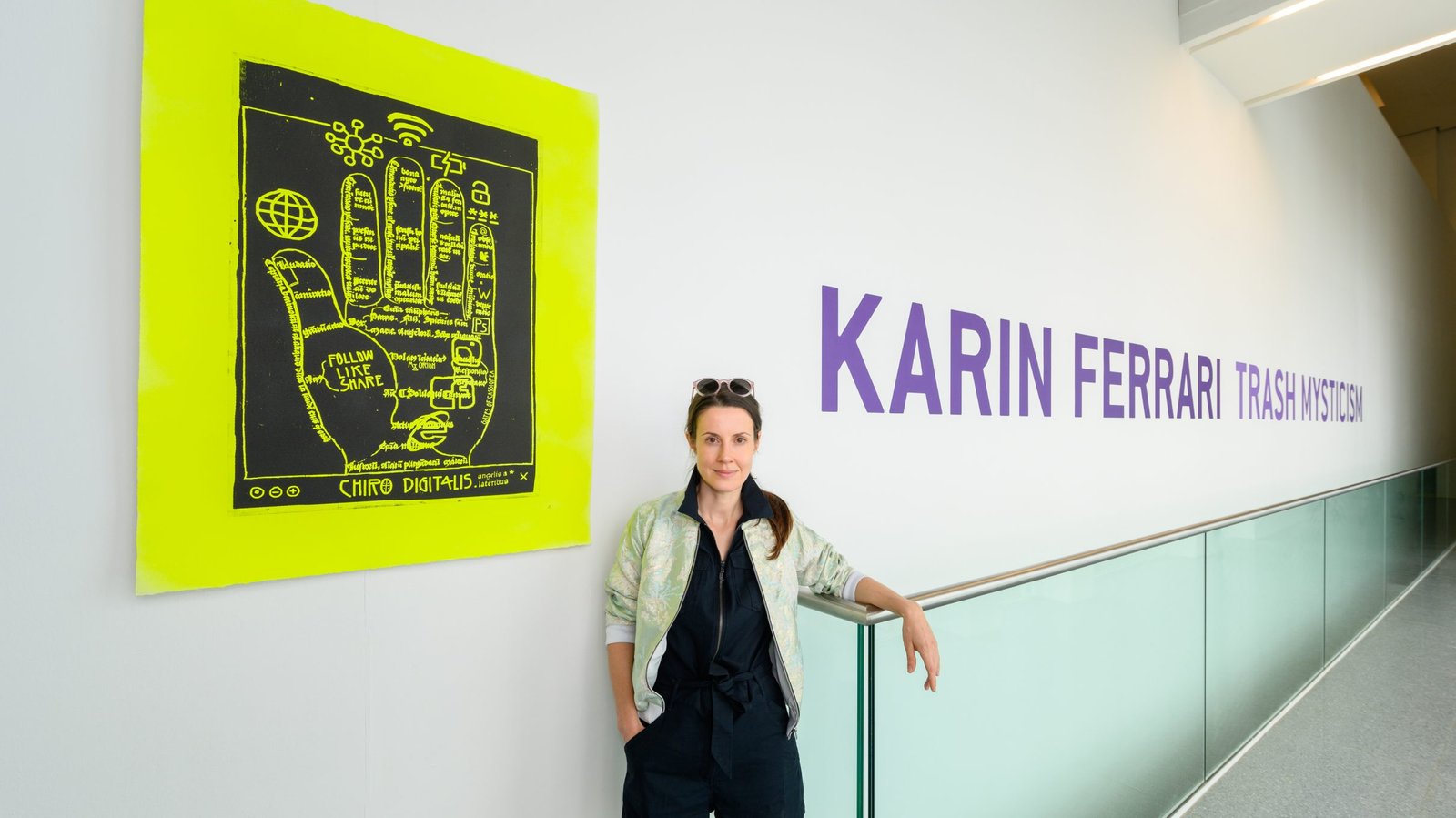
Photo: Karin Ferrari, visionary artist and creator of ‘trash mysticism,’ reveals the hidden layers of media and culture through her groundbreaking works.”
Dissecting Symbols, Media, And Spiritual Paradoxes
Karin Ferrari explores media, mysticism, and cultural narratives through art, deconstructing symbols in consumer culture, fringe theories, and architecture, while engaging audiences in critical thought about belief and visual influence.
K arin Ferrari is an artist who sees the unseen, a cultural decoder whose work reveals the hidden layers within the images we are constantly surrounded by. Fearless and innovative, she immerses herself into the intersections of consumerism, mysticism, and digital culture, peeling back the surface of media and cultural symbols to explore what lies beneath. Whether through her videos, installations, or prints, Ferrari challenges our perceptions of the world and lifts the curtain on the overlooked, the esoteric, and the bizarre.
Based in curiosity and inquiry, Ferrari’s artistic vision dissects the culture of conspiracy and spirituality in an era shaped by the internet. Her term “trash mysticism” strikes at the heart of one of her central concerns: How mystical and symbolic ideas are democratized, distorted, and disseminated in online culture, often taking on a life of their own. In her widely acclaimed DECODING (THE WHOLE TRUTH) series, Ferrari explores how belief systems and visual culture are interwoven, demonstrating how symbols, hidden messages, and cultural narratives help shape how we see the world. Her art invites us to question what we know and challenges us to reconsider the narratives we consume daily.
Ferrari’s artistic journey took an important turn fourteen years ago, during what she describes as “the gilded age of YouTube.” Late one night, her video recommendation feed transitioned into a peculiar library of conspiracy theories and fringe ideas presented in amateur, low-budget productions. Videos of reptilian shapeshifters and esoteric analyses of pop celebrities caught her attention—not only for their content but for the visceral belief they prompted, even fleetingly. “For a moment, I believed,” she recalls, “and it shifted my world.” That moment of belief became the catalyst for her decision to turn such fringe cultural phenomena into art.
The DECODING series, Ferrari explains, is influenced by those videos and the questions they inspired: Why would consumer culture, ostensibly a rational and profit-driven system, lean so heavily into mysticism and symbolic imagery? Hidden themes in music videos, advertisements, and even news broadcasts fascinated her. Her works explore how religious and archetypal motifs—from ancient Egyptian sun gods to devilish Earth goddesses—are infiltrating modern media and consumer spaces. In one video, Ferrari unpacks how Lady Gaga’s music videos use mystical symbolism to depict her rise to superstardom. In another, she examines the use of divine metaphors in smartphone advertisements, all while investigating hierarchies, celebrity worship, and their ties to capitalism.
Ferrari approaches such themes with equal parts humor, rigor, and critical analysis. Her work transcends mere parody by delving deep into what she calls “DIY mysticism” and the power of paranoia. “It’s the joy of making sense of things,” she explains, pointing out how humans routinely reshape their realities based on beliefs and frameworks—often without recognizing their influence. Artists, Ferrari argues, have a unique role to play in this conversation: They can freely explore ambiguity, contradiction, and irony, inviting audiences into a space of questioning and reflection.
Her exploration of pseudo-sacred commercial architecture in her project Archi_Fictions of Ecstasy is another fascinating dimension of her work. Drawing inspiration from research trips in South East Asia and cities like Manhattan, Ferrari investigates how mystical motifs subtly embed themselves into everyday spaces—hotels, shopping malls, financial towers. She highlights the architectural language of power and mysticism, describing what she calls “Rooftop Temples of New York City,” where religious-like symbolism perches atop skyscrapers. For Ferrari, this blending of spirituality and commerce speaks volumes about the desires and ideologies that underpin contemporary society.
As the media landscape grows more saturated—and distinctions between truth and fiction blur—Ferrari’s work feels more urgent than ever. She invites her audience to interrogate their relationship with imagery and consider their role as participants in visual culture. “Let’s create stories and narratives that inspire nice realities,” she suggests, underscoring the symbolic and practical power of storytelling.
Looking ahead, Ferrari is set to exhibit at Verdurin, a project space in East London, in January. This new exhibition will focus on the aesthetics of conspiracy theories, a natural extension of her ongoing interests. While in London, she plans to study the city’s financial architecture, continuing her exploration of how symbolism shapes economic and cultural power.
Karin Ferrari’s blend of critical inquiry and imaginative storytelling positions her as a cultural visionary for the digital age. At a time when beliefs, myths, and images collide in increasingly complex ways, Ferrari takes us on a journey into the uncomfortable and the uncanny—where truth, fiction, and wonder meet.