










THE SILENCE OF THE GRAVES
Every year, as mid-July arrives, a peculiar kind of shadow falls over Europe. It is the anniversary of Srebrenica—a name that should ring in our ears not just as a historical event, but as a profound, shattering alarm. Thirty-one years ago today, the promise of “Never Again,” forged in the ashes of the Holocaust, was utterly broken. And it was broken while the world watched in high definition.
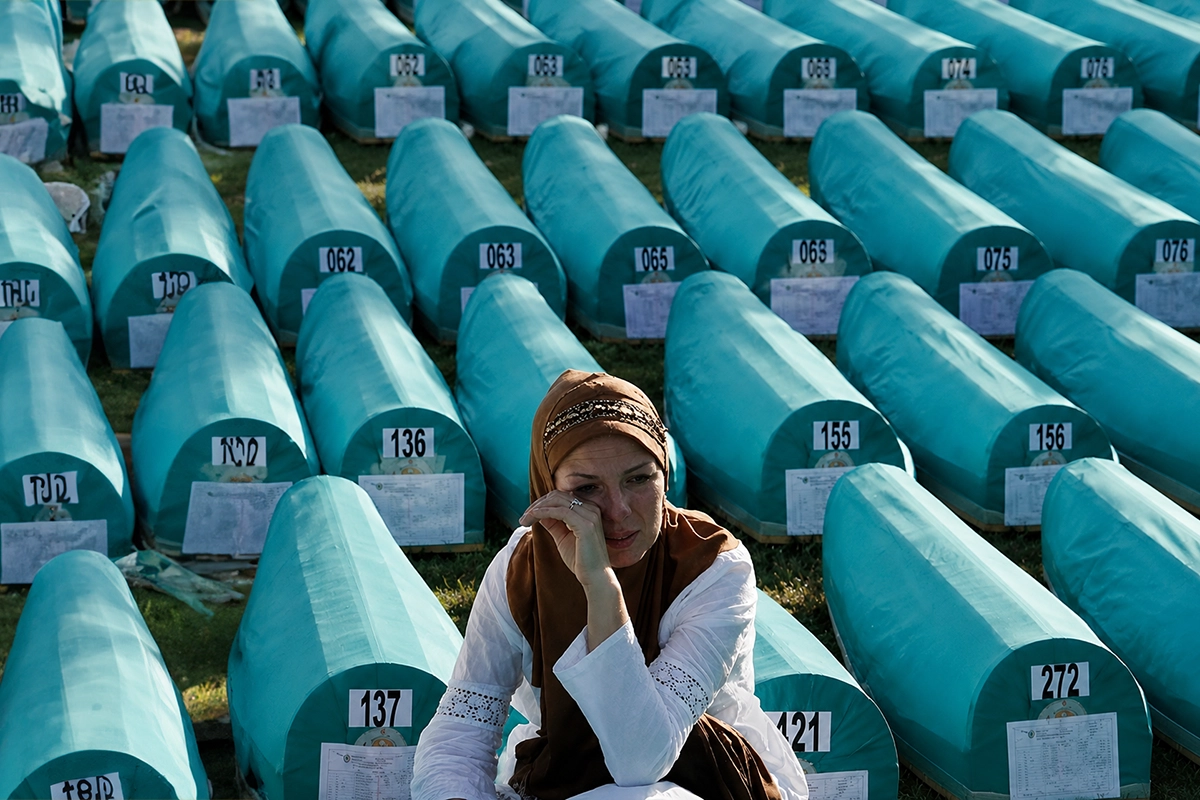
To look back at the July of 1995 is to look into an abyss of human cruelty. The numbers are carved in white stone at the Potočari memorial: 8,372. But numbers possess a dangerous ability to sterilise horror. Let us be unsparingly clear about what those numbers mean. They mean a boy of thirteen, trembling as he was torn from his mother’s arms. They mean grandfathers, fathers, and sons lined up against ditches, their hands bound, shot in the back by men who shared their language but lacked their humanity.
The Serb forces under Ratko Mladić did not merely kill; they desecrated. In a sickening attempt to hide their crimes, they used bulldozers to tear apart the primary mass graves, scattering body parts across dozens of secondary and tertiary sites. They tried to erase the very identity of their victims. Even today, the earth is still yielding secrets, as bone fragments are painstakingly matched with DNA to give families a name to bury. It was a meticulously planned, bureaucratised campaign of annihilation. It was, by every definition of international law, a genocide.
Yet, the true horror of Srebrenica is twofold. There is the savagery of the perpetrators, and then there is the damning, cowardly silence of the bystanders.
Srebrenica was not a forgotten corner of the world. It was a designated United Nations “Safe Area.” The thousands of Bosniak Muslims who crowded into the enclave had been disarmed by the international community under the solemn promise of protection. They trusted the blue berets. They trusted us.
What they received instead was an act of betrayal that will forever stain the conscience of the West. When Mladić’s tanks rolled in, the 400 lightly armed Dutch peacekeepers did not fight; they capitulated. When the terrified locals begged for their weapons back to defend their own children, the Dutch commander refused. The UN hierarchy dithered, offering a couple of token jet flyovers instead of decisive air strikes.
We are left with the indelible, nauseating footage of the Dutch commander, Thom Karremans, clinking champagne glasses and accepting gifts from Mladić, while outside the compound, the selection for slaughter had already begun. The UN did not just fail to keep the peace; they inadvertently managed the queue for a massacre.
Yes, justice has since limped into view. Karadžić and Mladić are spending the remainder of their days behind bars, the former locked away in a British prison on the Isle of Wight. The Dutch courts have admitted a degree of state liability. The UN has finally marked 11 July as an official day of remembrance.
But official days and belated apologies are a cheap currency. The bitter truth is that Srebrenica happened because the international community decided that the lives of Bosnian Muslims were not worth the political risk of intervention. We drew a line in the sand, and then we watched as it was washed away in blood.
As we mark this anniversary, we must confront the uncomfortable reality that the complacency which allowed Srebrenica to happen is not a relic of the nineties. It is alive and well today. When we look at the world around us, we still see global powers looking the other way, still see the cynical calculations of geopolitics placed above human survival.
To remember Srebrenica is not merely an exercise in historical grief. It is a test of our current morality. If we look at those 8,372 white headstones and feel only nostalgia for a past tragedy, rather than fury at our ongoing capacity for indifference, then we have learned absolutely nothing. The graves are silent, but they demand that we speak.