












Jay Allan Storey Takes Readers On A Journey Through Genres, Adventure, And The Limits Of Imagination
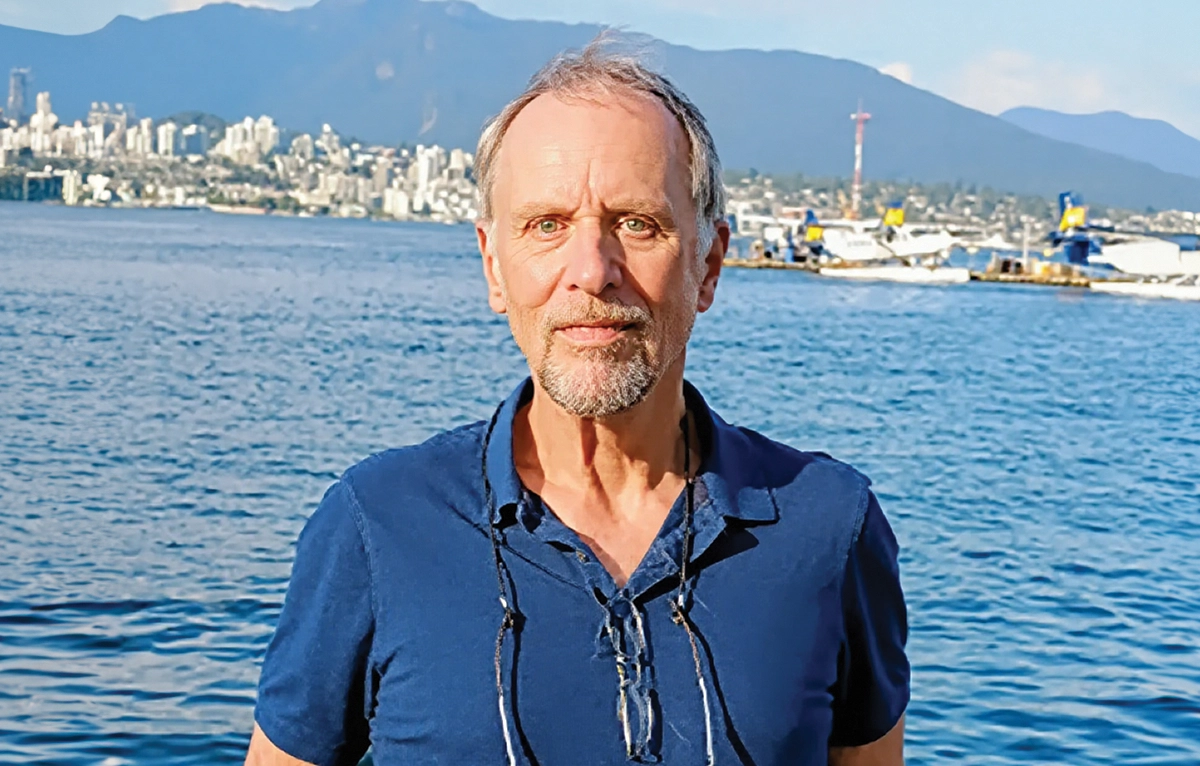
Exploring Creativity, Global Travels, And Stories That Transform
Jay Allan Storey shares his creative process, global inspirations, love for music, and how his diverse life experiences shaped thrilling science fiction, mysteries, and genre-defying literary masterpieces.
Jay Allan Storey isn’t just an author—he’s a multi-dimensional creative force whose work transcends the boundaries of genre and imagination. From science fiction epics to meticulously crafted mysteries, Jay captures the complexity of human experience with stories that toe the line between the conceivable and the fantastical, always rooted deeply in the characters who bring them to life. He is as fearless in his writing as he has been in his remarkable life, traveling through the rugged terrains of Iraq, Afghanistan, and Pakistan, or exploring the more personal landscapes of music and creativity. Mosaic Digest is thrilled to feature this exclusive interview with an author whose diverse experiences and boundless curiosity have irreversibly shaped the dynamism of contemporary fiction.
Jay’s bibliography reads like a treasure trove of literary innovation. Whether it’s the daring thrillers like The Arx, the immersive worlds of the Black Heart and Vita Aeterna series, or the unpretentious charm of his latest mystery The Houseboat Detective, his work pushes genre expectations and invites readers into a thoughtful exploration of identity, transformation, and possibility. Take, for example, The Houseboat Detective, a departure from his hallmark science fiction into the world of mysteries, humor, and Canadian-centric narratives that celebrate the city of Victoria—Jay’s birthplace and lifelong muse. His protagonists are more than characters; they are reflections of resilience and evolution, illustrating his belief that breaking free from stereotypes is not just possible, it’s essential.
Through this editorial feature, Mosaic Digest celebrates Jay Allan Storey not just for his extraordinary stories, but for the richness with which he infuses his art—the music that harmonizes his narratives, the diverse experiences that lend authenticity to his work, and the global perspective that enriches his writing with layers of depth. His stories remind us that imagination doesn’t have limits, and his journey proves that creativity flourishes best in lives lived boldly. Jay Allan Storey stands as an artist who invites us to not only dream about alternate realities but to embrace them as mirrors of our own. Immerse yourself in this interview, and prepare to be both inspired and intrigued by the mind of a literary craftsman at the peak of his creative brilliance.
Your career has spanned everything from software development to cab driving—how have these diverse experiences influenced your storytelling?
Though I didn’t actually begin writing until quite late in life, I’d always considered the idea, and beyond just enjoying diversity, I’ve always been attracted to experiences that might provide future material. Many of the things I’ve done have made it into my books, and having actually done them I can talk about them with some kind of authority. Also, I think diversity of experience leads to diversity in thought, and opens the mind to new ideas.
What inspired you to shift genres with The Houseboat Detective, and how did writing a mystery differ from your usual science fiction work?
One of my earlier novels, The Arx, was a detective story, though it had a significant SciFi component, and I’ve always loved a good mystery.Still, The Houseboat Detective is a departure from my usual work: it’s the first time I’ve tried to incorporate humour, the first time there’s been no science fiction involved, and the first time I’ve made a point of featuring locations from a particular city-Victoria, British Columbia.
The book is also more character driven than my other books, which have all featured ‘big’ ideas-Houseboat Detective is really just a pure mystery.
I’ve always resisted being stuck in a particular genre, and I like to challenge myself. Though I love science fiction, I wanted to try something different. Also, given the political turmoil currently surrounding Canada, I wanted to write something that was unabashedly Canadian-that featured the city where I was born and grew up. If Houseboat Detective proves to be popular, I’m hoping to make it a continuing series.
In keeping with the diversity and Canadian themes, I’m currently working on a new novel, which will be in the steampunk genre, and set in northern Canada.
You’ve travelled extensively through places like Afghanistan, Iraq, and the Swat Valley—how have those journeys shaped the themes or characters in your books?
I traveled around the world solo when I was nineteen, and that experience alone provided enough ideas to last a lifetime. There was a scene in my first book, Eldorado, where masses of people are living on the street, that was inspired by one of my experiences traveling in India.
I’m actually surprised that more of my travel experiences haven’t made it into my books, at least explicitly, and that I’ve never been particularly inclined to write about those places, though they made a powerful impression on me. While they haven’t had much explicit coverage, I’m sure they’re implicitly there in the multifaceted way I view the world, and the characters I portray.
Music seems to play a role in your creative process, especially in The Houseboat Detective. How do you use music to develop your characters or scenes?
I actually hadn’t thought of it before, but in both my detective novels, The Arx and Houseboat Detective, the protagonists are musicians (though much more so in the Houseboat Detective). Maybe I somehow subconsciously relate the complexity of music to the complexity of an investigation.
In Houseboat Detective, music is what keeps the protagonist, Jake Sommers, going-‘the one unmoving anchor in a life that, in every other way, seemed to drift aimlessly’. It uplifts him when he’s down, and soothes him when he’s stressed. It also informs his detective work. At one point he thinks-‘Like a discordant note in an arpeggio, something stood out from everything else’.
Your novels are described as “skirting the edge of believability”—how do you strike the balance between the imaginative and the credible?
As primarily a science fiction writer, I’m aware that my audience are likely to be knowledgeable about science and in tune with what’s scientifically feasible. They’re always ready to ‘pounce’ if you make a glaring logical or technological error.
At the same time, I’m attracted to scenarios some might consider far-fetched, such as in The Black Heart of the Station, where the Earth is dragged out of its orbit by a passing perturbation of Dark Matter, or Vita Aeterna, where a treatment has been invented that can significantly extend human lifespan.
I think the balance between visionary thinking and believability is a problem every science fiction writer has to deal with. You want to use your imagination to visualize some outrageous alternate reality, but that reality still has to follow the basic rules of physics and biology.
Looking back at The Black Heart of the Station and Arrival, what do you consider the biggest creative breakthrough or lesson you gained from writing those books?
I’ve always been fascinated by the idea that biblical scriptures might refer to actual historical events-that the great flood, the parting of the Red sea, etc. might have been real occurrences whose details were lost in time. I wanted to write a story that would capture how such a circumstance might occur.
This is the premise driving the Black Heart. The action takes place in a self-contained city, the Station, built 1500 years in the past, 1 kilometer beneath the surface of a dead, frozen Earth. Around year 900, a catastrophic asteroid strike destroyed a huge section of the city, killing the vast majority of its inhabitants, and erasing virtually all historical data. The survivors, predominantly blue-collar workers with little knowledge of the technical and historical aspects of the Station, spent the next hundred years barely hanging on. During those dark days, all knowledge of the past and the city’s original purpose was lost, surviving only as mysterious parables in the texts of the resident Solis church.
Until the discovery of a hidden scripture by a novice Solis monk finally reveals the truth.