





James Morehead Illuminates Poetry Through Narrative, Music, And Multimedia Innovation

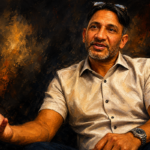
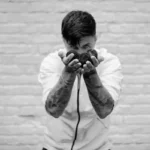
Photo: James Morehead at a recent poetry reading, sharing his evocative work that bridges narrative, music, and visual art.
Inspires Modern Poetry
James Morehead discusses The Plague Doctor, his Dublin Poet Laureate tenure, collaborations with artists, musicality in poetry, and the balance of critique and instinct shaping his distinctive narrative-lyric voice.
J
ames Morehead is a luminous force in contemporary poetry, a Poet Laureate Emeritus of Dublin, California, and the evocative voice behind the Viewless Wings Poetry Podcast. His collections, including the celebrated The Plague Doctor, showcase a masterful blend of narrative and lyricism that transcends traditional poetic boundaries. Morehead’s work has not only been published widely—from Ignatian to Beyond Words and Citron Review—but has also been transformed into multimedia experiences: tethered became an award-winning animated short, Twilight in the Sculpture Forest captured Best Documentary at the Los Angeles Poetry Film Festival, and gallery was set to music for baritone and piano. His performances at NPR’s Poetically Yours, Patagonia’s Poet Laureate Celebration, and the 20th Annual Haiku Festival reveal a poet equally at home in the intimate setting of a page and the expansive stage of public engagement.
In this revealing interview for Mosaic Digest, Morehead shares the inspirations behind The Plague Doctor, the impact of his tenure as Poet Laureate of Dublin, California, and his rich collaborations with visual artists and musicians. Readers gain an intimate look at how rhythm, musicality, and ekphrastic detail inform his craft, and how he balances critical feedback with artistic instinct to cultivate a distinctive voice. This conversation is a masterclass in creative process, offering aspiring poets and seasoned readers alike a glimpse into the meticulous, inspired mind of a modern poetic visionary.
James Morehead blends lyricism, narrative, and multimedia mastery, elevating contemporary poetry with depth, innovation, and a distinctive, resonant artistic voice.
Interview Highlights
- Inspirations and creative process behind The Plague Doctor
- Experiences as Poet Laureate of Dublin, California
- Collaboration with visual artists and musicians
- How rhythm and musicality shape his poetry
- Balancing critical feedback with artistic instinct
- Multimedia adaptations of his poetry (tethered, Twilight in the Sculpture Forest, gallery)
- Performing at NPR’s Poetically Yours and major festivals
What inspired you to create The Plague Doctor as a three-act poetic structure?
The three-act structure emerged while deciding what to include. Ordering the poems on our family room floor, I envisioned a narrative arc. The first act sets the eerie tone with the title poem, the second provides a pastoral breather, and the third leans into mortality. I structured this book to be read in one sitting like listening to an album rather than a collection of singles.
“Poetry is not just written—it’s performed, visualized, and experienced across mediums.”
– James Morehead
How did your experiences as Poet Laureate of Dublin, California shape the themes in this collection, James Morehead?
Serving as Poet Laureate of Dublin, California for four years was a parallel universe. My responsibilities centered on bringing literary arts into the community, from organizing a month-long Poetry Walk in local storefronts to writing commemorative poems for the City’s 40th Anniversary, a park opening, and a footbridge. The experience showed me it’s possible to find poetry in almost anything. The footbridge poem, for example, led me down a research rathole about how the bridge’s trail was once a feeder rail line over a century ago. It proved poetry can communicate so much history and emotion in under two minutes.
“Collaboration challenges me to see my work through fresh artistic lenses.”
– James Morehead
What was it like collaborating with visual artists such as Natalia Ardus, Mark Kulas, and Tony Rubino?
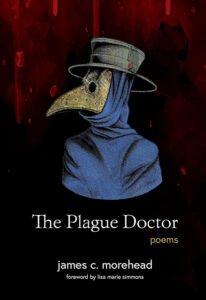
I love cross-disciplinary collaborations. Mark Kulas’ art inspired one poem and he graciously allowed several pieces in the book. Tony Rubino provided the stunning cover, coloring an existing piece to match the title poem’s shades. The true collaboration was with Natalia Ardus. I discovered her detailed pen-and-ink work at Silicon Valley Comic Con and commissioned her. I provided three poems and left her to create. She showed pencil sketches, but I completely trusted her instincts. I wanted the art to represent her unique voice, not just illustrate my words. I loved her work so much I eventually had a tattoo artist ink one of her pieces on my right shoulder.
How did the foreword by Lisa Marie Simmons influence readers’ approach to the poems?
I’ve collaborated with Lisa for years. She’s coached me on performance, and I’ve provided lyric notes for her jazz albums. When I asked her to write and record the foreword for The Plague Doctor audiobook, I had no idea she’d also film her performance in her Italian home studio! Readers who watch Lisa recite the foreword get the perfect introduction to the “sound” of the book before reading a single page. I’ll forever be grateful for her support.
Tina Cane compares your work’s musicality to The Who; how important is rhythm when you write poetry?
All poets have an intimate relationship with music. Poems are more than words on a page—they are how words sound, ricochet, and carry rhythm. Poets obsess over syllables just as musicians agonize over notes. If words don’t fit perfectly, the listener instantly feels something is off. Reading drafts out loud is vital because your inner voice can mask technical issues. I recommend poets not only read aloud during editing but also record themselves. Hitting “record” nudges you into performance mode, allowing you to effectively stress-test the poem and hear it as an audience member would.
What role do artistic references, such as Jimmy Page, play in shaping your imagery?
Poets are often obsessive researchers. Listening to Led Zeppelin’s The Battle of Evermore, I decided to write an inspired sonnet. I dug into the track’s details—the specific mandolin Jimmy Page played, the Lord of the Rings backstory, and the fact that it was actually a duet with folk singer Sandy Denny. Uncovering specific, textured details like these provides authentic hooks that I love working into a poem.
How did feedback from critics like Kristina Marie Darling and Donald Platt affect your perspective on the collection?
I attended an intense manuscript workshop led by Kristina and later hired her for additional editorial feedback. Her critical, highly opinionated insights were invaluable. She challenged me to elevate each poem—not by dictating edits, but by showing where I could push further or where I needed to do less. Actionable feedback is essential to writing poetry at the highest level. However, it’s equally important to know when to ignore it. I knew one poem was perfect, resisted calls to edit it, and remain thankful I did. Yet, for many other poems, Kristina’s challenges forced me to re-think how close the manuscript was to being done. I was incredibly grateful for that extra homework!
What does ekphrastic poetry allow you to express that other poetic forms do not?
Using another artist’s work as inspiration forces you to explore it much more deeply than during a casual museum visit. Ekphrasis encourages diving into the art’s backstory and connecting it to “something else”—which can be highly personal or seemingly unrelated. It’s always more than just a lovely caption. I’ve participated in several ekphrastic poetry events in the San Francisco Bay Area, and my current work-in-progress is actually a poetic tour of Bay Area museums.
What writing tips would you give to aspiring authors who want to blend visual art and poetry?
Walk through a museum looking for a unique hook. For example, while viewing a beautiful portrait at the Oakland Museum of California, I found myself more fascinated by its elaborately carved, gilded frame. The artist signed the painting, but what artisan created the frame? What wood was used? How does gilding work? I used those questions as a starting point, shifting the poem’s focus entirely to the frame instead of the portrait. Find the stories hiding in the margins.
What advice would you offer aspiring authors seeking their own distinctive voice?
Give yourself time. Many artists learn initial skills through imitation—like an art student sketching a masterpiece in a museum. As you push yourself to learn the mechanics of poetry, you’ll find patterns in what you love creating. Multiple readers told me they loved my “rich imagery,” and I realized that was a pillar of my voice. Don’t force it; let your voice emerge naturally through the work.
For any author, what is the most valuable lesson you have learned about sustaining creativity over time?
First: getting started is always hard. It’s like the first thirty minutes of a long hike. But if you push through while your mind warms up, you’ll hit a flow state, which is an amazing feeling. Attacking a blank page isn’t fun until you reach the point where you don’t want to stop. Believe you’ll find that point.
Second: if you wait for a creative spark, your output will be sporadic. Seek inspiration by writing even when you don’t feel like it. You’ll stumble upon far more ideas by actively writing than you ever will by waiting for inspiration to strike.
What question do you think interviewers should ask authors more often, but rarely do?
“What did you edit out?” I’m fascinated by the invisible graveyard of cut stanzas, deleted poems, and abandoned ideas. Editing must be a ruthless, beautiful process. The courage to cut what doesn’t serve the whole often elevates a poetry collection.
Editor’s Note
A visually rich, emotionally resonant poetry collection that masterfully blends language and art into a deeply immersive, memorable experience.
The Plague Doctor (in three acts) is an immersive poetry collection blending vivid language with visual art. James Morehead’s ekphrastic style captures fleeting moments, artistic inspiration, and human connection. Structured in three acts, it offers emotional depth and narrative flow. Its musicality and multimedia elements create a dynamic reading experience that rewards multiple readings with fresh insights.