











Act of Remembrance Honours War Dead Buried In Belgium
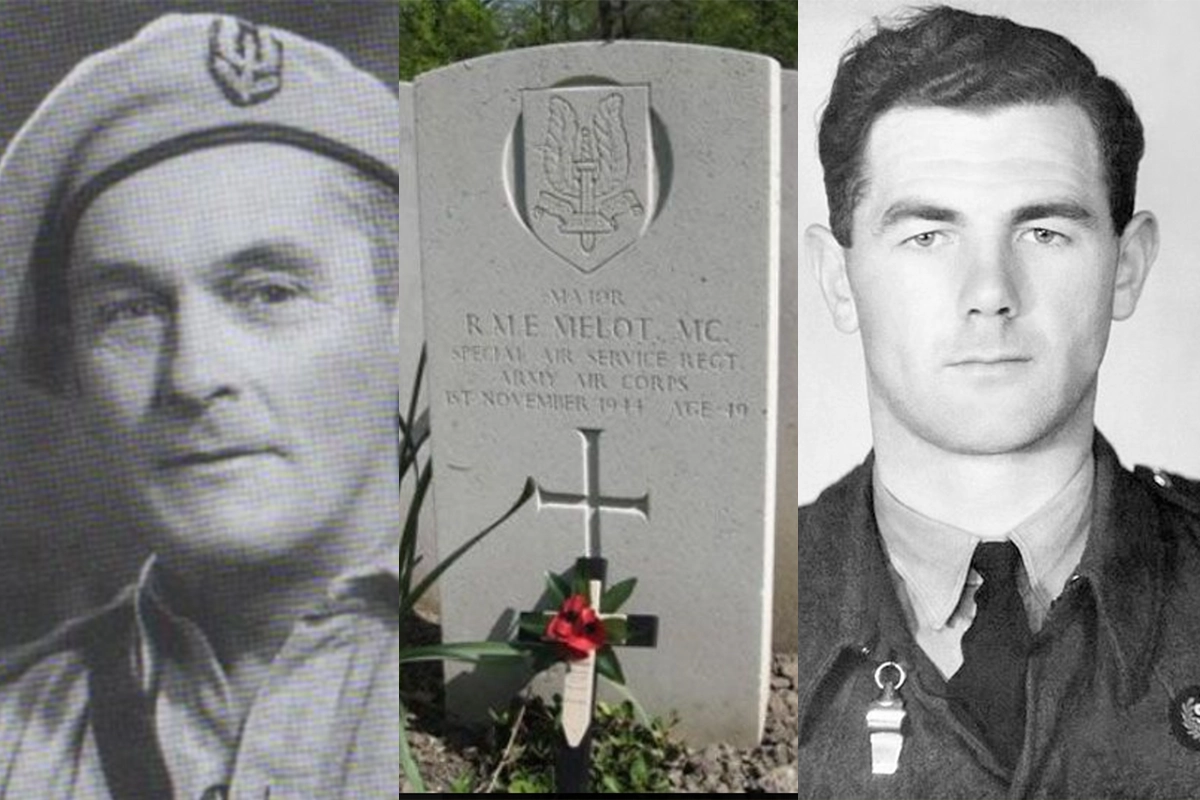
Photo: Veterans, military personnel, diplomats, and community members gather at Evere Commonwealth War Graves Cemetery in Brussels during the Royal British Legion’s annual Act of Remembrance honoring Allied war heroes. Photo credics:.George Thompson : Imperial War Museums, Robert Melot, Dennis Abbott. Brussels Town Cemetery (CWGC)
Brussels Remembers Allied Heroes
The Royal British Legion’s annual Act of Remembrance in Brussels honors British and Commonwealth war dead, celebrating courage, sacrifice, and enduring international friendship at the historic Evere Commonwealth War Graves Cemetery.
It isn’t for nothing that Belgium is, historically, known as the “battlefield of Europe” and a solemn and moving event this weekend highlights the shared sacrifices of the tens of thousands of war dead buried in Belgian soil.
The annual Act of Remembrance this Saturday (June 20) in Brussels is an Allied commemoration held by the Royal British Legion (RBL) Brussels branch at the Commonwealth War Graves Commission (CWGC) Cemetery in Evere (Brussels Town Cemetery).
While November 11 (Armistice Day) is Belgium’s principal national day of remembrance for all fallen soldiers, the June 20 Act of Remembrance holds unique significance for the British and Commonwealth ex-pat and military communities in and around the capital.
Colonel Nick Thom, the new UK Attaché to Belgium and Luxembourg, whose French-Belgian grandfather served in the Belgian Army in WW2, will give a reflection at the service.
101-year-old Second World War veteran Count Henri d’Oultremeont, who lives in Brussels, is also expected to take part in the ceremony.
RBL Brussels chair Dennis Abbott told this site, “The act of remembrance at Evere is the Royal British Legion’s main commemoration in Brussels. It is an opportunity to honour all those who made the ultimate sacrifice for Belgium’s freedom.
“More than 40 of the heroes laid to rest at Evere were still in their teens.While the majority of the casualties are British, 124 are Canadians, 21 are Polish and others came from Australia, the Netherlands, New Zealand, Greece and South Africa,” he said.
The main cemetery is also the last resting place of many distinguished Belgian figures.
These include four previous Mayors of Brussels – Jules Anspach, Adolphe Max, Charles Buls and Charles de Brouckère – as well as François van Campenhout, composer of the Belgian national anthem, noted French artist Jacques-Louis David, famed for his painting The Death of Marat, and Joséphine de Montholon, reputedly the daughter of Napoleon, born during his exile on St Helena.
A RBL spokesman said, “As well as honouring those who died in many cases far from home, the ceremony reinforces enduring international ties.”
The ceremony, which starts at 11.30am, serves as a joint tribute gathering military personnel, veterans, diplomatic representatives and others.
The specific date is chosen to lead into the broader summer remembrance season and the event features musical tributes from the Belgium Military Wives Choir.
The cemetery contains more than 11,000 graves across its 380,000 sq mt grounds. The Commonwealth war graves include 641 identified burials in total, comprising 54 from WW1 and 587 from the Second World War.
The site has specific sections with some notable burials, including Major Bob Mélot, a Belgian who served in the British Special Forces during WW2 with SAS legends David Stirling and Paddy Mayne. Mélot saw Brussels liberated in September 1944 but died when his jeep crashed on 1 November. He left a wife and two daughters.
Before the war Mélot, described by Gavin Mortimer, author of “Stirling’s Men: The Inside History of the SAS in World War II”, as “one of the most intrepid men of the war”, was working as a cotton merchant in Alexandria.
Damien Lewis, a bestselling military historian and former TV war correspondent who has written extensively about the SAS, said of him, “Bob Melot was 49 years old when he died in 1944 – hence his being called, with immense affection, the ‘Grandfather’ of 1 SAS.
“A decorated First World War veteran, when he volunteered for Britain’s armed services at war’s outbreak, he was refused due to his age. Not to be put off, he joined the “ISLD” – the cover name for the Secret Intelligence Service in North Africa, and for ISLD ops in the desert was again decorated. That in turn led him to join the SAS, in whose service he gave the ultimate sacrifice. He was the bravest of the brave.”
The late Duncan Ridler, who served alongside Mélot in 1 SAS HQ Squadron Intelligence Section, wrote:”Even to a regiment that had seen much death, Bob’s death shocked a lot of people.”
Members of the SAS acted as pall bearers at his funeral.
Another notable burial at Evere is Victoria Cross winner Flight Sergeant George Thompson, of No 9 Squadron, Royal Air Force Volunteer Reserve.
Thompson, from Perth and Kinross in Scotland was awarded the VC for saving his comrades in a burning Lancaster bomber.
His citation read: “This airman was the wireless operator in a Lancaster aircraft which attacked the Dortmund-Ems Canal in daylight on the 1st January 1945. The bombs had just been released when a heavy shell hit the aircraft in front of the midupper turret. Fire broke out and dense smoke filled the fuselage. The nose of the aircraft was then hit and an inrush of air, clearing the smoke, revealed a scene of utter devastation.
“Most of the perspex screen of the nose compartment had been shot away, gaping holes had been torn in the canopy above the pilot’s head, the inter-communication wiring was severed, and there was a large hole in the floor of the aircraft. Bedding and other equipment were badly damaged or alight; one engine was on fire.
“Flight Sergeant Thompson saw that the gunner was unconscious in the blazing mid-upper turret. Without hesitation he went down the fuselage into the fire and the exploding ammunition.
“He pulled the gunner from his turret and, edging his way round the hole in the floor, carried him away from the flames. With his bare hands, he extinguished the gunner’s burning clothing. He himself sustained serious burns on his face, hands and legs. Flight Sergeant Thompson then noticed that the rear gun turret was also on fire. Despite his own severe injuries he moved painfully to the rear of the fuselage where he found the rear gunner with his clothing alight, overcome by flames and fumes.
“A second time Flight Sergeant Thompson braved the flames. With great difficulty he extricated the helpless gunner and carried him clear. “Again, he used his bare hands, already burnt, to beat out flames on a comrade’s clothing. Flight Sergeant Thompson, by now almost exhausted, felt that his duty was not yet done.
“He must report the fate of the crew to the captain. He made a perilous journey back through the burning fuselage, clinging to the sides with his burnt hands to get across the hole in the floor. The flow of cold air caused him intense pain and frost-bite developed. So pitiful was his condition that his captain failed to recognise him. Still, his only concern was for the two gunners he had left in the rear of the aircraft.
“He was given such attention as was possible until a crashlanding was made some 40 minutes later.
“When the aircraft was hit, Flight Sergeant Thompson might have devoted his efforts to quelling the fire and so have contributed to his own safety. He preferred to go through the fire to succour his comrades. He knew that he would then be in no position to hear or heed any order which might be given to abandon aircraft.
“He hazarded his own life in order to save the lives of others. Young in years and experience, his actions were those of a veteran. Three weeks later Flight Sergeant Thompson died of his injuries. One of the gunners unfortunately also died, but the other owes his life to the superb gallantry of Flight Sergeant Thompson, whose signal courage and self-sacrifice will ever be an inspiration to the Service.”
A CWGC spokesman said, “Brussels was in German hands from 20 August 1914 to the date of the Armistice. Part of the Brussels Town Cemetery contains the graves of 54 Commonwealth casualties, 49 of which were brought back from Germany by the Canadian Corps in April 1919.”
The British Expeditionary Force was involved in the later stages of the defence of Belgium following the German invasion in May 1940, and suffered many casualties in covering the withdrawal to Dunkirk.
Commonwealth forces did not return until September 1944, but in the intervening years, many airmen were shot down or crashed in raids on strategic objectives in Belgium, or while returning from missions over Germany.
Most of WW2 casualties buried in the town cemetery died on lines of communication duties after the liberation of Brussels at the beginning of September 1944, but a few date from the brief period that the BEF spent in Belgium in May 1940.
The Waterloo Memorial is also located in Brussels Town cemetery.
Unveiled on 26 August 1890, the memorial consists of a large sculpture of Britannia by Anglo-Belgian Jacques de Lelaing with a crypt below containing the remains of 17 men including Wellington’s aide-de-camp Lieutenant-Colonel Sir Alexander Gordon and Deputy Quarter-Master General Sir William Howe De Lancey, who both died from their wounds after the battle, Captain John Blackman of the Coldstream Guards, killed at Hougoumont, and the only non-officer, Sergeant-Major Edward Cotton of the 7th Hussars, who survived the battle and became a well-known battlefield guide.