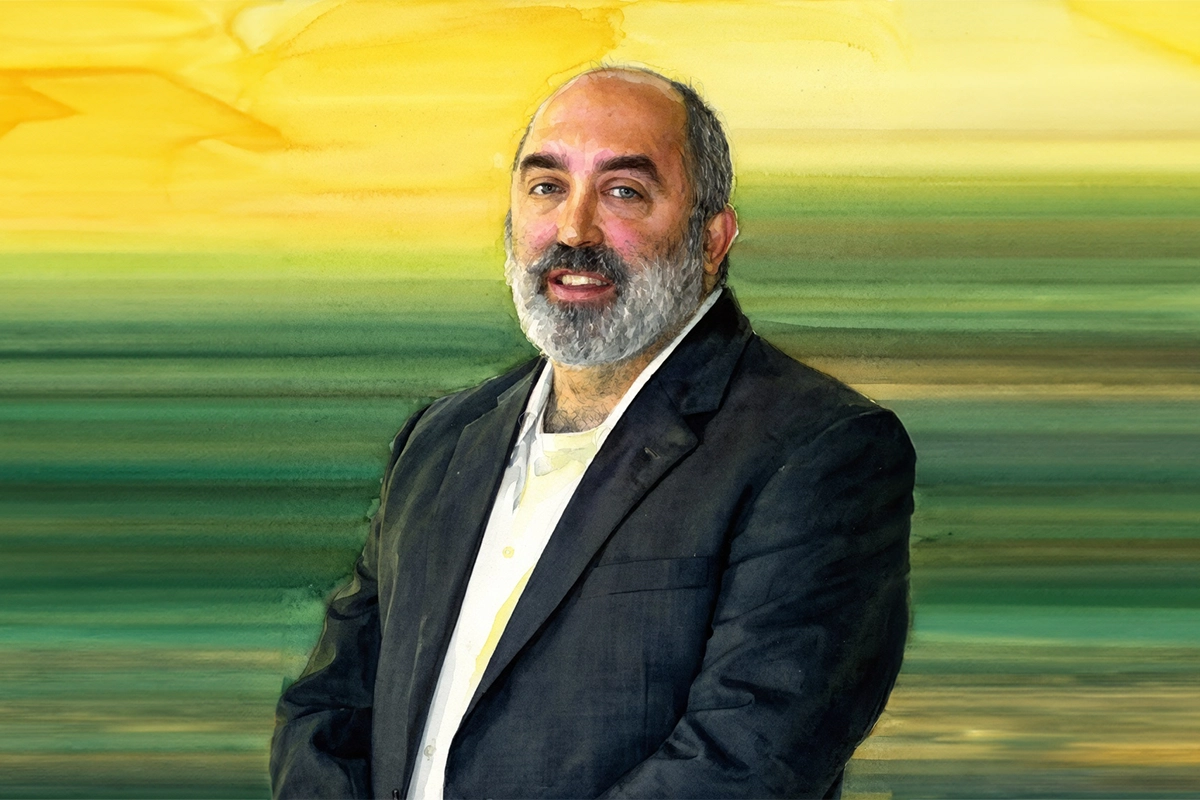







David Harrison Horton Shares His Vision For Transforming Literature Through Experimental Poetics And Thoughtful Innovation
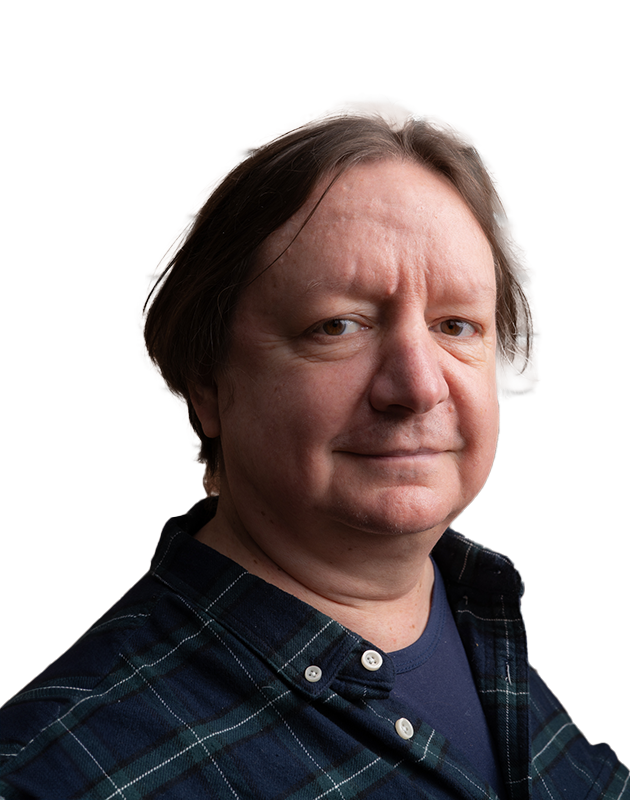
Photo: David Harrison Horton: The groundbreaking poet and artist redefining the boundaries of language, form, and creativity from Beijing to the world.
Exploring the Maze of Innovative Poetry
David Harrison Horton discusses his experimental works, including Maze Poems, and his approach to language, form, and content in exploring identity, placement, and reader interaction through poetic innovation.
D avid Harrison Horton stands as one of the most compelling and innovative voices in contemporary experimental literature. A Beijing-based writer, artist, editor, and curator, Horton has consistently pushed the boundaries of form and content to craft works that are as intellectually rigorous as they are creatively daring. His remarkable ability to navigate the intersections of poetry, visual art, and prose has resulted in a groundbreaking body of work that challenges traditional literary conventions while inviting readers to engage deeply with language, form, and meaning.
In his acclaimed book Maze Poems (Arteidiola, 2022), Horton redefines poetic expression by constructing literal mazes filled with words, forcing readers to slow down and grapple with the mechanics of reading itself. His earlier chapbooks, including Model Answers (CCCP Chapbooks/Subpress, 2024) and Salt & Iron (serialized by In Parentheses in 2020), exhibit a similar spirit of experimentation, testing the limits of cohesion, structure, and accessibility. At the same time, Necessary, one of his most introspective works, delves into the universal questions of placement and identity through language stripped to its essential core. Across each project, Horton demonstrates an unmatched ability to balance audacity with restraint, while trusting readers to take an active role in shaping meaning.
As the editor of Mosaic Digest magazine, it is an absolute privilege to share our exclusive interview with David Harrison Horton in this issue. His insights offer not only a look into the creative process behind his works but also a broader understanding of how experimental literature can transform the way we read, think, and feel. Horton’s relentless curiosity and refusal to remain tethered to convention make him a vital thinker in the literary landscape. Mosaic Digest is proud to highlight his work and contributions, which continue to shape the conversation around the future of poetry and hybrid writing forms.
David Harrison Horton is a bold visionary, redefining literature with groundbreaking creativity, intellectual depth, and poetic innovation.
What sparked the initial inspiration for writing Necessary?
In 2002, I moved from the San Francisco Bay Area to Nanjing, China. I began to seriously consider ideas around place and how we, as individuals, choose to situate ourselves, and how these decisions impact who we are and who we become. For example, we can place ourselves geographically: where we live, where we were born. We can place ourselves within the various traditions (history, religion, etc) that came before us. So, after ruminating on this for a long while, I began to write what would become Necessary.
How did the process of creating Maze Poems compare to your other works?
These pieces combine automatic writing, visual poetry, and essay. Mazes were a form I had been playing around with for over a decade before I began working on the ones that are contained in this book. These works are the culmination of my many explorations of the maze as a poetic form. First, I would create the maze. This gave the piece its actual form. Then, I would write continuously until the maze was filled with words.
What does the concept of a “literal maze” of thoughts represent for you in Maze Poems?
I used automatic writing to fill each maze, so a maze represents the actual form of a single train of thought.
What challenges did you face while balancing urgency and restraint in your writing of Necessary?
The language in Necessary is honed down to the bare minimum, so much so that the reader is often asked to take serval threads and weave them together for meaning or feeling. For example, the reader is given the images in this passage — “slippers and sandals / hammer-toed children / one pair of pants between” — and asked to fit them in with the stanzas just before and after them. In prose, this might take a few paragraphs to do, but with poetry and trust, I am confident in the readers’ ability to work this out in a way that will make sense or create a mood for them. Each reader will arrive at different ways to take these in, and that is fine. Because of the restraint used, Necessary is open to many different readings and understandings.
How has your approach to experimental writing evolved across Necessary, Model Answers, and Maze Poems?
With each of these, the forms and approaches are very different. With Necessary, one of the things I wanted to do was whittle the language down as much as possible while still being able to communicate. Model Answers was an exercise in negative cohesion. How far can we drift from a central idea and still have things seem connected? One of the main concerns with Maze Poems was purposefully slowing the reading speed down, to focus on how we, as readers, are creating meaning out of language with the activity of reading, and how we process that meaning as we are creating it.
Were there specific influences—literary, visual, or otherwise—that shaped Model Answers?
I specifically was playing around with the kind of model answer books that are available for the essays in standardized tests. Each piece has a generic topic, like education, and a discourse that subverts the model answer format by becoming less and less cohesive as the piece unfolds.
Can you explain how your personal experiences informed the themes in Necessary?
As I mentioned earlier, one of the central themes is placement, so there are places and people mentioned in Necessary that are part of my personal history: Mr. King in Oakland, Mr. Godston in Chicago, for example. We all choose how we place ourselves and the terms we use to define this placement shape how we see ourselves and our experiences. So naturally some of my own experiences would be part of my own process in this reckoning.
“A maze represents the actual form of a single train of thought.”
– David Harrison Horton
How do you see the intersection of form and content in your work, especially with your use of innovative structures?
Form helps to approach the content in different ways. For example, a dinner with a loved one could be presented in a novel, a short story, a CNF essay, a sonnet, a haiku, etc. So the content can fit into many various forms, but the form selected will affect what can and can’t, should and shouldn’t be shown. So the form shapes how the writer will approach the content and this will, in turn, impact how it is presented to the reader. Using innovative structures will offer new ways of looking at and presenting the content. This, hopefully, will give the reader a new way to connect with it.
“Using innovative structures offers new ways of looking at and presenting the content.”
– David Harrison Horton
What role do you think visual elements play in enhancing or transforming the reading experience of your poetry in Maze Poems?
The mazes are what slow the reader down. If the words were written in standard linear format (like you’re reading now), then the pieces would not have the slowing effect and the experience of reading the pieces would be very different. So I would say the visual element is key to the whole project.
How do you hope readers emotionally or intellectually engage with the “complications” raised in Necessary?
With confidence and curiosity. There are many elements presented in the poem and there is no right or wrong way to put them together.
How do you navigate the balance between lyrical experimentation and accessibility for readers in Model Answers?
While I am attempting serious things linguistically, I feel that there is an underlying sense of play. These were very fun to write, and I hope they come across as just as fun to read.
What advice would you give to emerging authors exploring experimental or hybrid writing forms?
Try it and see if it breaks. If it doesn’t break, keep going until it does or until you reach the end of your investigation into that form. Read what others are doing and have done. This will give you a bigger tool kit to play around with.
Editor’s Note
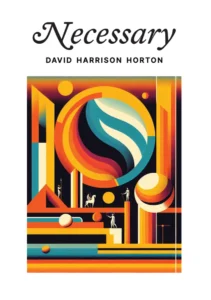
Necessary is a masterful poetic tapestry, blending history, myth, and contemporary themes into a deeply resonant and thought-provoking journey.
David Harrison Horton’s Necessary is an evocative collection blending fragments of tradition, history, and modernity. Horton weaves a mosaic of imagery, incorporating influences from Babylonian myths, Marco Polo, and cultural touchstones, to explore themes of human connection, loss, and identity. The recurring figure of Mr. Lusk adds an enigmatic anchor to the narrative, grappling with the weight of heritage amidst vivid symbols and stark, contemplative language. This collection challenges readers to unravel its layered meanings, delivering a thought-provoking meditation on the interplay of past and present. Necessary is both intricate and hauntingly resonant.